



Reality Santa Barbara (Video)


About
Available on








Community
525 episodes
The whole world celebrates holidays surrounding the incarnation (Christmas), death (Good Friday), and resurrection (Easter) of Jesus Christ, but very little attention is given to Jesus’ ascension, even in the Church. But the ascension is kind of a big deal. Hebrew Scripture prophecies it. The New Testament’s most quoted Old Testament verse is about Jesus’ ascension. Peter’s Pentecost sermon cites the ascension as proof of Jesus as Israel’s exalted messianic king. When we say “Jesus is Lord”, or “Jesus is King” we mean, Jesus has ascended! But why does the ascension matter to you, right here and right now as a 21st century follower of Jesus? Let’s talk about that.


Guest Speaker Dominic Balli preaches over Psalm 126 and God's Faithfulness
The Great Commission has catalyzed tens of millions of Jesus followers to share their faith over the centuries. Christians have been compelled to share the good news of Jesus to family members, friends, and coworkers, to people in their communities and beyond, to other cities, states, nations, and continents. Countless vulnerable, exploited and abused children have been rescued, millions of hungry have been fed, desperately poor communities have been given resources, water wells have been dug, and education has been provided all in the name of Jesus and His command to “go”. Still, some Christians feel guilt around the idea of “going” (or not going, as it were). Others question some of the unintentional negative consequences of well-meaning Christians whose efforts caused complications or even harm to people in other parts of the world. What’s did Jesus mean when He told His disciples to “go”? What do these words mean to us in 21st century Santa Barbara, California? Let’s talk about the good news of the Great Commission.
Followers of Jesus have an easy time believing God loves the whole world, but we sometimes struggle to believe that God really does love us. In this prophecy from Isaiah, God expresses a love so supreme He invokes the strongest relational metaphor—that of relationship between a mother and her nursing infant— a love so supreme it transcends a mother’s love.

In the first century a woman’s testimony was only half as credible as a man’s. A woman with a bad reputation would have been less credible still. Regardless of its inclusion, or lack thereof in the canon, the verses in the last half of Mark 16 present a truth that all the gospels agree—Mary Magdalene, a formerly demon-possessed woman, was among the first witnesses of the resurrection. Why would the authors (and most devoted apprentices of Jesus) want us to know that the first person to proclaim the resurrection testimony upon which the entire substance of saving faith derives its credibility, was a woman? What might we learn about belief itself in an age of easy unbelief?

God’s faithful son is finally enthroned as king, but in the most surprising way. He is exalted through a shameful execution reserved for only for the most unconscionable criminals. Faithful disciples quietly give Jesus a lavish burial in a tomb fit for the affluent. A faithful disciple quietly show up at his tomb. A faithful divine messenger asks, “What are you doing here?”
Jesus stands before the local Roman prefect, accused of being a messianic insurrectionist. When Pilate finds no fault in Jesus he offers to free “the king of the Jews”. Will the people #FreeJesus and receive him as king? Or will they be swayed by the loudest voices to choose a lesser alternative? In this sermon we consider what truth this passage has on offer when we face the Jesus vs. a lesser messiahs choices in our daily lives.

Guest Speaker Blake Zimmerman takes a break from Jesus is King series to preach on Acts 28v17-31
Jesus shares his final meal with his disciples, one of whom will betray him, most of whom will abandon him, all of whom He offers the cup of redemption.

As we close in on the last couple of days before Jesus’ death, there is little neutral ground in the hearts of humankind. In light of Jesus’ love, tender hearts can’t hold back their lavish worship, and hard hearts grow harder still.

This passage contains Jesus’ longest uninterrupted teaching in the gospel of Mark. In response to the disciples marveling at the magnificence of the Jerusalem temple, Jesus predicts its utter destruction, after which the disciples when that will happen and when will be the sign that it’s about to take place.
After fielding a series of deceptive, adversarial questions with wisdom and grace, Jesus now asks a single powerful question, and reveals a prophetic truth, rattling the tenets of the religious core and their systemic manipulation, domination, and exploitation. The audience listens with delight as Jesus reveals Himself as the God who sees.
We all take comfort in being right. “Being right” helps us justify our wrongs and make sense of wounds. “Being right” protects us from villains and liberates us to pursue the good life, or so we think. But happens when we find out our mind map of “being right” is off? What happens when we realize we don’t see life as clearly as we thought? Jesus eases the burden of our incessant needs of “being right” and invites us to follow Him along the path to living well—truly liberated to live a life of love. In this sermon we explore what happens when the people most obsessed with being right confront the author of life.
Lead Pastor Stephen Posey talks about three commitments on a short sermon over Mark 3:13–19.
Pastor of Spiritual Formation & Worship , Joseph Pfeifer continues the series Jesus is King with Mark 11:27-33 and Mark 12:1-12
The disciples marvel that Jesus’ words had such power; Everyone wants prayer that works, but no one seems to know how prayer works. Jesus makes another astounding promise about prayer and invites them to experience a Jesus kind of faith for themselves.
Jesus disrupts the way access to God happens forever, making the meritocracy of religious achievement obsolete currency, and disarms the powers of religious exploitation.
What does Jesus see when He looks at you? This week we are looking at a mysterious prophetic parable Jesus enacts in front of His disciples and what it means to us today.
Guest Speaker Peter Russell starts off Reality Santa Barbara New year with the sermon titled Born to Bless.

If you are a follower of Jesus, then you have a ministry in the church. But what does it mean to fulfill our ministry?
Whether under the tyranny of poverty and injustice or under the spell of overconsumption and apathy, the whole world is crying out for revolution! We, the followers of non-anxious, humble Jesus, are invited to participate in a Jesus kind of revolution.
On Pastor Lazo's last sermon as official Lead Pastor of Reality SB, he talked about what looks like Jesus favorite question shown in Mark 10:46-52 “What do you want me to do for you?”
The world’s success comes through greed and control. Jesus succeeds by serving and shows us how.

Eternal life comes from following Jesus. But this is hard for people who are well off.
The way we access God is in the same way a child receives a free gift they never expected.
Sometimes our relationships are framed by what we can get out of them. Jesus reframes the question by using the example of marriage.
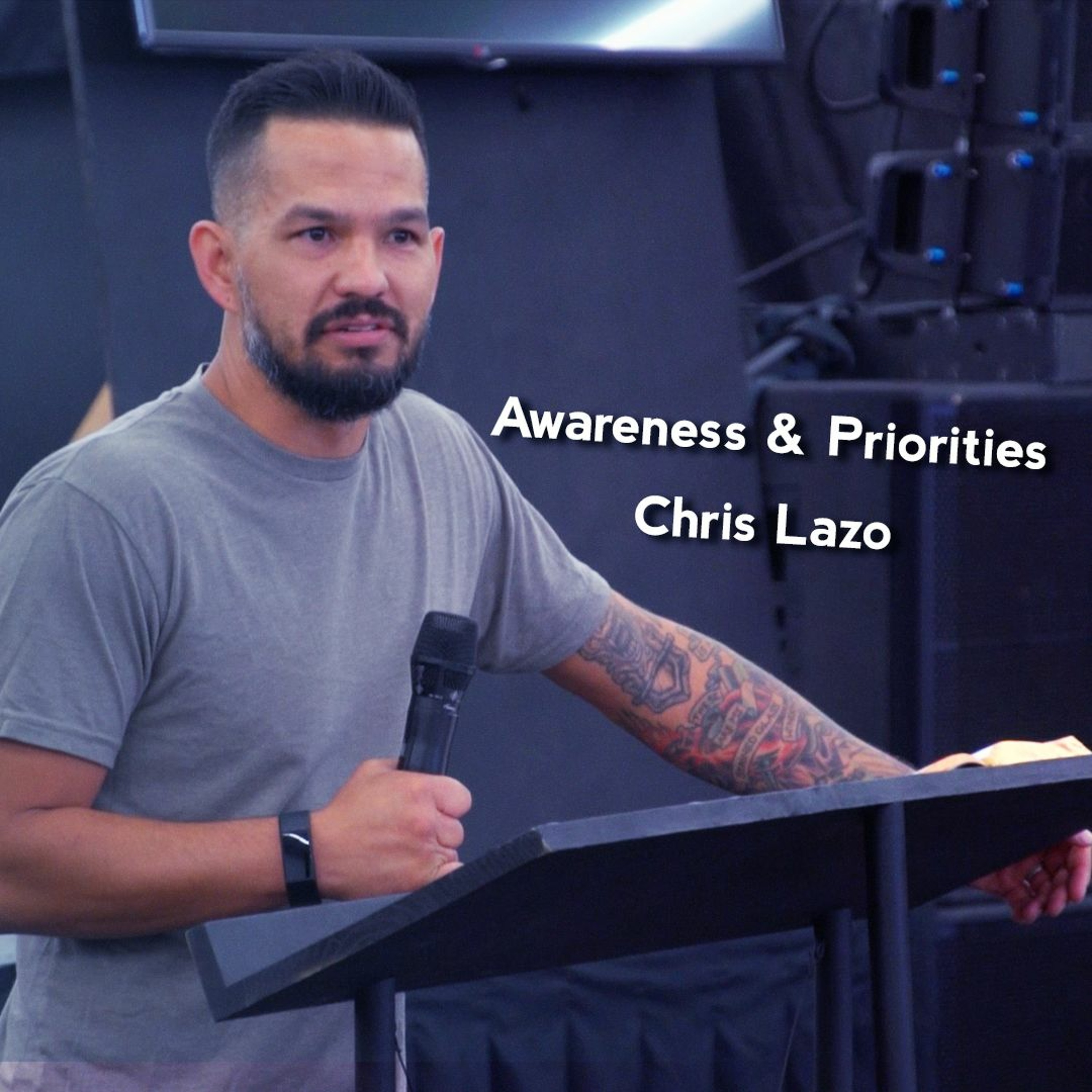
Be aware of each other’s faith. Be aware of your own faith. Go all in on Jesus together.

Do not reject someone who is doing good just because they don’t belong to your tribe. Nor reject what you are doing because you don’t belong to the right group. God is making all things new and we are invited into that.
