



Rob Hopkins


About
Available on








Community
526 episodes
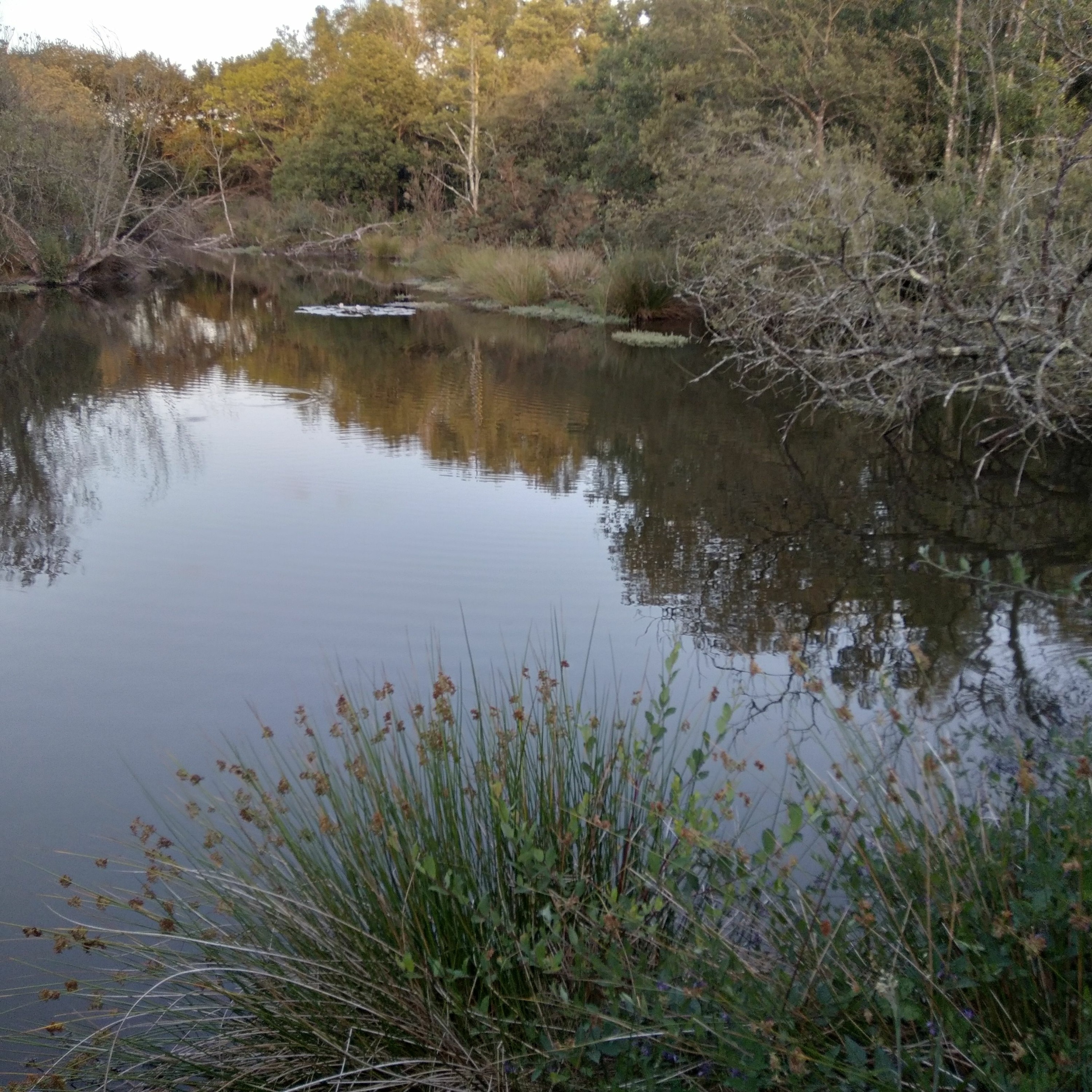
2030 Field Recordings of Cornish beavers by Rob Hopkins

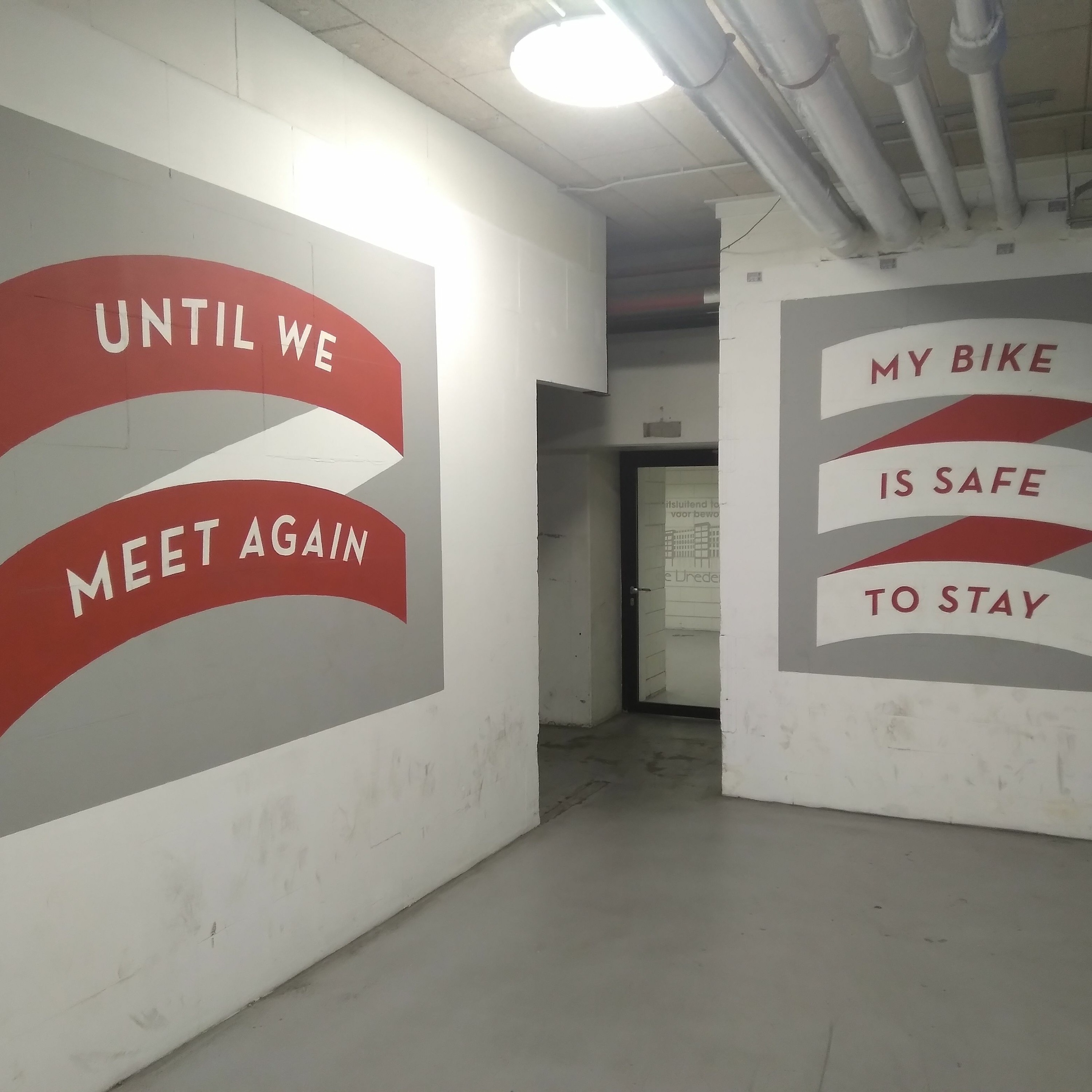
I was in Utrecht recently, to record, for 'Field Recordings from the Future', the rush hour of bicycles. Here is a taste of that.
What would a car-free, low carbon, delicious future sound like? I visited the Vauban in Freiburg to find out.
Here is a short piece to introduce a new project I'm doing with the amazing Mr Kit: https://kitmusic.bandcamp.com/ Watch this space!
Welcome to 2022. We start this year with a fantastic episode and a really important question. What if we were to implement every solution that we already know exists in order to tackle the climate crisis the sense of urgency that an emergency should inspire? After the damp squib of COP26, it's a vitally important question. Can we do it? Is there still time? And most importantly, what would it feel like to live in a time when that was actually happening, when all around us, all hands were applied to this most momentous of tasks? It's not a question we ask often enough. And it is a big question. Joining me for the first episode of this year are Clover Hogan and Paul Hawken, both brilliant thinkers on this question. Paul's book. 'Regeneration', which we refer to throughout the podcast, can be bought here (never Amazon). Do let me know what you think of this episode, of thoughts for future What If questions it raises for you, or anything else it inspires in you. And Happy New Year!
Here's Episode 45 for you, I hope you're going to love it. Meet Tim Gill and Alice Ferguson of Playing Out, brilliant guests for a vital discussion. Today we're talking about kids, and play and about the places where we live. Kids have almost entirely vanished from our streets. Retreating indoors in the face of the car’s domination of our city spaces, and a perception of the lack of safety, kids are all too often starved of play. ‘No ball games here’ signs. Horrible noises only audible to teenagers to chase them away from sitting near certain buildings, The privatisation of public space. Cities are increasingly being designed around the needs of adults and capital rather than kids. So what might we do about it? Some beautiful visions of the future from our Time Machine adventure this week. I hope you love it. Do let me know what you think.....
Although not planned as some kind of 'Christmas Special', that's kind of what this episode is, so hopefully it will give you the opportunity to treat your imagination to something very special over the festive season. This episode will introduce you to Flora Collingwood-Norris and to Orsola de Castro, cofounder and Global Creative Director of Fashion Revolution. Flora's book is 'Visible Creative Mending for Knitwear', and Orsola's book is 'Loved Clothes last: How the Joy of Rewearing and Repairing Your Clothes Can Be a Revolutionary Act'. I hope this episode inspires much stitching and loving repairing.
Welcome to Episode 41 of 'From What If to What Next'. Powerful psychology is used to convince us, often subliminally, that we want and need things we previously never knew even existed. This is especially dangerous at a time when we need to urgently cut consumption of high carbon-generating products and lifestyle choices. It is estimated that in the UK companies spend over £23bn a year on advertising. Research shows that the more advertising we are exposed to, the more unhappy we feel, the more materialistic, the less we engage in positive social activities and the less we care about the environment. Advertising, in other words, is incompatible with the decarbonisation we so urgently need. There is a very real, and dangerous, link between living in cities overrun with cars and the fact that we are surrounded by billboards and newspaper stuffed with seductive car ads. What if instead those spaces presented us with different messages, messages celebrating more inclusive cities with far less cars, cities with clean air, cities rich with biodiversity - messages that told different stories? Our What If question for today then is … “What if we reclaimed our public spaces from advertising?” My two guests on this episode bring a huge amount to this conversations. Rosa ter Kuile is Campaigns and Communications manager at Rising Arts Agency. and is part of the Bristol Womxns Mural Collective. Robbie Gillett works part-time from Bristol on Possible’s Badvertising campaign (you can find some of their excellent publications here) and at Adfree Cities. More about their work at these links. I hope this episode will help you to see the spaces around you differently, to reimagine what your corner of the world would look like without adverts, and how that might impact your imagination. As always, do let me know what you think. And thanks to Ben Addicott for making it all sound so great.
The IPCC report that came out in mid-2021 said “unless there are immediate, rapid and large-scale reductions in greenhouse gas emissions, limiting warming to close to 1.5 degrees, or even 2 degrees, will be beyond reach”. “Immediate, rapid and large-scale reductions”. Let’s imagine we were able to actually do that in the time available to us. It would mean the complete reimagining of food, travel, housing, the economy. A retooled education system. A new sense of shared and collective purpose. It would feel like living through a revolution of the imagination. But what would it actually feel like to live through a revolution of the imagination? It's a question that leads us to our question for today’s episode – what if we are standing on the cusp of an Imagination Age? It was a question inspired by this article I read that one of our guests had written about the second guest. Gabriel A. Silva, who wrote it, is a Professor in the Department of Bioengineering in the Jacobs School of Engineering and the Department of Neurosciences in the School of Medicine at the University of California San Diego. He holds a Jacobs Family Scholar in Engineering Endowed Chair, is the Founding Director of the Center for Engineered Natural Intelligence, and Associate Director of the Kavli Institute for Brain and Mind. In addition to his academic work, he is a regular contributor to Medium and Forbes. And Rita J. King, who it's about, believes in Applied Imagination for creative, pragmatic problem solving in the Imagination Age. King is EVP for Business Development at Science House, a strategic consultancy in Manhattan. She is a writer, researcher, speaker, designer and artist. As a Futurist at the National Academy of Sciences Science and Entertainment Exchange, she invents novel technologies, characters and stories for film and TV projects. She is a Resident Research Fellow at the Center for Engineered Natural Intelligence at UC San Diego. I hope you love this conversation and where it goes and, as always, do let us know what you think! Thanks.
I'm not going to say much about this episode, other than that it's incredible. We are exploring Afrofuturism, which has been variously described as “speculative fiction from the African diaspora”, “a way of imagining possible futures through a black cultural lens” and “an intersection of imagination, technology, the future and liberation”. It has so much to teach us about imagination and how to keep What If questions alive over time. You will also hear the story of the Zambian Space Programme (a new one on me) which is just amazing. My guests are both amazing. Dr. Priscilla Layne is Associate Professor of German and Adjunct Associate Professor of African Diaspora Studies at the University of North Carolina at Chapel Hill. Her book, White Rebels in Black: German Appropriation of Black Popular Culture, was published in 2018 by the University of Michigan Press. She has also published essays on Turkish German culture, translation, punk and film. She recently translated Olivia Wenzel's debut novel, 1000 Serpentinen Angst, which will be out next year. And she is currently finishing a manuscript on Afro German Afrofuturism. Dr. Dennis Chester is Professor of African American Literature at California State University East Bay (CSUEB) in Hayward CA. His interests include all manner of topics related to African American literature and culture with specialties in the Harlem Renaissance and in contemporary genre studies. Dr. Chester's recent activities include published articles on African American crime fiction and presentations on Afrofuturism and the characteristics of Black speculative fiction. A recent Fulbright fellow, Dr. Chester is also very interested in the diasporic aspects of contemporary Black writing and exploring the ways that Black literature and Black people move within and across national borders. I hope you love this, and do let me know what you think. And thanks, as ever, to Ben Addicott for making it all sound so great.

Usually our podcasts aren’t that topical, you can hopefully listen to them at any time and they are still relevant. Today’s is not like that. It is being released just 6 days before the beginning of COP26, the vitally important climate summit happening in Glasgow. And usually they are released, initially at least, just to you as a subscriber. But today we are making an exception and releasing it freely to everyone ... because it matters right now. So please, share this link with all your friends, and get this vital episode out far and wide. The world’s governments will be coming together for 2 weeks to, hopefully, reach some kind of binding agreement that might give the world at least a fighting chance of preventing runaway climate change. There’s one problem though... On a planet where over half the population is female, the leadership team put together by the UK government, who are hosting these talks, is almost exclusively male. Yes, you heard that right. And yet, climate change is an issue that impacts women more than men. It disproportionately impacts their livelihoods, the levels of violence they face, their educational opportunities and much more. Yet we know that involving the diversity of a population in making big decisions that affect them can lead to far greater public support, not to mention better ideas. Research also shows that women understand climate change better than men, are more open to change and to big ideas, and bring a more compassionate approach to decisionmaking. I'm joined to explore this by the fabulous Nameerah Hameed and by Bianca Pitt, both of, among other things, #SheChangesClimate. I hope you love our conversation as much as we did. Please let us know what you think. And do share the link with your friends and do sign She Changes Climate's Open Letter. And see you in two weeks, for a fascinating episode to mark our 40th episode...
The decline of insect populations around the world has been nothing short of terrifying. Last year I visited a school in an intensive wine-producing region in France, and suggested to the kids that they might build an insect hotel, only to be told by the head teacher "we don't have any insects here". It has stayed with me ever since. So in today's episode, we are exploring how it would feel to live through a time when insect population, and biodiversity in general, bounced back? If we did everything we possibly could to create the conditions for that? How incredible would that be? My guests are Vicki Hird, who runs Sustain: The Alliance for Better Food, and is the author of the just-published 'Rebugging the Planet: The Remarkable Things that Insects (and Other Invertebrates) Do – And Why We Need to Love Them More', and Matt Shardlow is CEO of Buglife, "the only organisation in Europe devoted to the conservation of all invertebrates". Do join them and support their work. Thanks as ever to Ben Addicott for sound production and theme music, and for our taste this week of what my Time Machine sounds like... Do let me know what you thought of this episode.
Everywhere, where you live included, has a patchwork of organisations of different sizes who are doing business and making things happen in a way that is not solely about the generation of profit, but about serving a larger social purpose. They might be called social enterprises, or socially-trading organisations, or all sorts of other things. Today’s episode asks what if they got together and designed how better they might join up and work in a more connected way? What if they offered peer to peer support between each other? What if the Mayor of the city got behind this new network, and saw it as an opportunity to invest and support the emergence of a new economy? What if that investment was then, as each enterprise found its feet and generated surpluses, reinvested back on a pay-it-forward basis to help other emerging enterprises? And what if this skilful support for a new economy spread and spread and became the default model for how to regenerate the economies of towns and cities across the land? Sounds good doesn’t it? Well stand by. You’re about to hear a story of how this is actually happening, one you won’t have read about in the papers or seen on TV, but it’s very much a reality. I am joined by two amazing guests who have played an active role in making this happen. Danielle Cohen joined Power to Change, the independent trust that supports community businesses in England, in 2018. She works in cities and regions to enable the community business sector to flourish as part of the local economy. Her work has included partnering on the development of Kindred, a social investment vehicle owned and led by the social economy in Liverpool City Region, backed by the city region’s Combined Authority and Power to Change. Before joining Power to Change, Danielle worked in urban regeneration, community engagement and corporate responsibility, including as deputy CEO of a central London BID. She believes passionately in building a regenerative economy which nurtures people and planet. Erika Rushton has 35 years of experience in supporting and investing in communities and creative enterprises to create, grow, occupy and reinvent their own economies. She has worked with homes, workplaces, towns, whole cities, industry sectors and communities of interest at a regional, national and international level. She is the Director of Creative Economist whose current contracts include Islington Mill Arts Club to deliver The Other City – an Artist led £7 million redevelopment of heritage and modern buildings accommodating 150+ creative enterprises; Women In Space a network of 25+ creative women from across the UK who have taken over unwanted land and buildings, creating value and giving places new purpose; and Kindred, which you’ll hear more about shortly. She mentors creative women leaders nationally and internationally; lectures internationally; and works voluntarily to address intersectional gender discrimination in the UK.
Everywhere, where you live included, has a patchwork of organisations of different sizes who are doing business and making things happen in a way that is not solely about the generation of profit, but about serving a larger social purpose. They might be called social enterprises, or socially-trading organisations, or all sorts of other things. Today’s episode asks what if they got together and designed how better they might join up and work in a more connected way? What if they offered peer to peer support between each other? What if the Mayor of the city got behind this new network, and saw it as an opportunity to invest and support the emergence of a new economy? What if that investment was then, as each enterprise found its feet and generated surpluses, reinvested back on a pay-it-forward basis to help other emerging enterprises? And what if this skilful support for a new economy spread and spread and became the default model for how to regenerate the economies of towns and cities across the land? Sounds good doesn’t it? Well stand by. You’re about to hear a story of how this is actually happening, one you won’t have read about in the papers or seen on TV, but it’s very much a reality. I am joined by two amazing guests who have played an active role in making this happen. Danielle Cohen joined Power to Change, the independent trust that supports community businesses in England, in 2018. She works in cities and regions to enable the community business sector to flourish as part of the local economy. Her work has included partnering on the development of Kindred, a social investment vehicle owned and led by the social economy in Liverpool City Region, backed by the city region’s Combined Authority and Power to Change. Before joining Power to Change, Danielle worked in urban regeneration, community engagement and corporate responsibility, including as deputy CEO of a central London BID. She believes passionately in building a regenerative economy which nurtures people and planet. Erika Rushton has 35 years of experience in supporting and investing in communities and creative enterprises to create, grow, occupy and reinvent their own economies. She has worked with homes, workplaces, towns, whole cities, industry sectors and communities of interest at a regional, national and international level. She is the Director of Creative Economist whose current contracts include Islington Mill Arts Club to deliver The Other City – an Artist led £7 million redevelopment of heritage and modern buildings accommodating 150+ creative enterprises; Women In Space a network of 25+ creative women from across the UK who have taken over unwanted land and buildings, creating value and giving places new purpose; and Kindred, which you’ll hear more about shortly. She mentors creative women leaders nationally and internationally; lectures internationally; and works voluntarily to address intersectional gender discrimination in the UK.
Oh wow, you're in for a treat. Today we bring together Anthea Lawson, author of the fabulous new book 'The Entangled Activist' and Alastair McIntosh, author of 'Soul and Soil' and 'Riders on the Storm'. I usually try to constrain the conversations we have here to around 45 minutes, but this one was so fascinating that we just kept rolling, and just kept chatting, and so this one actually comes in at an hour and a quarter! But you'll love it I promise, and you'll wish we'd kept going. I'm not going to tell you anything else, just that you will love it, and I so look forward to your reflections and comments.
Today’s episode of From What If to What Next is about care. Care has been very much on our minds of recent. COVID has highlighted how vitally important care is and yet how undervalued it is. It is so often seen as being the domain of women, and around the world it is often either underpaid, or unpaid work. As the populations of the Global North live longer and longer, and as young people are unable to afford, often, to leave home, it tends to often fall to women to care for both the younger and the older generations simultaneously, what is sometimes called the ‘Sandwich Generation’. Many people are happy to stand on their doorsteps and clap for those who provide the care in our society, but not to really value care, not to campaign for it to be truly valued. These days of COVID have the potential to be a real watershed moment. So in today's episode, with two extraordinary women, we're asking "what if care work was valued?” This is an episode that might very well lead to inner paradigm shifts... Kavita Ramdas is a recognized global advocate for intersectional gender equity and justice. She currently serves as the Director of the Women’s Rights Program at the Open Society Foundations. She also serves on a few select non-profit advisory boards, the board of trustees of the Rockefeller Brothers Fund, and the board of directors of GRIST, a publicly supported journalism non-profit focused on climate justice. Ai-jen Poo is an award-winning organizer, author, and a leading voice in the women’s movement. She is the Executive Director of the National Domestic Workers Alliance, Director of Caring Across Generations, Co-Founder of SuperMajority, Co-Host of Sunstorm podcast and a Trustee of the Ford Foundation. Ai-jen is a nationally recognized expert on elder and family care, the future of work, and what’s at stake for women of color. She is the author of the celebrated book, The Age of Dignity: Preparing for the Elder Boom in a Changing America.
You are in for such a treat. This is one of the most thought-provoking and inspiring episodes of this podcast yet. It was my huge honour to be joined by Yumna Hussen and Lottie Cooke to discuss what a reimagined education system would be like. Honestly, spending an hour in the company of these two remarkable young people, so articulate and well informed, was just a joy. Lottie and Yumna are part of an organisation called Pupil Power which is "committed to educating, engaging and transforming young minds around the issues impacting our experience of school". "So", they add, "we're demanding an entire transformation in education". And this conversation will inspire you that such a transformation is not only possible, and thrilling, but also long overdue. I hope you love this episode as much as I do. And do share your thoughts, I'd love to know what you thought of it.
Here is the perfect accompaniment to the long summer days. Or the deluge. Or perhaps a bit of both. Today we are talking about travel. As many cities begin to actively take steps away from the dominance of cars, we are asking what might it be like if that had already happened? What might it be like to live in a city in which more travel now takes place on food or on two wheels? And how are electric vehicles transforming that? It's a brilliant discussion with two amazing guests. As always, do let me know what you think, feedback is much appreciated. My two guests are: Carson Brown is a Co-founder and Head of Product at TAUR an electric scooter brand. Having spent the majority of his career dedicated to developing micromobility products. He is a strong advocate for greener, more efficient cities, and enabling people to change their lifestyle through considered design. Melissa Bruntlett is a urban mobility advocate specializing in communications and engagement. She is also the co-author of Building the Cycling City: The Dutch Blueprint for Urban Vitality and the newly released Curbing Traffic: The human case for fewer cars in our lives. Melissa focuses on urban mobility and sustainable cities, and believes it is imperative to build cities that work for every citizen, using her experience as a writer, marketer, and media producer to share the human perspective of multi-modal transport to a mainstream audience. Professionally, Melissa supports knowledge sharing and capacity building to create more equitable mobility environments, working with and advising public and private partners in Europe, North America and Australasia to develop effective and compelling communications and engagement plans and strategies. She is a Canadian living in the Netherlands with her husband Chris and their two children
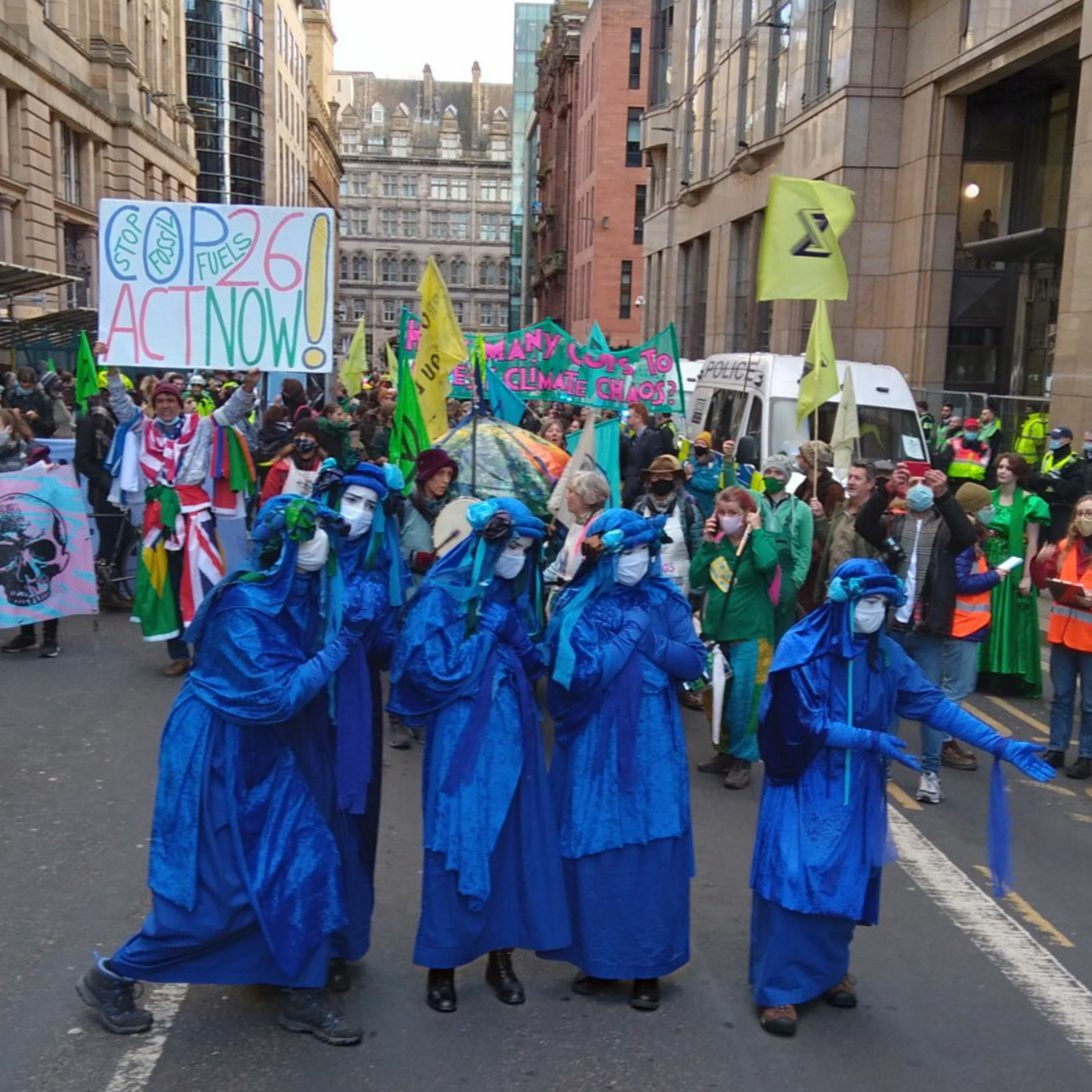
Here are some people I spoke to on my third day at COP26 in Glasgow. The voices you'll hear here at Dorothy Grace Guerrero, Head of Policy at Global Justice Now, Nick Dearden, Director at Global Justice Now, Rupert Read, former XR spokesperson, Heidi Chow, Executive Director at Jubilee Debt Campaign, and Asad Rehman, Director at War on Want.
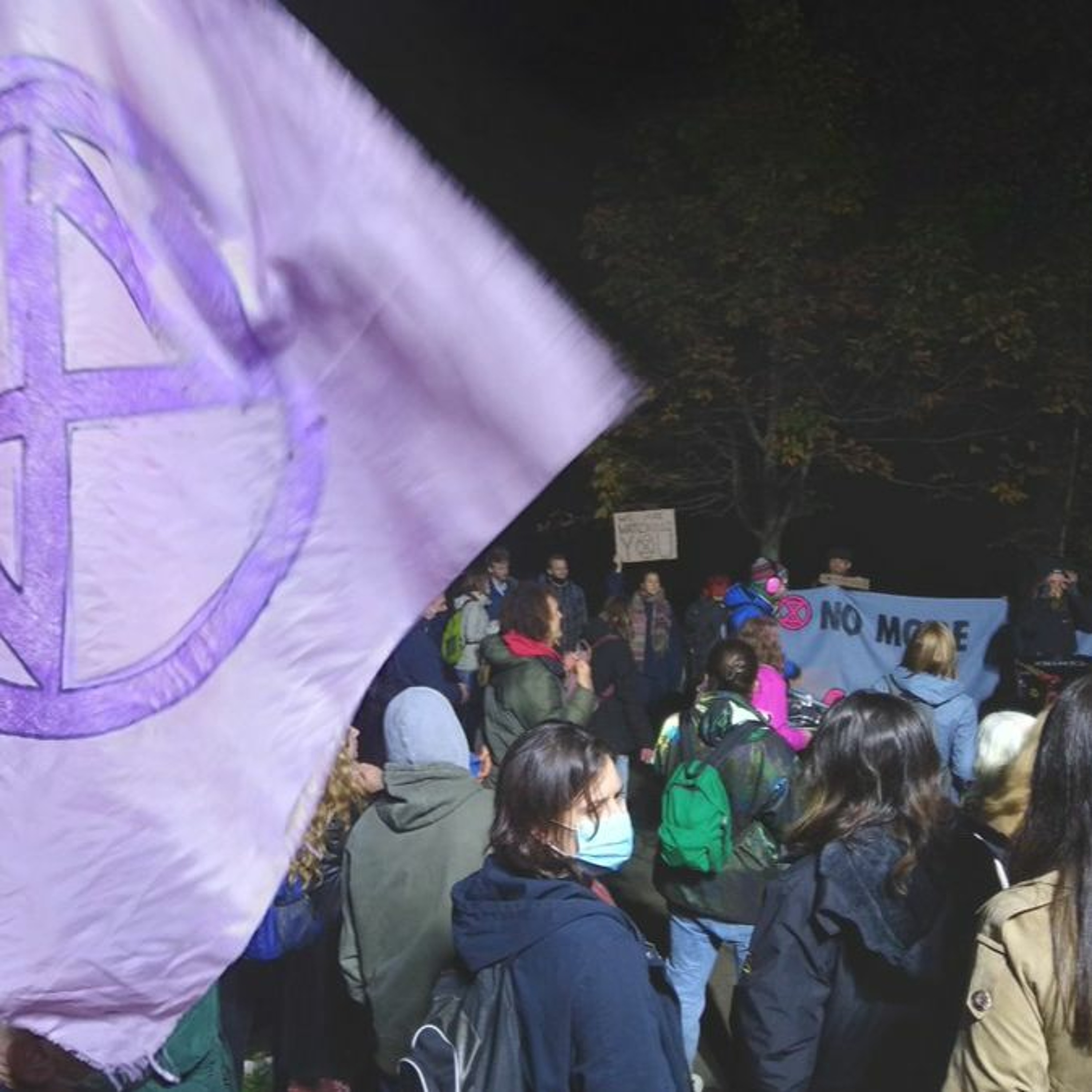
Here are a few conversations I had with people while in Glasgow on my first day in the city for COP26. Here I talk to Bill McKibben, to community supported organiser Jacob Johns, to Anthony Diaz of the Newark Water Coalition and to Leila Salazar-López, Executive Director of Amazon Watch. Enjoy. I ask all of them two questions, what could a successful COP26 look like for you, and what should we do if that's not what comes to pass?
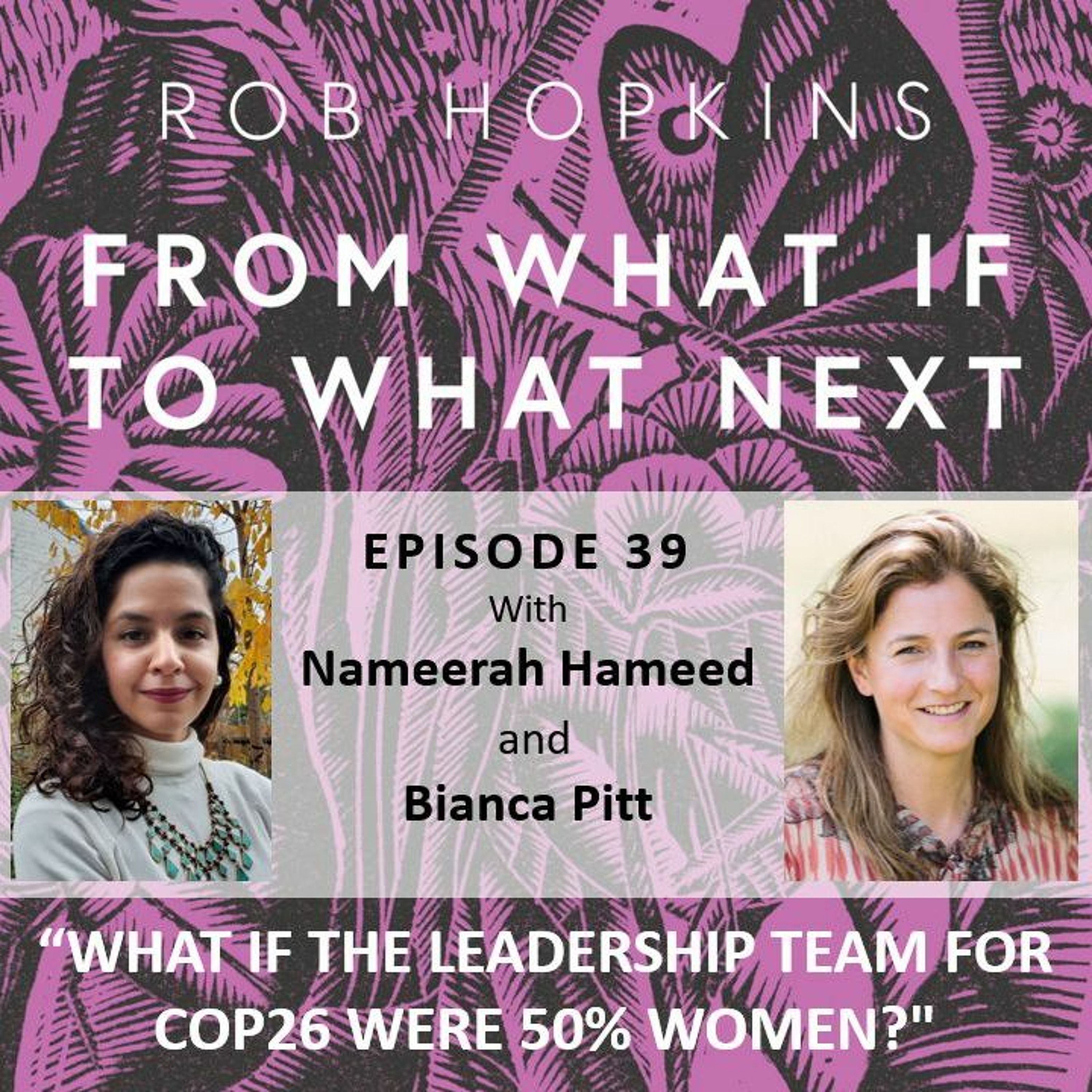
Usually our podcasts aren’t that topical, you can hopefully listen to them at any time and they are still relevant. Today’s is not like that. It is being released just 6 days before the beginning of COP26, the vitally important climate summit happening in Glasgow. The world’s governments will be coming together for 2 weeks to, hopefully, reach some kind of binding agreement that might give the world at least a fighting chance of preventing runaway climate change. There’s one problem though. On a planet where over half the population is female, the leadership team put together by the UK government, who are hosting these talks, is almost exclusively male. Yes, you heard that right. And yet, climate change is an issue that impacts women more than men. It disproportionately impacts their livelihoods, the levels of violence they face, their educational opportunities and much more. Yet we know that involving the diversity of a population in making big decisions that affect them can lead to far greater public support, not to mention better ideas. Research also shows that women understand climate change better than men, are more open to change and to big ideas, and bring a more compassionate approach to decisionmaking. I'm joined to explore this by the fabulous Nameerah Hameed and by Bianca Pitt, both of, among other things, #SheChangesClimate. Enjoy!
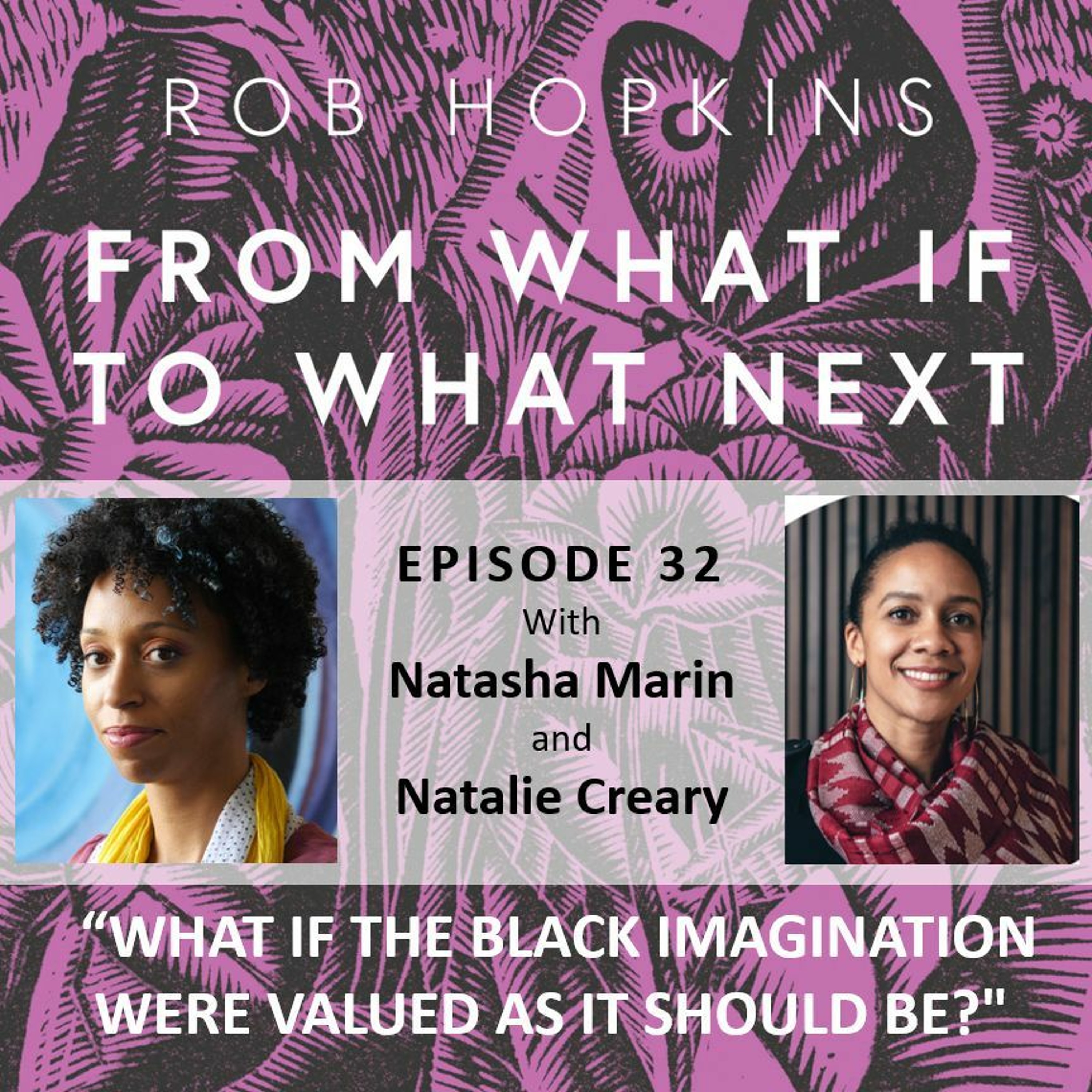
This episode is one of my favourites so far. This week we are exploring the black imagination, with two amazing guests. A little more about your guests: Natasha Marin is an antiracism consultant based in Seattle, specializing in communications, community building, and digital engagement. She is the curator of Black Imagination: Black Voices on Black Futures and a conceptual artist whose people-centered projects have circled the globe since 2012 and have been recognized and widely acknowledged. BLACK IMAGINATION—a series of conceptual exhibitions—amplifying, centering, and holding sacred a diverse sample of voices including LGBTQIA+ black youth, incarcerated black women, black folks with disabilities, unsheltered black folks, and black children was her bravest work thus far. Her viral web-based project, Reparations, engaged a quarter of a million people worldwide in the practice of “leveraging privilege,” and earned Marin, a mother of two, death threats by the dozens. Natalie Creary is the Programme Delivery Director for Black Thrive Lambeth. The cross-sector partnership works to dismantle the structural barriers that create and sustain mental health inequalities for Black African and African-Caribbean communities in Lambeth. She has a long-standing interest in approaches that tackle the root causes of inequality and push conventional boundaries. Her interest lies in working with communities and grassroots organisations to decolonise knowledge and to create opportunities for communities to have ownership of their stories and the solutions they deliver to address the social challenges they may face. Her work and research explore how race, age, class, gender and sexuality intersect to shape the health and wellbeing experiences of Black and mixed race communities. She has also completed postgraduate studies in Health Psychology and lectures on health inequality, quality improvement methodologies and health promotion for Middlesex University’s MSc Public Health. She is also on the editorial board of the Lancet Psychiatry.
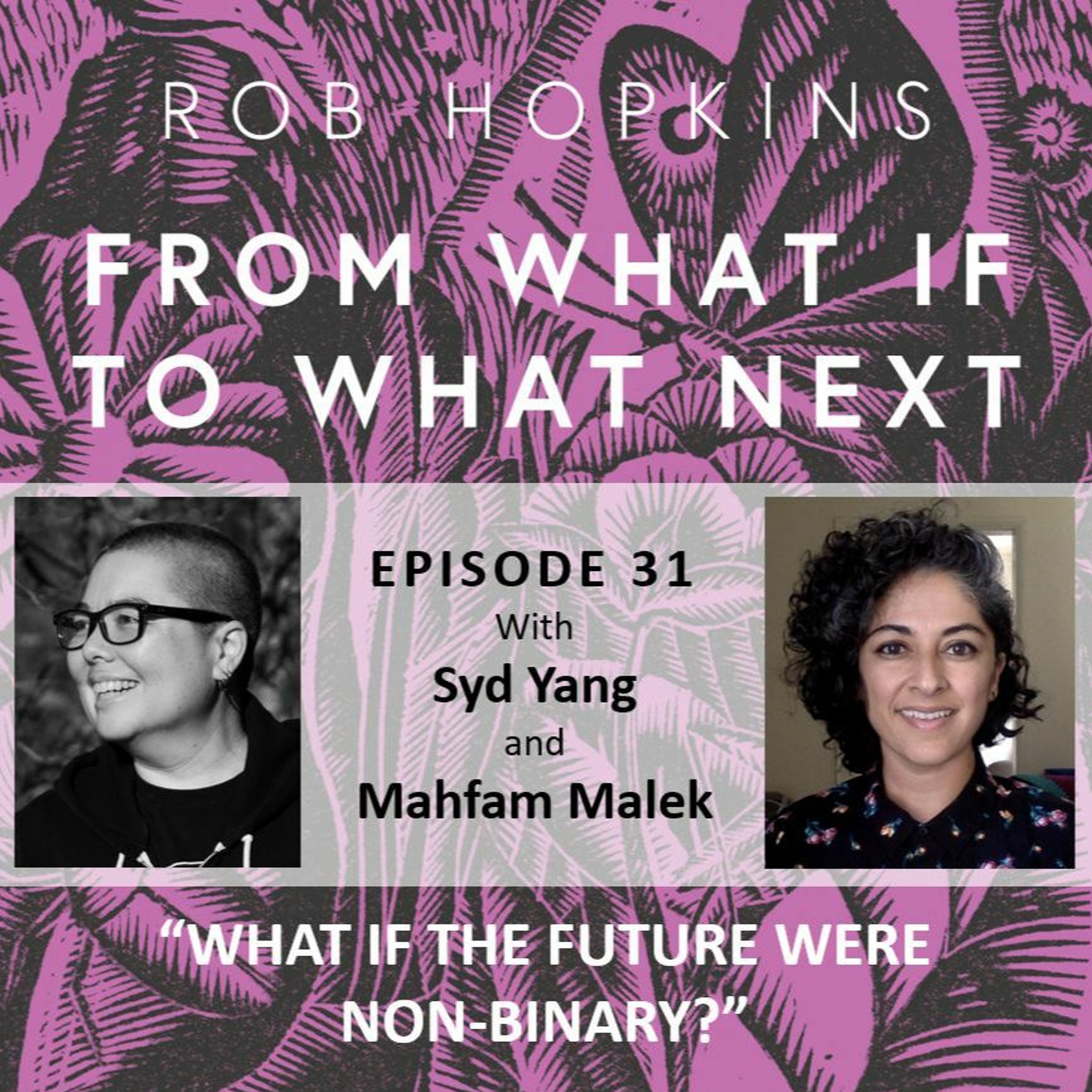
This is such an incredible episode. One of those ones I had to go off and sit under a tree afterwards to absorb. Today we talk about gender. I grew up in a society that thought in terms of two genders, you were male or you were female. This was accompanied by expectations that men behaved in ways that were ‘masculine’, and women in ways seen as being ‘feminine’… If you were someone who didn’t identify as either, or someone who challenged society’s expectations of what being masculine or feminine meant, it was a bleak time. And in many cultures, far bleaker still, indeed very dangerous. Some cultures recognise a ‘third’ gender, but what would it be like if we were to see gender instead as a spectrum, and where you choose to place yourself on that spectrum is up to you, and can change as often as you like? What if society accommodated, supported, nurtured even, such a degree of fluidity? What if everyone could be who they wanted to be, to define themselves however they wanted to, and the kind of abuse so many LGBTQI+ people experience was instead replaced by a culture that valued people wherever they are across the spectrum. What wonders might such an approach unlock in our culture? Syd Yang is the Senior Advisor for Healing Justice and Wellness at Movement Voter Project. Syd's work finds its resonance in the stories we each hold at the intersection of memory, body, sexuality and mental health. Syd works primarily with queer and trans BIPOC individuals as well as regularly leads workshops, community healing circles and has been a group facilitator for over two decades, with a specific focus on grief, healing ancestral trauma, sexuality + spirituality, body liberation and eating disorder recovery. Mahfam Malek has held many roles in justice movements over the years, including facilitator, somatic coach, non-profit staff of many stripes, social justice-oriented stand-up comic, direct-action and cultural organizer, environmental educator, and more. In addition to training, facilitating, and coaching, they write, organize with a group of abolitionist diasporic Iranians, hang out with their dog, and chat on the phone nearly daily about absolutely nothing with their parents. They are also the Training and Operations Director at the Chicago Torture Justice Center. I really hope you find something very special in this discussion. My thanks to Syd and Mahfam, and also to you for supporting what we do here, and Ben Addicott, who so beautifully records, edits, produces and embellishes these podcasts. See you next time.
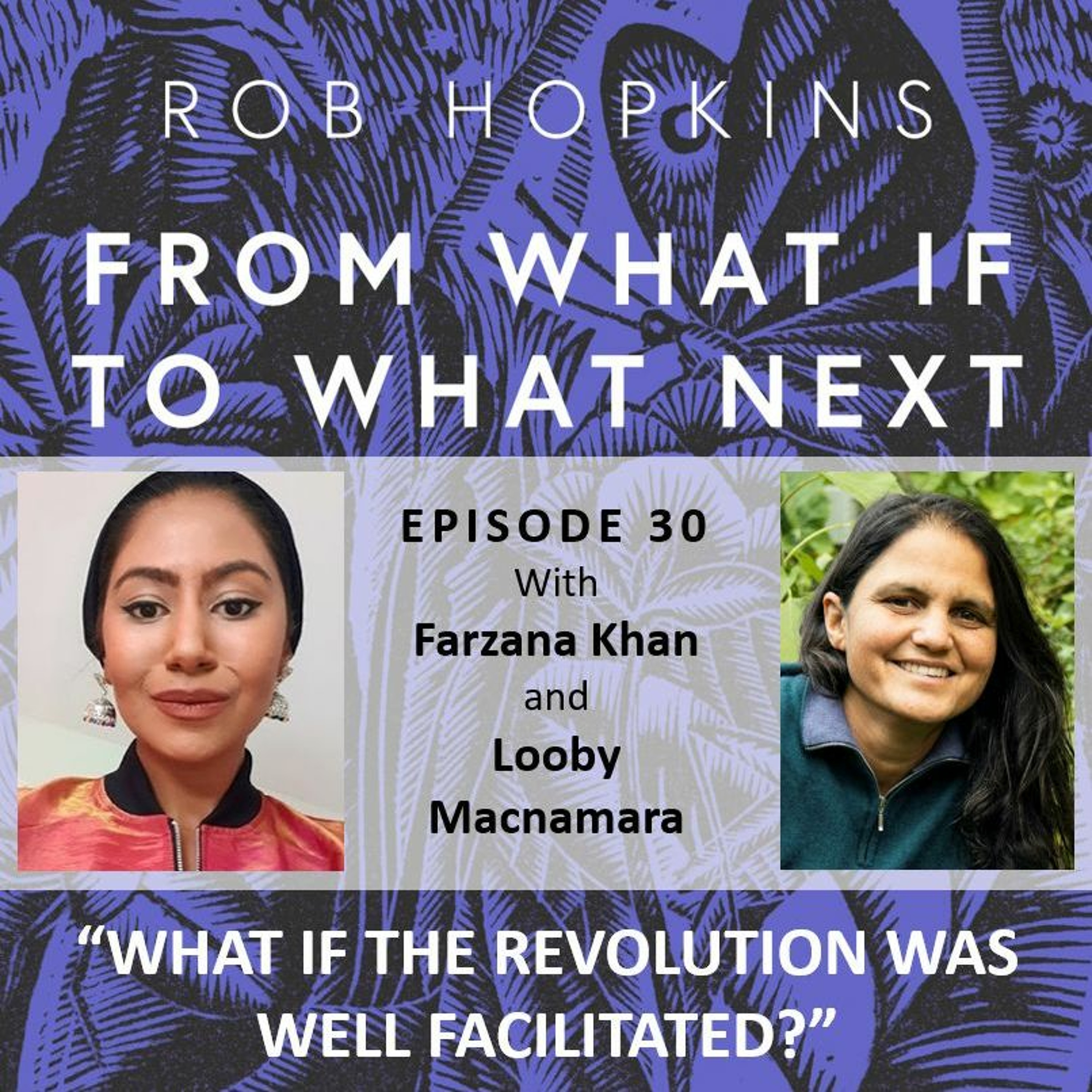
Episode Thirty. Wow. Whoever thought we'd get this far? Thank you so much for your support in making that possible. We have a delicious episode to mark this moment. We are joined today by Farzana Khan and by Looby Macnamara to explore 'What if the revolution was well facilitated?' It's a beautiful exploration of why good facilitation is such an important element of changemaking. We hope you love this, our 30th episode. Bring on the next 30! Farzana Khan is a writer, director, cultural producer and award-winning Arts educator. She is the co-founder and Director of Healing Justice London. She has a background in Youth and Community work particularly focused on artsbased education projects both in the UK and internationally. She was also the former creative and strategic director at Voices that Shake and is currently a Fellow at the International Curatorial Forum. Farzana was recently awarded Writer in Residence at Toynbee Hall, working on ‘All Water Has a Perfect Memory’ a screenplay exploring trauma, poverty, womanhood and bodily dignity amidst gentrified East London and ecologically violent times. Looby Macnamara has been teaching permaculture for nearly 20 years. During this time she has been a pioneer of personal and social permaculture, authoring the first book globally to focus on the peoplecare ethic People & Permaculture. Looby is also author of 7 Ways to Think Differently and Strands of Infinity. Her latest book, Cultural Emergence shares a pioneering toolkit for regeneration and transformation. She runs Applewood Permaculture Centre in the UK with her partner Chris Evans. She is also one of the partners of the European Mother Nature project, empowering mothers. Looby has been an active member of the permaculture community, and was a chairperson of the Permaculture Association and is a senior diploma tutor.
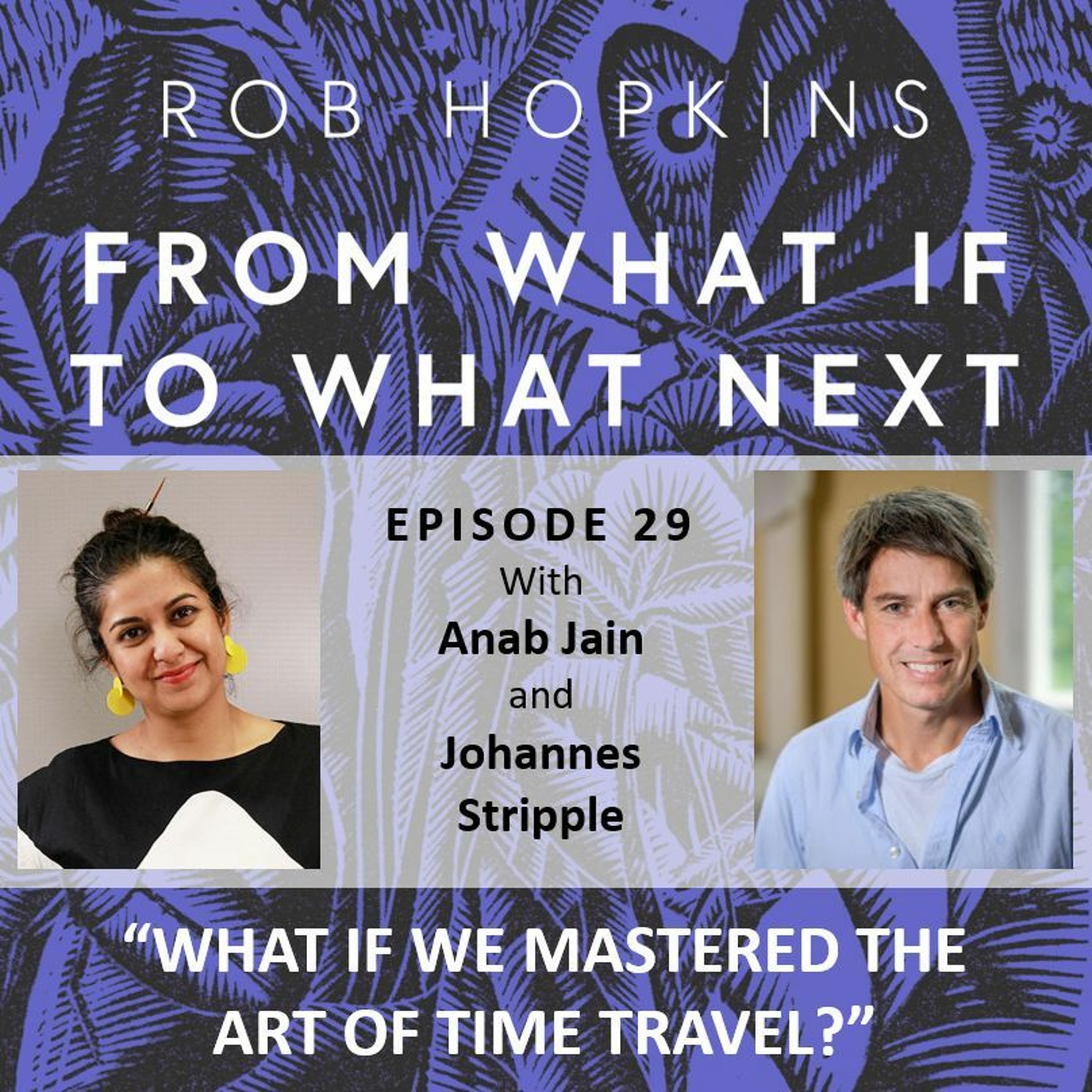
If you had a Time Machine, which year would you set the dial to? This episode is about time travel. More specifically, it is about using imaginary time travel, or futurism, or deep dreaming, or whatever you want to call it, in our activism. Why is it so powerful to invite people to imagine the future? What does it do to us to step into an imaginary future? And what tips of the trade can help us to really bring it alive for people? In this episode we are joined by Anab Jain of Superflux and by Johannes Stripple of Lund University, both fantastic exponents of the art of time travel. Essential listening for anyone who wants to bring a bit of the future into their lives and is wondering the most skilful way to do so. Enjoy the journey! And do let me know what you thought of this episode.

The time for imagining that change happens in small, incremental steps is now way behind us. As Naomi Klein says, "there are no non-radical solutions left". Today we are thinking big. Really big. With big thinkers. While some of our episodes focus on what if questions that are quite specific and focused, in this episode, Episode Twenty-Eight, we are thinking big, so hang on to your hats. Luckily we have two guests for you who are brilliant at thinking big. Atossa Soltani has been a global campaigner for tropical rainforests and indigenous rights, for going on three decades. She is founder and board president of Amazon Watch and served as the organization’s first executive director for eighteen years. Currently she is the director of global strategy for Amazon Sacred Headwaters Initiative working in alliance with 30 indigenous nations to protect 86 million acres in the most biologically diverse ecosystem on Earth. She is the Hillary Institute 2013 Global Laureate for Climate Leadership and is a producer of The Flow, a feature-length documentary currently in production on learning from nature’s genius. Stand by, you're going to love this... Jeremy Lent is an author and speaker whose work investigates the underlying causes of our civilization’s existential crisis, and explores pathways toward a life-affirming future. His award-winning book, The Patterning Instinct: A Cultural History of Humanity’s Search for Meaning, examines the way humans have made meaning from the cosmos from hunter-gatherer times to the present day. His upcoming book, The Web of Meaning: Integrating Science and Traditional Wisdom to Find Our Place in the Universe, will be published in June this year. He is founder of the nonprofit Liology Institute, dedicated to fostering an integrated worldview that could enable humanity to thrive sustainably on the Earth, and he writes topical articles exploring the deeper patterns of political and cultural developments at the blog Patterns of Meaning.

This new episode, one of my favourite so far, comes with a challenge. Can you listen to it and not reimagine your own relationship with flying or, as one of our guests puts it, being "twanged around in an aluminium sausage"? I stopped flying in 2006. I travel to the far reaches of Europe on the train, travelling to Sweden, Denmark, Austria, Italy, Mallorca, as the extent of my reach. I long one day to take the Trans-Siberian express. Yes, there are now places in the world I probably will never reach, but that’s OK. I can honestly say that not flying has not diminished my quality of life at all. I travel slower, I see more. As we reach a time where airlines and travel companies are falling over themselves to tempt you back onto airplanes to head off on holiday, we are taking a pause, a breath, to ask a question that once felt heretical, but which now feels rather exciting… “what if we all stopped flying?” This show features two amazing guests. Anna Hughes is an author and flight-free adventurer, and hasn’t been on a plane for more than a decade. She is the director of Flight Free UK, a campaign that asks people to give up flying for a year in order to break a habit and try different ways of travelling. With a background in sustainable transport campaigning and behaviour change, Anna is passionate about how our individual choices can change the world. Ed Gillespie describes himself as a ‘recovering sustainability consultant’ . He is a Director of Greenpeace UK, a facilitator at the Forward Institute on responsible leadership and is an investor/mentor of numerous ethical environmental start-ups. You may also be enjoying him on the ‘Jon Richardson and the Futurenauts’ podcasts, or even have seen him compering the wonderful Imaginarium tent at the equally wonderful, but sadly postponed, for this year, Shambhala Festival. I hope you really love this episode. If nothing else, you now know what a 'recombobulation zone'. Do let us know what you think...
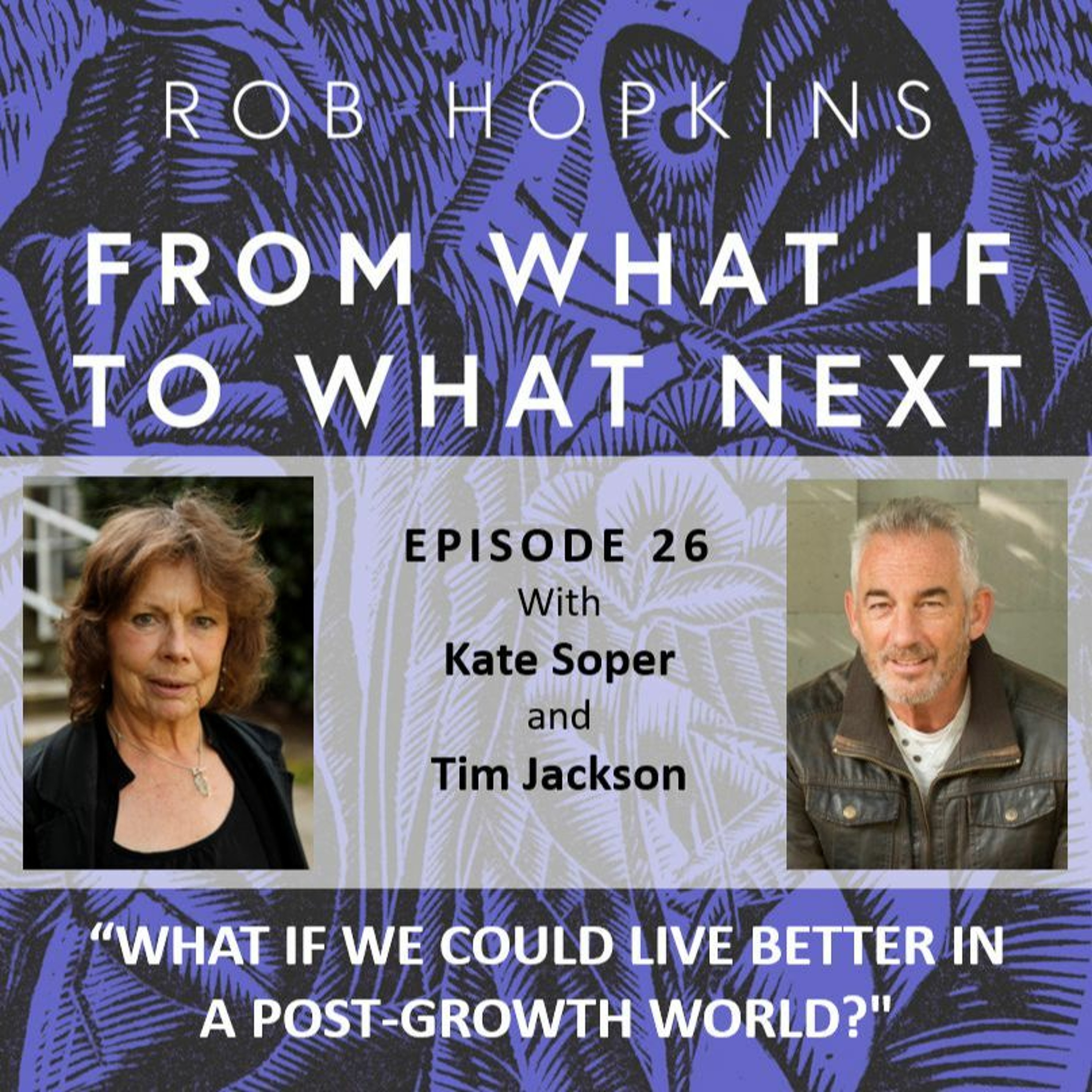
These days of COVID have shown us that extraordinary profound reimagining of many aspects of society are entirely possible. Might this be the time to forever do away with the idea that the only way to measure our progress, cultural, social, spiritual, economic, is purely by how much bigger our economy is than it was last year? It’s a weird metric… imagine if that was the only way we assessed the growth and evolution of our children? Sure, some growth at the start might be useful, but as they mature, we want to be able to measure their growth and their defining qualities in other ways than just their becoming ever more enormous… And what might the world look like if we did replace this idea of growth with something else? We are joined for this episode of 'From What If to What Next' by two amazing guests. Kate Soper is Emerita Professor of Philosophy and a former researcher with the Institute for the Study of European Transformations at London Metropolitan University. She is the author, and co-author, of many books, and was lead researcher in the research project on ‘Alternative Hedonism, and the theory and politics of consumption’ between 2004 and 2006. Her latest book Post-Growth Living: for an Alternative Hedonism was published in 2020. Our second guest is Tim Jackson, is an ecological economist and writer. Since 2016 he has been Director of the Centre for the Understanding of Sustainable Prosperity (CUSP) at the University of Surrey in the UK, where he is also Professor of Sustainable Development. His book Prosperity without Growth has been translated into 17 foreign languages. His latest book Post Growth – life after capitalism was published by Polity Press in 2021. In 2016, Tim was awarded the Hillary Laureate for exceptional international leadership in sustainability. Stand by for a fascinating conversation that will upend your sense of what an economy can be, and how we might measure its progress. Do let me know what you think of this episode. See you next time!

Let’s imagine, and this takes quite a leap in Britain in 2021 I’ll grant you, but stay with me, that we had a government who recognised that we are living through a time of imaginative contraction alongside a climate and ecological emergency, a social justice emergency and so much more. Let’s imagine that they were able to recognise this as the crisis it is, that allowing a population’s imagination to contract is profoundly dangerous. And let us also imagine that they decided that they needed to put in place an infrastructure of policy, resourcing, approaches, economics, and so on, that created the best possible conditions for the imagination to flourish. What might that look like? How would it be to live in a world where that infrastructure was in place? Panthea Lee is a strategist, curator, organizer, and facilitator working for structural justice and collective liberation, and Cassie Robinson. Cassie is Deputy Director of Funding Strategy at The National Lottery Community Fund where she’s responsible for Innovation, Policy and Practice, and oversees the Climate Action Fund, the Digital Fund and the Emerging Futures Fund amongst others (these are very shortened versions of their amazing bios, click the links in their names for more).

In which, with the help of specially-composed music by Ben Addicott and Rosie Issitt, we take a step into the 2030 that could result from our doing everything we could possibly do. Join Kwame Boateng, Suhaiymah Manzoor-Khan, Brian Eno, Scilla Elworthy, Robert Philips, Zach Norris, Andrea J. Ritchie Roman Krznaric, Jane Davidson, Hilary Powell, Dan Edelstyn, Sophie Leguil, Ash Perrin, Ben Tawil, Jane Perrone, Sherri Mitchell (Weh’na Ha’mu’ Kwasset), Josina Calliste, Chris Smaje, Tyson Yunkaporta, Lusi Alderslowe and Matt Willer as they step though time.
