



The No-Rank Zendo Podcast


About
Available on








Community
173 episodes
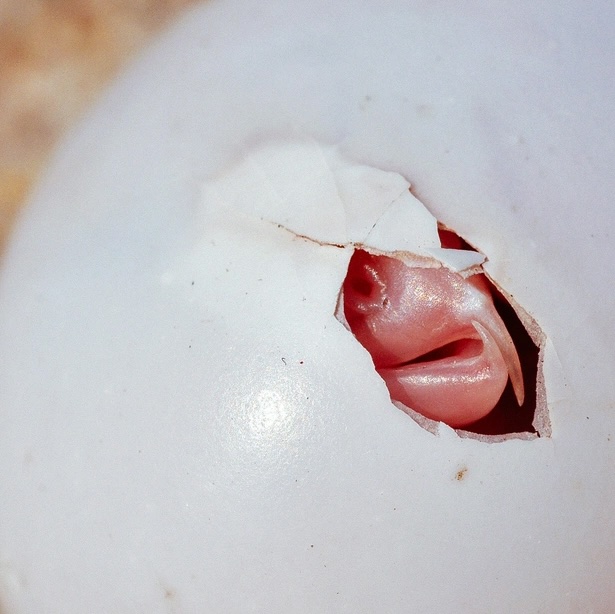
In this Teisho, given on March 3rd, 2024, Rinzan Osho examines case 16 of the Being present and leaning into the direct experience of life is pecking. The whole universe taps back, inviting us to wake up. If we stay vigilant and attentive, in the ripeness of time, the ego barrier will break open.


In this Teisho, given on February 11th, 2024, Rinzan Osho examines case 13 of the Koan introspection invites into a way of being that is always available but that we don't normally access. This way of being opens us up to a more meaningful relationship with the deep nature of things.

In this Teisho, given during No-Rank's Rohatsu sesshin on January 18th, 2024, Rinzan Osho examines case 11 of the Buddhism invites us to know the truth for ourselves. Whatever concepts we have about "truth" only get in the way of the direct experience of something beyond. The role of the so-called "Zen teacher" is not to show what is, but to help clear away the obstructions we have placed in front of ourselves. In this, we are all students to someting that cannot be taught.

In this Teisho, given during No-Rank's Rohatsu sesshin on January 17th, 2024, Rinzan Osho examines case 10 of the Our modern mind has lost much of its capactiy to feel into and relate to the world in ways that are deep and intimate. Koan study allows us to enter a different way of being and relating if only we are willing to step out of the shallows.

In this Teisho, given on January 14th, 2024, Rinzan Osho examines . In this first Teisho given at the new No-Rank Zen Temple, Rinzan Osho examiens the way the judging mindf, caught by right and wrong, like and dislike, limites the full blossoming of our lives.

In this Teisho, given on December 13th, 2023, Rinzan Osho examines . When we look deeply, there is no foundation for our differences. At the same time, as we become intimate with the deep nature of things, we are more and more amazed and appreciative of the profundity of our living, breathing, uniqueness.

In this Teisho, given on November 1st, 2023, Rinzan Osho examines . In the face of impermanence and the passing of our own lives, we are confronted with the imparative to let the light inside us shine forth, to give back to a world awaiting our full participation.

In this teisho, given on October 11th, 2023, Rinzan Osho examines the . When we get caught in notions such as having and not having, we lose the fundamental vitality of life. What is it to live without such concerns, seemingly separating us from ourselves?

In this Teisho, given on September 6th, 2023, Rinzan Osho examines . Self-help, psychotherapy and spiritual practice all help us live happier lives, but how do we distinquigh the spiritual call from the normal pursuits of well-being. Allowing ourselves to die to the moment, when the bus comes, we get on and go.

In this teisho, given on August 23rd, 2023, Rinzan Osho examines the . What is spiritual practice that is deeply intimate with the world as it is? What is it to dance with this very life?

In this Teisho, given on July 5th, 2023, Rinzan Osho examines . In this moment, there is neither birth nor death, so how can there be Nirvana? These are the questions Ziyong asks her disciple as Ziyong lay on her own death bed.
Genjo Marinello Roshi gave this Teisho during the Aug. 12, 2023, Zazenkai at No-Rank Zendo. This talk examines what makes a good teacher of Zen practice. Is it how many peaks you have climbed?
In this teisho, given during Chobo-ji's Summer sesshin on June 28th, 2023, Rinzan Osho examines the . Our life is limited by conceptualizations and opinions. What is it to really see through? What is it to be deeply intimate?
In this teisho, given during Zazenkai on June 10th, 2023, Rinzan Osho examines the . Though we tend to approach the world from an analyitical, rational, and scientific state of mind, this form of knowing and understanding is but like "a single strand of hair held up against the great sky."
In this Teisho, given on June 7th, 2023, Rinzan Osho examines . Opening to grief opens us to love. When the barriers to love are dropped, love can do what it is called to do: be open to and care for the hurting world.
In this teisho, given on May 31st, 2023, Rinzan Osho examines the . The mind wants to have something to hold on to. In the end, with full examination of what is, we find that there is nothing. So we are left with a profound sense of the power of the ineffable.
In this teisho, given on April 12th, 2023, Rinzan Osho examines the second of the four Divine Abidings: Equanimity (upeksa). Each of the Divine Abidings asks us to take responsibility for how we are in the world. With equanimity, we are asked to create space within ourselves to let all things move and pass through niether clinging to nor rejecting anything.
In this teisho, given on April 5th, 2023, Rinzan Osho examines the second of the four Divine Abidings: Sympathetic Joy (mudita). Each of the Divine Abidings asks us to take responsibility for how we are in the world. With sympathetic Joy, we join with the outflowing of the joyfully blossoming universe.
In this teisho, given on March 22nd, 2023, Rinzan Osho examines the second of the four Divine Abidings: Compassion (karuna). Each of the Divine Abidings asks us to take responsibility for how we are in the world. With compassion, we turn our minds toward holding that everything matters, caring deeply for all things, and taking responsibility for it.
In this teisho, given on March 15th, 2023, Rinzan Osho examines the first of the four Divine Abidings: loving kindness (metta). Each of the Divine Abidings asks us to take responsibility for how we are in the world. With loving kindness, we are asked to be warm and tender. Though it may seem that this leaves us exposed and vulnerable, the true nature of this non-conditioned love is that nothing can hurt it, and when we can love in this way, we are truly free. *
In this Teisho, given on March 8th, 2023, Rinzan Osho examines . This teisho explores working with and utilizing koans (case examples). When koans are seen not simply as tools for helping us unpack ourselves but as the very expression of Dharma reality itself, we can dive more fully into the direct experience of koan, becoming intimate, connected and responsive.
In this Teisho, given on March 1st, 2023, Rinzan Osho examines case number eighteen from the Mumonkan: Like a person facing their own death, when confronted with nothingness, the somethingness of life becomes brilliant and profound. Zen practice asks both that we engage the "nothing" and to open to the mysterious "something." We then ourselves into life, taking responsibility for the gift of life, living it freely and fully.
In this Teisho, given on January 11th, 2023, Rinzan Osho examines . When we deeply investigate ourselves, we will find not one, but many inner truths. Beneath those inner truths is a great "emptiness." But even this "emptiness" is not the fundamental truth. When the ocean waves are as true as the ocean depths, we have still to take responsibility for swimming. *
In this Teisho, given on Noivember 9th, 2022, Rinzan Osho continues his examination of the Ten Grave Precepts with Teisho on the Tenth and final Precept: "We will esteem the three treasures, the Buddha, Dharma, and Sangha." Religion and spiritual practice asks us to put something larger than ourselves ahead of ourselves. We can do this by showing respect and reverence toward the treasures of our tradition.
In this Teisho, given on Noivember 2nd, 2022, Rinzan Osho continues his examination of the Ten Grave Precepts with Teisho on the Ninth Precept: "We will keep our mind at peace; we will not be directed by anger." Rather than suppressing anger, which leads to energetic congestion and a spiritual bypass, we must learn to create a realm of peace for it to exist in. We must then seeks its root which, ultimately, can lead to compassionate action.
In this Teisho, given on October 12th, 2022, Rinzan Osho continues his examination of the Ten Grave Precepts with Teisho on the Eighth Precept: “We will be grateful for our lives; we will not covet or be directed by envy or jealousy.” There are many methods for cultivating a more grateful heart-mind, and all are good. However, it is when we learn how to dip into the deep and unconditional “This” that the most reliable gratitude opens up.
In this Teisho, given on October 5th, 2022, Rinzan Osho continues his examination of the Ten Grave Precepts with Teisho on the Seventh Precept: "We will be humble; We will not exalt ourselves or judge others." Humility is the practice of seeing that we are all interconnected and that everyone, given their particular circumstances, is doing their best, even as we each need to take responsibility for doing better.
In this Teisho, given on September 21st, 2022, Rinzan Osho continues his examination of the Ten Grave Precepts with Teisho on the Sixth Precept: "We will remember that silence is precious; we will not gossip or engage in frivolous conversation." Our speech can promote peace or cause harm. In taking responsibility for our speech, we take responsibility for our way of being in the world.
In this Teisho, given on September 7th, 2022, Rinzan Osho continues his examination of the Ten Grave Precepts with Teisho on the Fifth Precept: "We will exercise proper care of our body and mind; we will not be gluttonous or abuse intoxicants." It is essential, in taking responsibility for our lives, that we consider why it is that we use substances. Though it may seem that we use them to turn towards a certain experience, we can also see that it turns us away. True intimacy and freedom come from learning the pathways to the full landscape of our being, relying on nothing to get us there.
In this Teisho, given on December 6th, 2022 at Chobo-ji's Rohatsu Sesshin, Rinzan Osho examines case number seven from the Mumonkan: As spiritual practice asks that we set aside our preferences and ideals, it opens us to a shimmering reality that is asking us to care for it. The rigors of long retreat make us ripe for this actualization. *
