



Who Arted: Weekly Art History for All Ages


About
Available on








Community
451 episodes
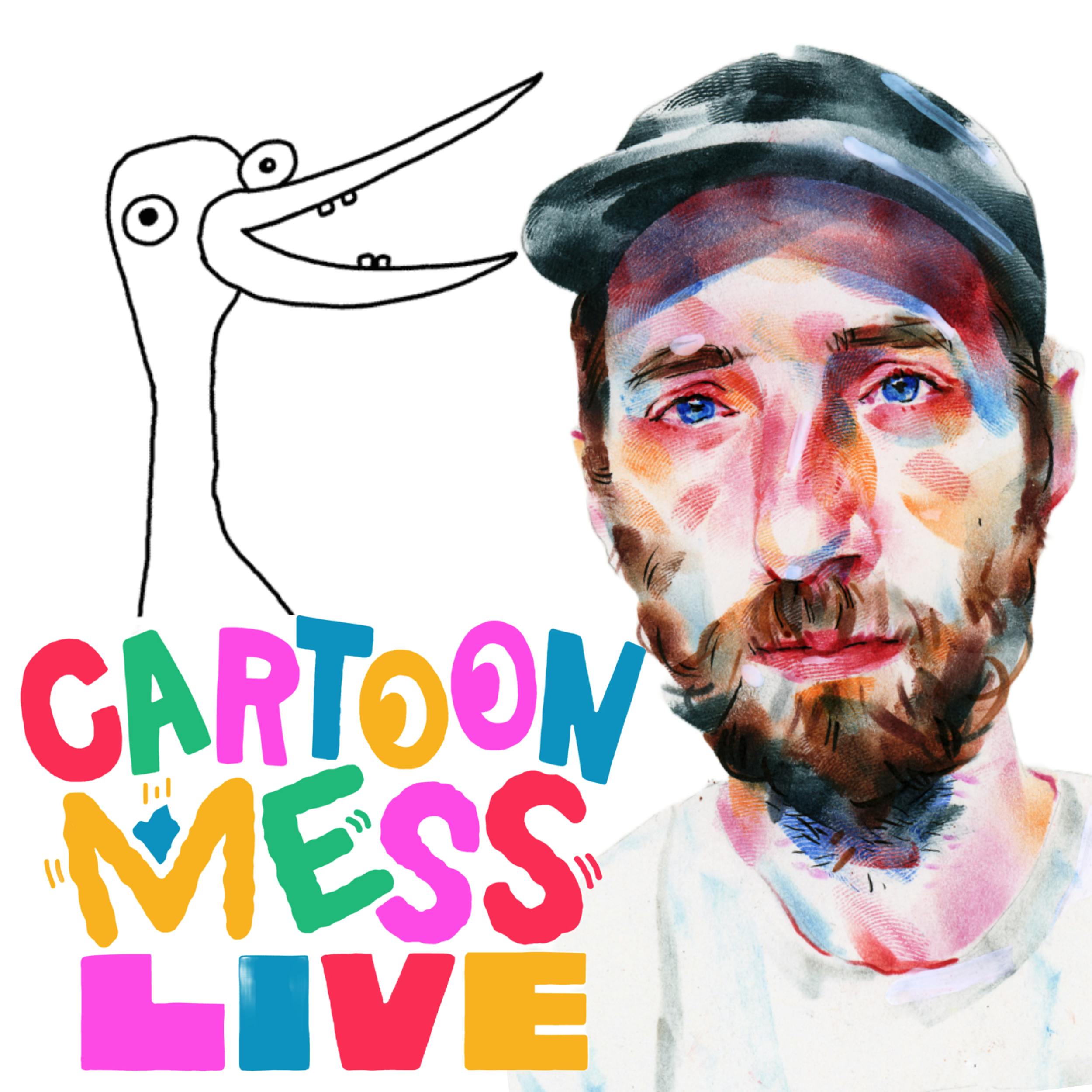
Today I have another artist interview. I have been a big fan of Tom DesLongchamp since I first encountered his drawings while I was researching an episode of my other podcast Art Smart. In addition to mind blowing marker drawings, Tom creates live animation performances on Cartoon Mess. I talked with him about his life, his influences and his process. Check out Tom's links: Website https://www.tomdeslongchamp.com/ Instagram https://www.instagram.com/tomthinks/ Twitch https://www.twitch.tv/tomthinks Youtube https://www.youtube.com/@thismystery https://www.youtube.com/@CartoonMessLIVE Related episodes: Art Smart | Markers Who ARTed | Interview with Herb Williams Who ARTed episode talking about Tom's marker drawing Arts Madness 2024 links: The Brackets Spotify Playlist Vote in the Current Round Check out my other podcasts Art Smart | Rainbow Puppy Science Lab Who ARTed is an Airwave Media Podcast. If you are interested in advertising on this or any other Airwave Media show, email: advertising@airwavemedia.com Learn more about your ad choices. Visit megaphone.fm/adchoices

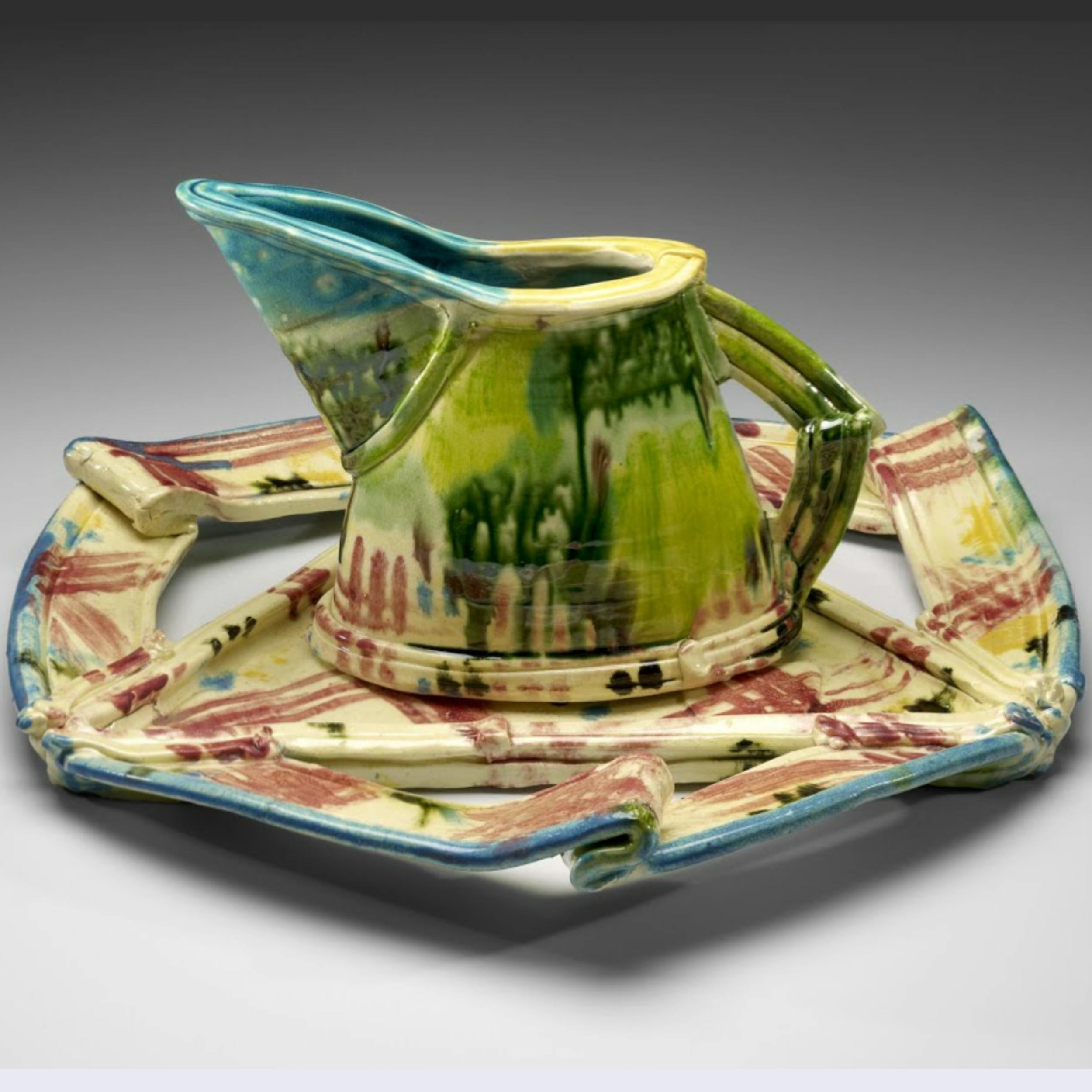
Betty Woodman was an artist who started as a conventional potter but through her career began making creative connections that elevated the form. She built off traditional plates, bowls, vases etc. adding bold colors, and twisting the forms into something that was more about the artist's creative vision than a functional object. Betty Woodman expanded people's notions of what ceramics could be. Arts Madness 2024 links: The Brackets Spotify Playlist Vote in the Current Round As I mentioned in the intro for this episode, I have been thrilled to begin writing articles for The Art of Education University's magazine. Check out my article with some tips and tricks as well as ceramic lesson ideas when it is published on the AOEU website Monday, April 1. Check out my other podcasts Art Smart | Rainbow Puppy Science Lab Who ARTed is an Airwave Media Podcast. If you are interested in advertising on this or any other Airwave Media show, email: advertising@airwavemedia.com Learn more about your ad choices. Visit megaphone.fm/adchoices
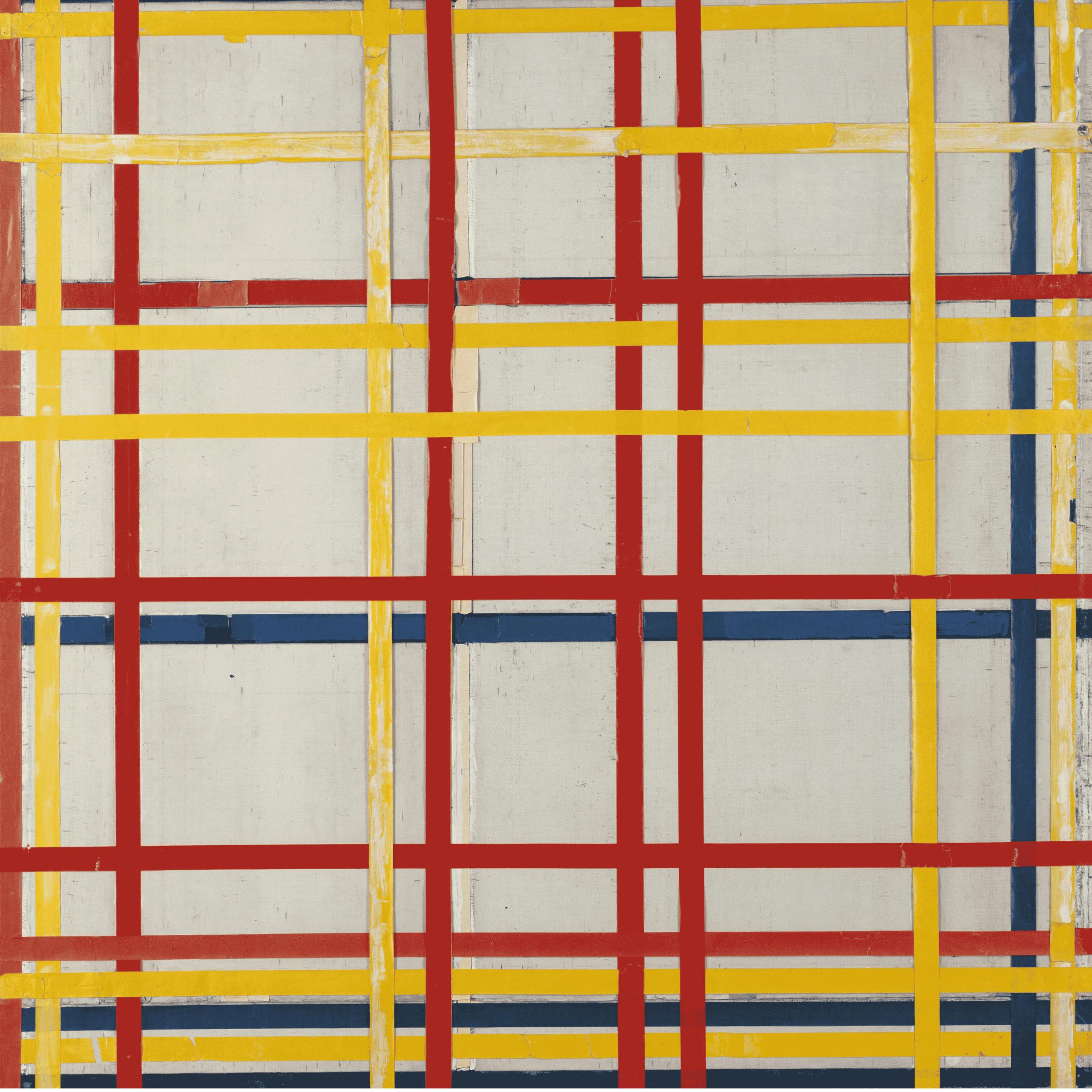
Piet Mondrian is considered an icon of modern art, but he didn't start off that way. While he always loved art, he got his degree in education. Mondrian's early paintings were somewhat traditional landscapes. He experimented with Impressionist and Post Impressionist styles, then moved on to some Cubist influence. His major breakthrough was with the De Stijl movement focusing on the basic elements of art using straight lines and primary colored rectangles. Mondrian was one of the most prominent theorists of the group as he developed a style he referred to as Neoplasticism. While I have covered Mondrian previously, I wanted to release this episode today to celebrate the publication of my first article for The Art of Education University. Check out my article in their magazine over at www.theartofeducation.edu Arts Madness 2024 links: The Brackets Spotify Playlist Prediction Form Vote in the Current Round Check out my other podcasts Art Smart | Rainbow Puppy Science Lab Who ARTed is an Airwave Media Podcast. If you are interested in advertising on this or any other Airwave Media show, email: advertising@airwavemedia.com Learn more about your ad choices. Visit megaphone.fm/adchoices

In this episode of Who ARTed: Weekly Art History for All Ages, we delve into the captivating world of The Forbidden City, a monumental complex in Beijing, China, steeped in history and artistry. We explore the architectural marvels that define its majestic presence, from the sprawling palace compounds of the outer court, reserved for state affairs and accessible only to men, to the intimate domestic spaces of the inner court, dedicated to the imperial family. The Forbidden City is one of the works required for AP Art History. To learn more about works from the AP Art History list, check out my Spotify playlist, AP Art History Cram Session Arts Madness 2024 links: The Brackets Spotify Playlist Prediction Form Vote in the Current Round Check out my other podcasts Art Smart | Rainbow Puppy Science Lab Who ARTed is an Airwave Media Podcast. If you are interested in advertising on this or any other Airwave Media show, email: advertising@airwavemedia.com Learn more about your ad choices. Visit megaphone.fm/adchoices
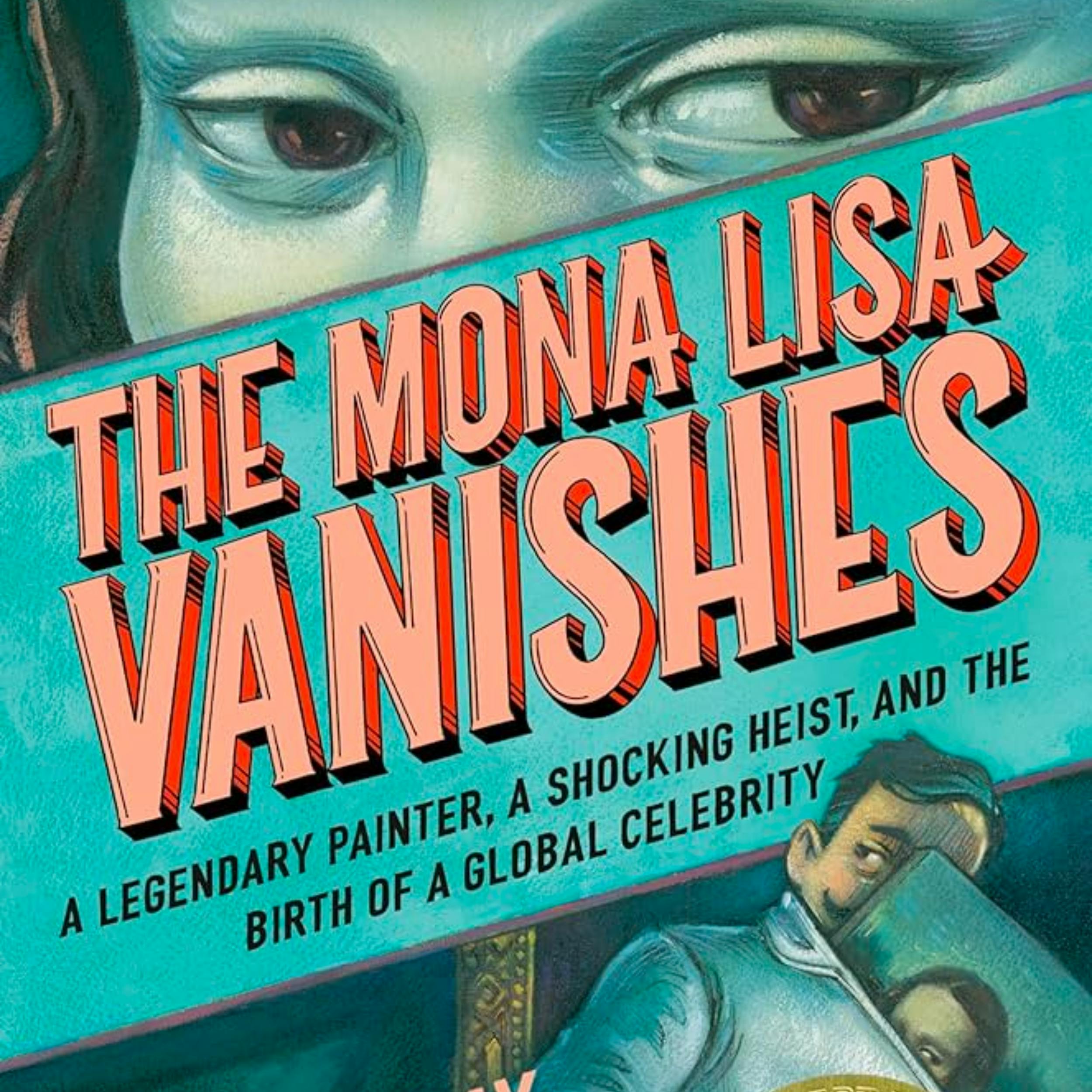
In what many would consider a major upset last week, Leonardo da Vinci was knocked out of our Arts Madness Tournament. I love the stories surrounding Leonardo and his work, so I thought this would be a perfect time for an encore presentation of my interview with Nicholas Day, author of The Mona Lisa Vanishes Order The Mona Lisa Vanishes on Amazon: https://www.amazon.com/Mona-Lisa-Vanishes-Legendary-Celebrity/dp/0593643844 Lisa Gherardini was not born to fame and fortune. In fact, her family had fallen on hard times as wars laid waste to their land. She was an unlikely subject for a prominent artist. Leonardo da Vinci was a second-class member of his family. He was acknowledged by his father but barred from the family trade and left to make his own way in the world. He was smart and talented but bounced around pursuing interests in science and engineering as well as the arts. He was notorious for trying the patience of his patrons taking excruciatingly long to complete a job if he finished it at all. He was an unlikely candidate to become a prominent artist. Vincenzo Peruggia was a humble tradesman. He had worked at the Louvre putting artworks behind glass in an effort to protect them. He actually built the box to protect The Mona Lisa. He was an unlikely culprit for the greatest art heist of all time. The crime was investigated by the greatest detectives of the day, but nobody could imagine the man with a postcard of the Mona Lisa on his mantle had the real thing tucked away in his humble apartment for two years. This week we’re talking about the highly improbable people and events that turned a lovely Renaissance portrait into the most famous painting in the world. Arts Madness 2024 links: The Brackets Spotify Playlist Prediction Form Vote in the Current Round Check out my other podcasts Art Smart | Rainbow Puppy Science Lab Who ARTed is an Airwave Media Podcast. If you are interested in advertising on this or any other Airwave Media show, email: advertising@airwavemedia.com Learn more about your ad choices. Visit megaphone.fm/adchoices
This week we are wrapping up Round 3 of Arts Madness 2024. The matches are very close. Last week, Emily Kame Kngwarreye beat Keith Haring by a single vote. This week, one of the most famous artists of all time is on track to be eliminated. Be sure to check the links below to see the brackets and vote for your favorites. I also wanted to share something for a little fun fact Friday. As many long time listeners know, I love a good caper or con (see the linked episodes below). I recently learned that as a young adult, Michelangelo, the famous Renaissance artist, engaged in some forgery. Art Capers, Cons and Heists: Han van Meegeren Wolfgang Beltracchi Nat Tate Take the Money and Run The Stockholm Heist The Isabella Stewart Gardner Museum Heist The Mona Lisa Vanishes The Eiffel Tower Sold for Scrap Arts Madness 2024 links: The Brackets Spotify Playlist Prediction Form Vote in the Current Round Check out my other podcasts Art Smart | Rainbow Puppy Science Lab Who ARTed is an Airwave Media Podcast. If you are interested in advertising on this or any other Airwave Media show, email: advertising@airwavemedia.com Learn more about your ad choices. Visit megaphone.fm/adchoices
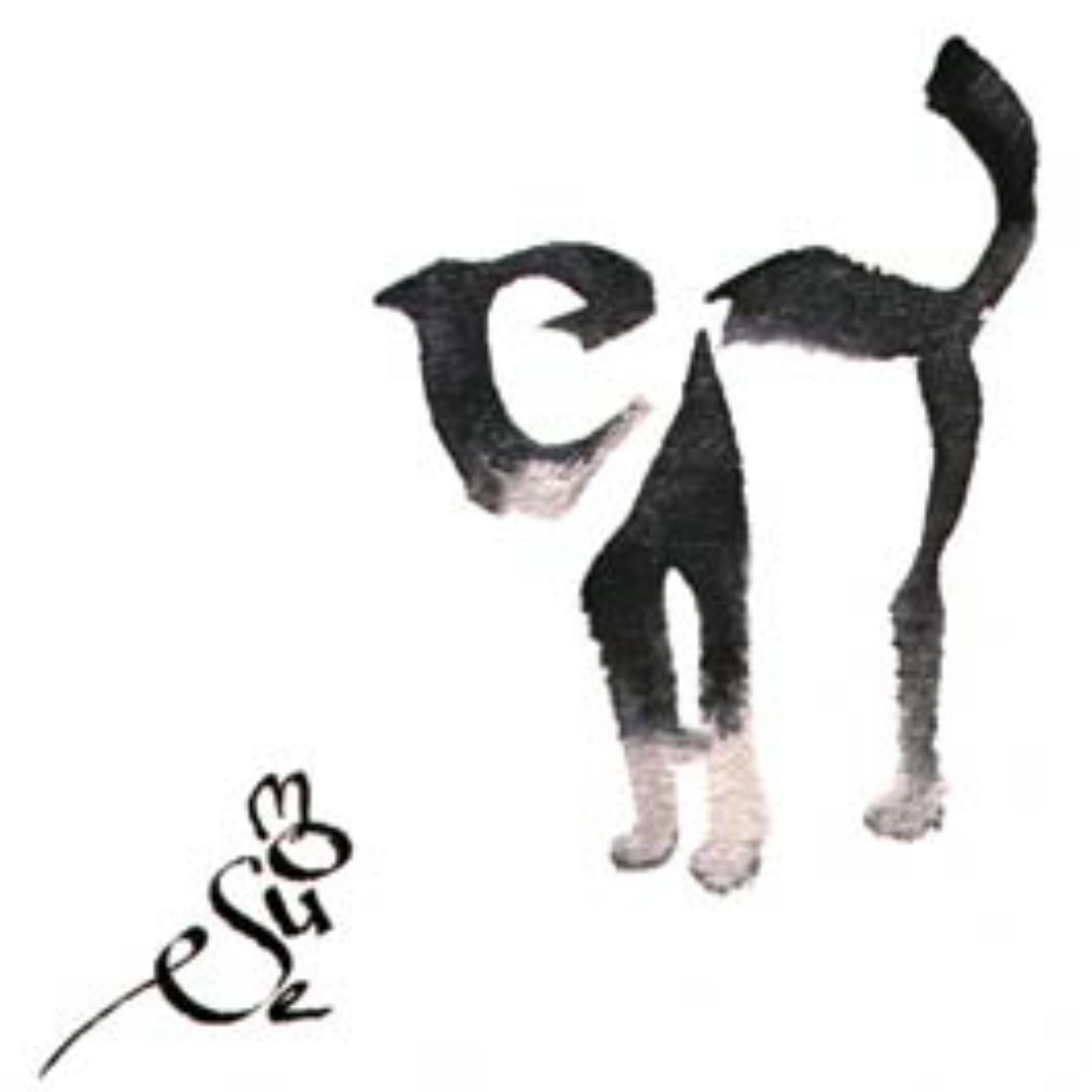
This week I interviewed Margaret Shepherd, a calligraphy artist and author. She has written several books, but her latest is Learning American Calligraphy. As she explains in the interview, calligraphy is an art form with a rich history all around the world. Check these links for more information: Margaret Shepherd's website Learn American Calligraphy book for sale on Amazon Arts Madness 2024 links: The Brackets Spotify Playlist Prediction Form Vote in the Current Round Check out my other podcasts Art Smart | Rainbow Puppy Science Lab Who ARTed is an Airwave Media Podcast. If you are interested in advertising on this or any other Airwave Media show, email: advertising@airwavemedia.com Learn more about your ad choices. Visit megaphone.fm/adchoices
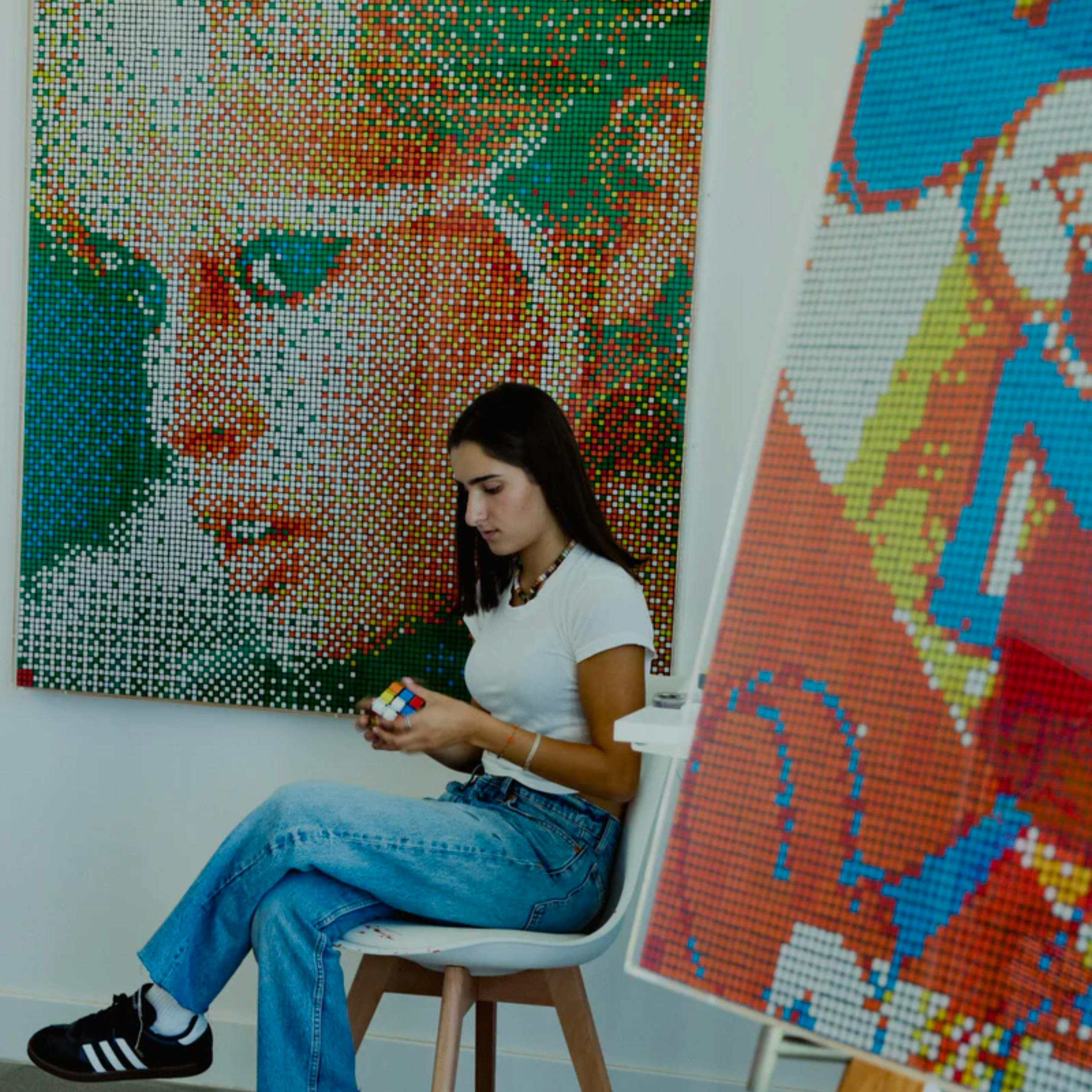
The Rubik's Cube is a fun puzzle toy, but some have begun looking at it as a medium to create pixelated masterpieces. Learn a little bit about Erno Rubik, his cube, and a young artist using it in a way Rubik never anticipated. Daniella Chaim is a teenager making sophisticated works by solving and meticulously arranging hundreds of Rubik's Cubes. See her work on Instagram The math to figure out how many possible permutations there are on a Rubik's Cube: (1/2) * (8! x 3⁷) * (12! x 2¹¹) = 43,252,003,274,489,856,000 Arts Madness 2024 links: The Brackets Spotify Playlist Prediction Form Vote in the Current Round Check out my other podcasts Art Smart | Rainbow Puppy Science Lab Who ARTed is an Airwave Media Podcast. If you are interested in advertising on this or any other Airwave Media show, email: advertising@airwavemedia.com Learn more about your ad choices. Visit megaphone.fm/adchoices
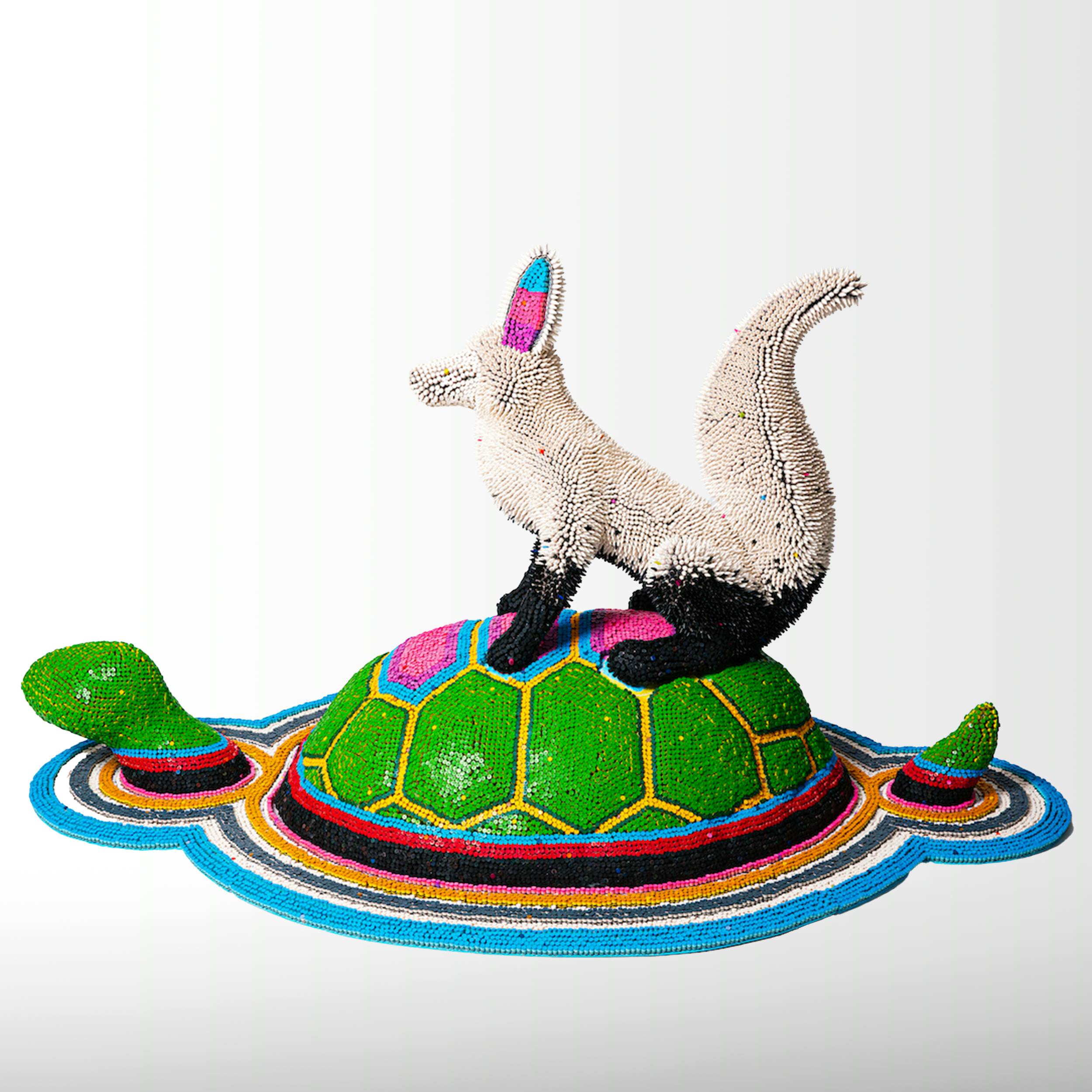
Herb Williams is an incredibly talented sculptor bringing crayons to a whole new dimension. I sat down to talk to Williams about his background, his artistic influences, and exactly how and why he uses crayons to sculpt. He shared his memories of making art as a child as well as his experience working in a foundry making lost wax castings before he decided to pursue a literal dream of making sculptures out of crayons. If the name Herb Williams sounds familiar, you may recall I talked about him in my crayon episode of Art Smart. I mentioned that I am writing an article for The Art of Education University's magazine about Williams, Stark and DesLongchamp (probably to be released late March or possibly in April). In the meantime, if you want to learn more about Stark or DesLongchamp, check out my Art Smart episodes about paper and markers respectively. I also did an episode of Who ARTed about Tom DesLongchamp back in December of 2023. For more from Herb Williams, check out his website and follow him on Instagram @herbwilliamsart Arts Madness 2024 links: The Brackets Spotify Playlist Vote in the Current Round Check out my other podcasts Art Smart | Rainbow Puppy Science Lab Who ARTed is an Airwave Media Podcast. If you are interested in advertising on this or any other Airwave Media show, email: advertising@airwavemedia.com Learn more about your ad choices. Visit megaphone.fm/adchoices
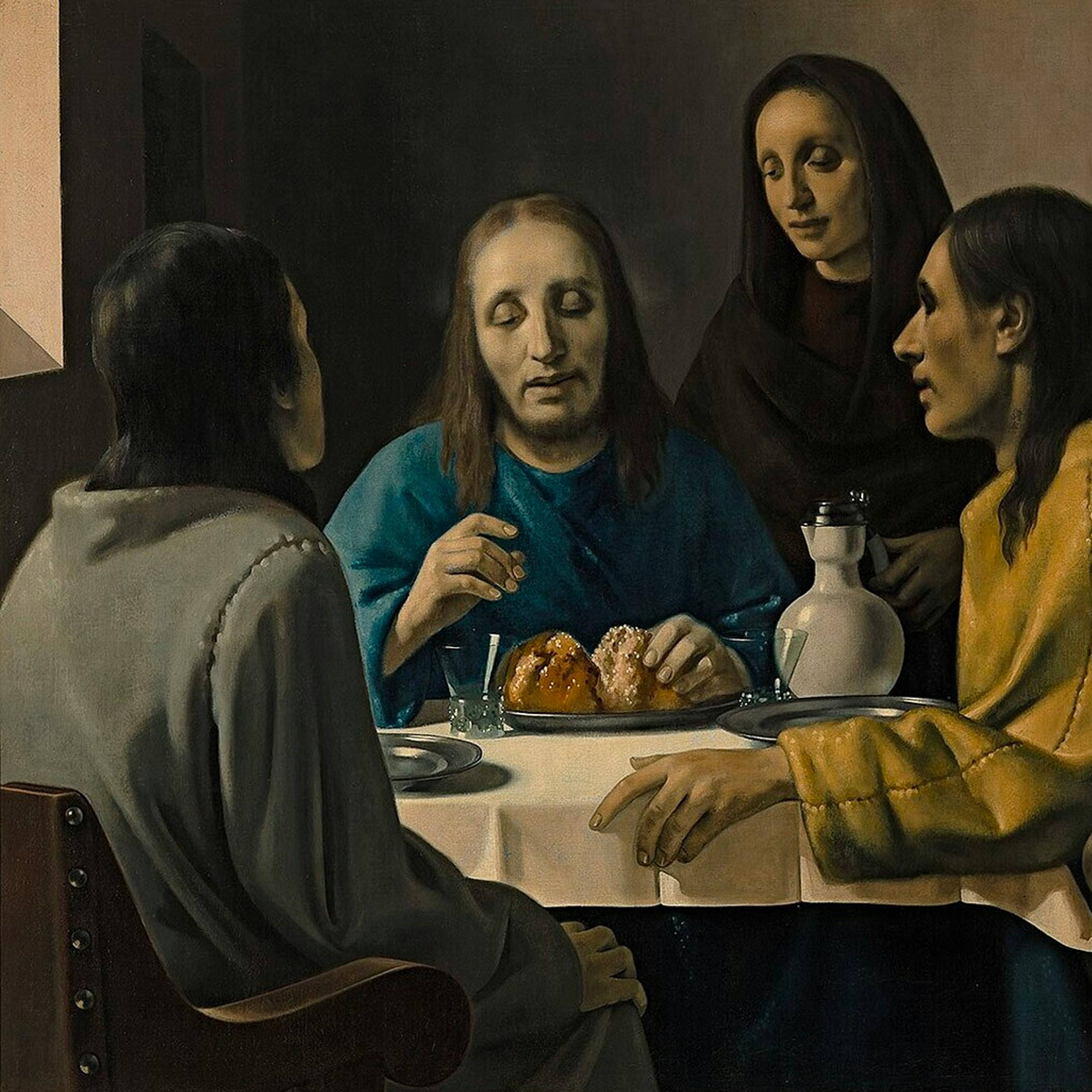
The late 1930s were a rough time in Europe. Nazis were on the rise, and museums began hiding their most treasured works or even shipping them off to safe locations. As all of these works were floating around in the art world and many pieces being hidden, Hans van Meegeren emerged as an art dealer with some lost Vermeers. As I explained in the previous episode about the Vermeer stolen from the Isabella Steward Gardner museum, there aren’t a lot of Vermeer paintings and much of his biography is unknown. There are some historians who believe Vermeer studied under an artist who was heavily influenced by Caravaggio. Van Meegeren was celebrated for bringing the world the gift of these lost Caravaggio influenced Vermeer paintings. The critics loved the paintings and they loved Van Meegeren for discovering these lost works. He sold them for huge amounts and over just a few years amassed a fortune of about $30 million in today’s money. The thing is Van Meegeren would sell to anyone with money, including the Nazis. Hermann Goering, Hitler's vice chancellor was an art lover. He particularly loved the Vermeer painting he got from Van Meegeren. In the 1940s, the allies came knocking to ask why Han van Meegeren was doing business with the Nazis. Now whatever they expected to hear as his response, I guarantee they were surprised. Van Meegeren declared that he deserved to be treated as a hero for his dealings with the Nazis because all of the works he sold them were fakes. He claimed that by selling and trading these forgeries he was able to get 137 authentic Dutch masterpieces from the Nazis. It was an interesting defense, that he was not a war criminal but simply forger. It would be hard for anyone to feel sympathy for the victims of this crime but most found it too hard to believe. Check out the article 6 Seedy Parts of the Art World Art Educators Love to Teach Arts Madness 2024 links: The Brackets Spotify Playlist Prediction Form Vote in the Current Round Check out my other podcasts Art Smart | Rainbow Puppy Science Lab Who ARTed is an Airwave Media Podcast. If you are interested in advertising on this or any other Airwave Media show, email: advertising@airwavemedia.com Learn more about your ad choices. Visit megaphone.fm/adchoices

Keith Haring is one of my absolute favorite artists because he was earnest and direct in his paintings. In his works, he would reduce complicated messages to clear and catchy slogans. He used bright colors and dancing figures to make art that was fun but also sought to make the world a better place. In 1978, Haring moved to New York City to attend the School of Visual Arts, where he studied painting along with semiotics. He also experimented with video and performance. Focus on performance made him more conscious of movement in his painting. He said he moved to NY because he wanted intensity in his life and in his art. He was inspired by hip-hop and the club scene where all kinds of people would come together to dance and have a good time. At his gallery openings, he would often have a DJ bringing the energy and movement to a venue not typically known for that vibe, and even after his work sold in prestigious galleries around the world, he continued to make chalk drawings on subway platforms and selling affordable prints in the Pop Shop because he firmly believed that art is for everybody. My guest this week is Tim Bogatz host of Art Ed Radio from The Art of Education University. Here are his links: Art Ed Radio: https://theartofeducation.edu/podcasts/behind-the-scenes-of-the-art-room-makeover-ep-399/ The Art of Education University: https://theartofeducation.edu/ AOEU Youtube: https://www.youtube.com/playlist?list=PLjHIXlDbceMVJwfuHLJ0QISPKtSJO_ACZ Related episodes: Felix Gonzalez-Torres Klaus Nomi Arts Madness 2024 links: The Brackets Spotify Playlist Prediction Form Vote in the Current Round Check out my other podcasts Art Smart | Rainbow Puppy Science Lab Who ARTed is an Airwave Media Podcast. If you are interested in advertising on this or any other Airwave Media show, email: advertising@airwavemedia.com Learn more about your ad choices. Visit megaphone.fm/adchoices
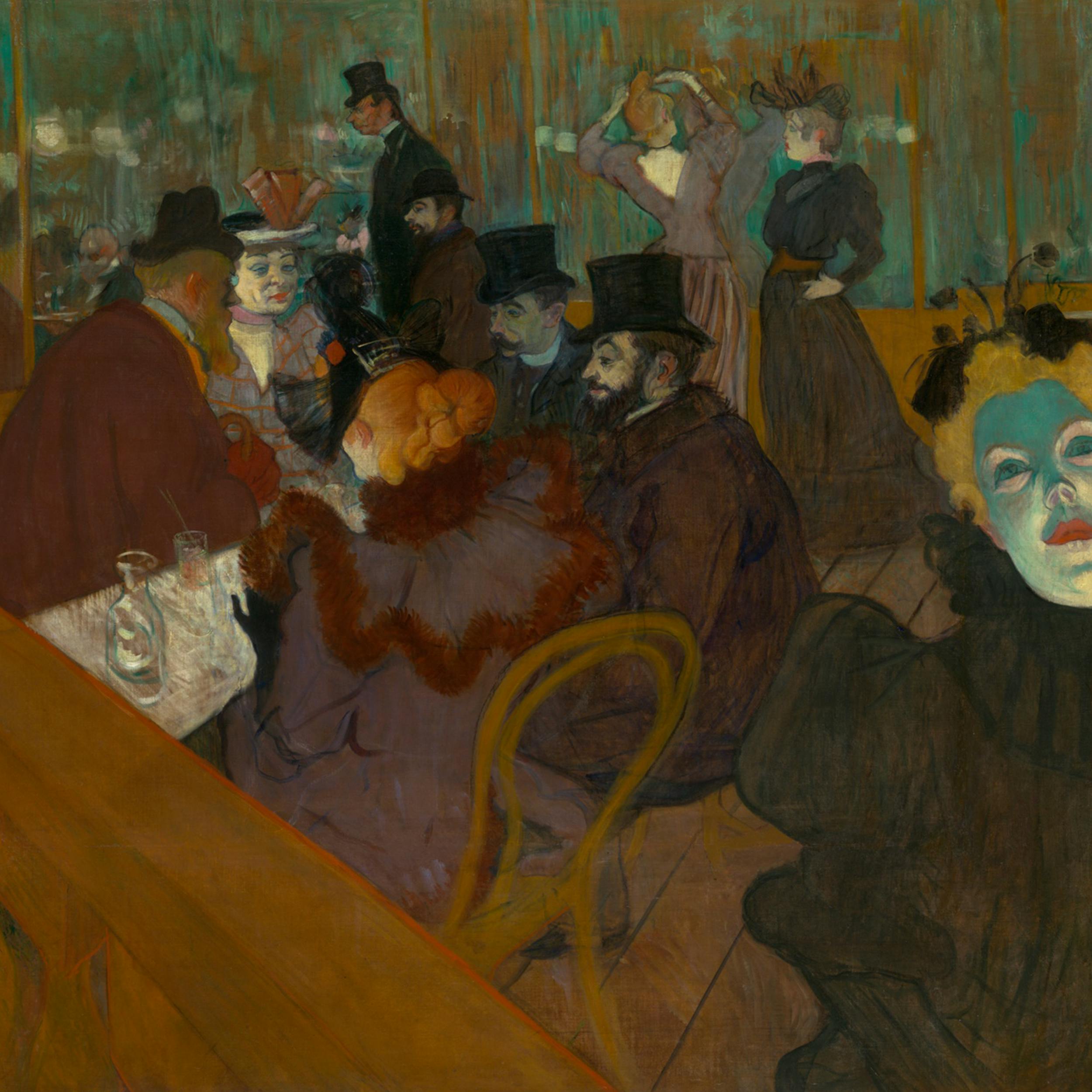
Henri de Toulouse Lautrec was associated with the Moulin Rouge since it first opened in 1891. He was captivated by the unique spirit of the club where people of all walks of life would mingle and enjoy the festivities. Of course it probably also helped that the nightclub’s owner bought Lautrec’s Equestrian painting to hang in the foyer. That painting was one of Lautrec’s many works depicting the circus with an active and exciting composition showing the performers in action. It seems fitting for the Moulin Rouge which was known for it’s active performances and circus like atmosphere. In addition to being the birthplace of the high energy can can dance, The Moulin Rouge boasted some other wild innovations including building a dance floor for patrons to enjoy dancing along as the spirit moved them, and there was even an elephant on the premises in the garden. Arts Madness 2024 links: The Brackets Spotify Playlist Prediction Form Vote in the Current Round Check out my other podcasts Art Smart | Rainbow Puppy Science Lab Who ARTed is an Airwave Media Podcast. If you are interested in advertising on this or any other Airwave Media show, email: advertising@airwavemedia.com Learn more about your ad choices. Visit megaphone.fm/adchoices

The Eiffel Tower was by far the largest structure built for the 1889 World’s Fair in Paris. Eiffel was an entrepreneur and he had two engineers working with him to plan the iron tower, but not everyone was on board with the design. Audiences today may be surprised to hear that many Parisians thought the design was an eyesore and a blight on their beautiful city. The architect Stephen Sauvestre was commissioned to work on the design to make it less ugly. He drafted arches, glass-walled halls on every level, stonework around the base, and other ornamental details throughout the structure. Ultimately they stripped it down to a more utilitarian structure but they kept his idea of arches at the base. The form of the tower is largely determined by the engineers' calculations to cut down on wind resistance. The primary resistance came from writers and artists who criticized the tower throughout its construction. I think my favorite description came from Francois Coppee who called it “this mast of iron gymnasium apparatus, incomplete, confused and deformed.” Of course, this criticism faded as the world’s fair began and the tower was a huge hit. Over 2 million visitors came to marvel at it. While it did prove successful, the Eiffel tower was not intended to be a permanent fixture in the city. It was built to wow visitors in the fair and then to be torn down later. Eiffel only had a permit to have the structure stand for 20 years. The idea that the tower would be temporary provided an interesting opportunity for another sort of creative visionary. A truly remarkable con artist named Victor Lustig sold the tower for scrap… two times. Arts Madness 2024 links: The Brackets Spotify Playlist Prediction Form Vote in the Current Round Check out my other podcasts Art Smart | Rainbow Puppy Science Lab Who ARTed is an Airwave Media Podcast. If you are interested in advertising on this or any other Airwave Media show, email: advertising@airwavemedia.com Learn more about your ad choices. Visit megaphone.fm/adchoices
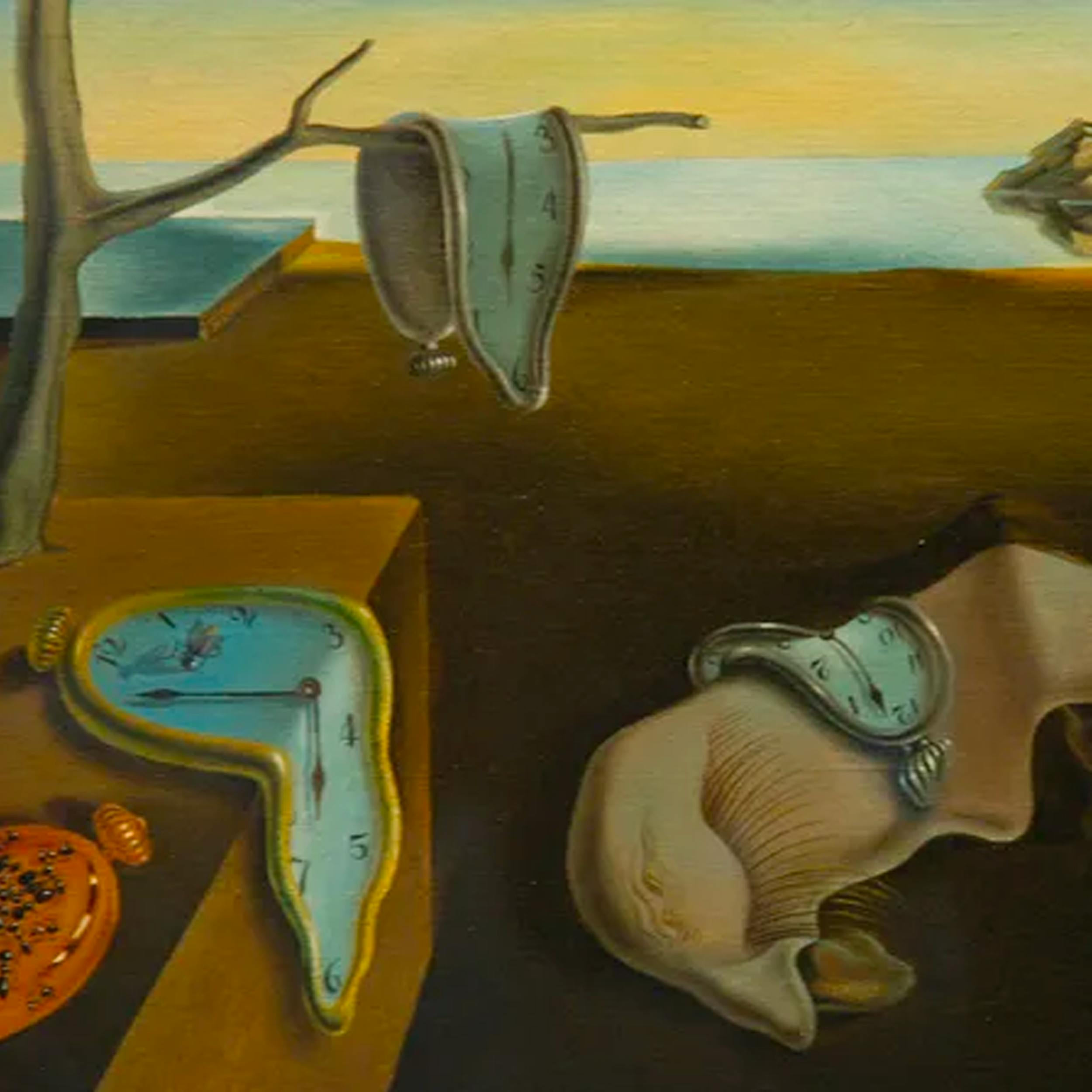
Salvador Dali's most famous painting is The Persistence of Memory from 1931. The painting is surprisingly small just 9 ½ by 13 inches or slightly larger than the average sheet of paper. It is one of the most widely recognized and referenced images of the surrealist movement. For those who don’t know it by name, you will likely recognize the description of clocks melting in the desert. The melting of clocks much like the ambiguous figure in the middle of the composition references a metamorphosis. Things are in a state of flux. Ants crawl all over the clocks like fruit left to rot on the ground. Dali referred to this work describing time as a soft cheese and yet with all of the absurdity, there are realistic elements drawn from the landscape of his home in Spain. There is an unsettling mix of the real and absurd which served as a device surrealist artists would use to call into question the rational world and whether things truly are as hard and fast as we might at first perceive them to be. The clocks melt because even time, like all things, is relative and malleable. Other episodes to check out: Art Smart - Surrealism Arts Madness 2024 links: The Brackets Spotify Playlist Prediction Form Vote in the Current Round Check out my other podcasts Art Smart | Rainbow Puppy Science Lab Who ARTed is an Airwave Media Podcast. If you are interested in advertising on this or any other Airwave Media show, email: advertising@airwavemedia.com Learn more about your ad choices. Visit megaphone.fm/adchoices
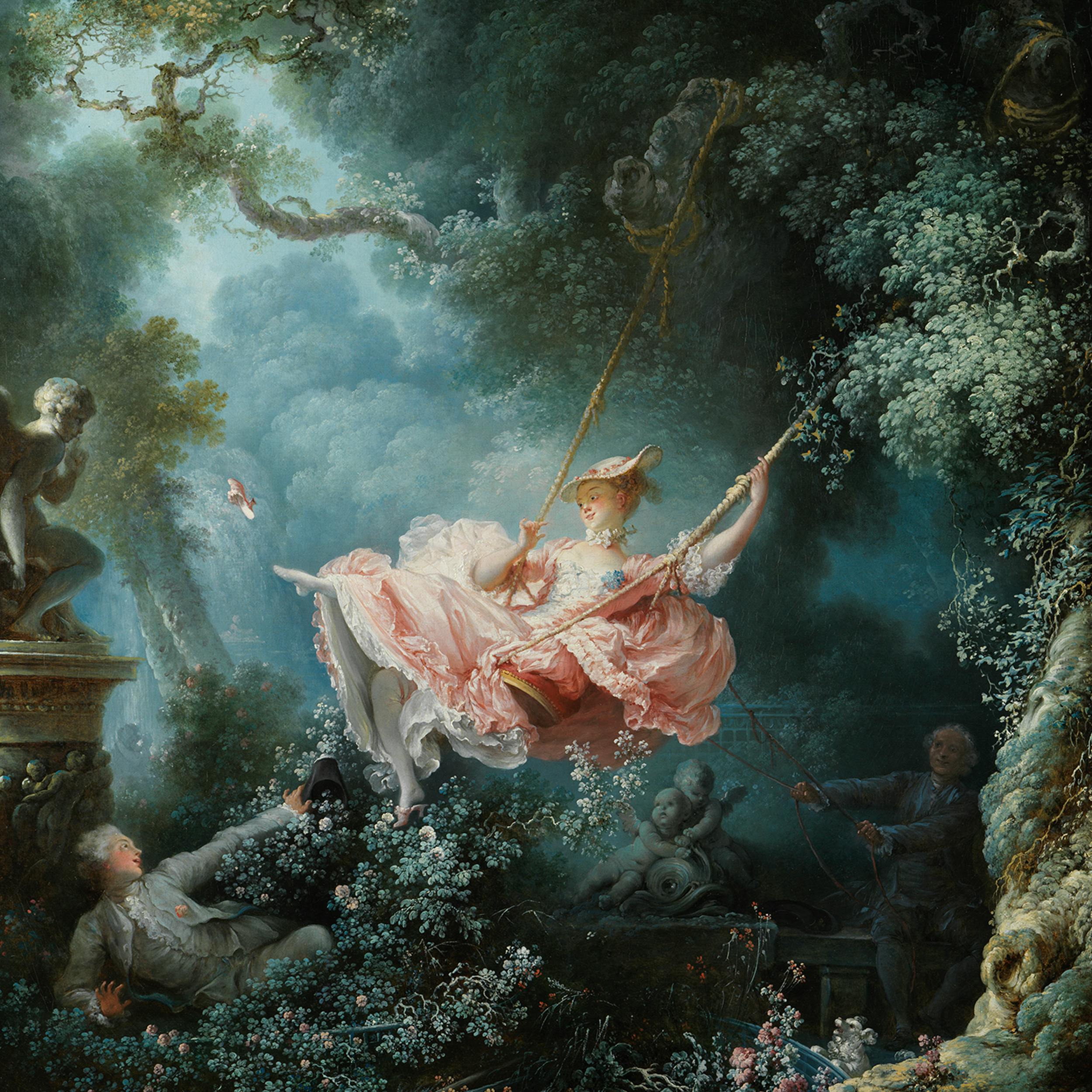
Jean-Honore Fragonard’s painting, The Swing is one of those rare pieces that feels so immediately accessible it has begun to make the leap from the museum gallery wall to pop culture. Early in the immensely popular Disney movie Frozen, the character of Anna jumps up in front of the painting to mimic the expression of the woman on the swing. It was a moment that portrayed Anna as spontaneous and caught up in the moment but also foreshadowed a love interest with perhaps less than noble intentions. This is a great example of a Rococo artwork as the angles create a sense of movement and the spotlight on the central figure feels like a continuation of the high drama of the Baroque, but the Rococo was a bit more frivolous and self-indulgent. In this painting, we see a woman riding on a swing inside a private garden. It was a space where the aristocrats might be more at ease to let loose and have a bit of fun away from the strict confines of polite society. Fragonard was commissioned to make this painting which was kept in a private cabinet for only his patron and close friends to enjoy. Arts Madness 2024 links: The Brackets Spotify Playlist Prediction Form Check out my other podcasts Art Smart | Rainbow Puppy Science Lab Who ARTed is an Airwave Media Podcast. If you are interested in advertising on this or any other Airwave Media show, email: advertising@airwavemedia.com Learn more about your ad choices. Visit megaphone.fm/adchoices
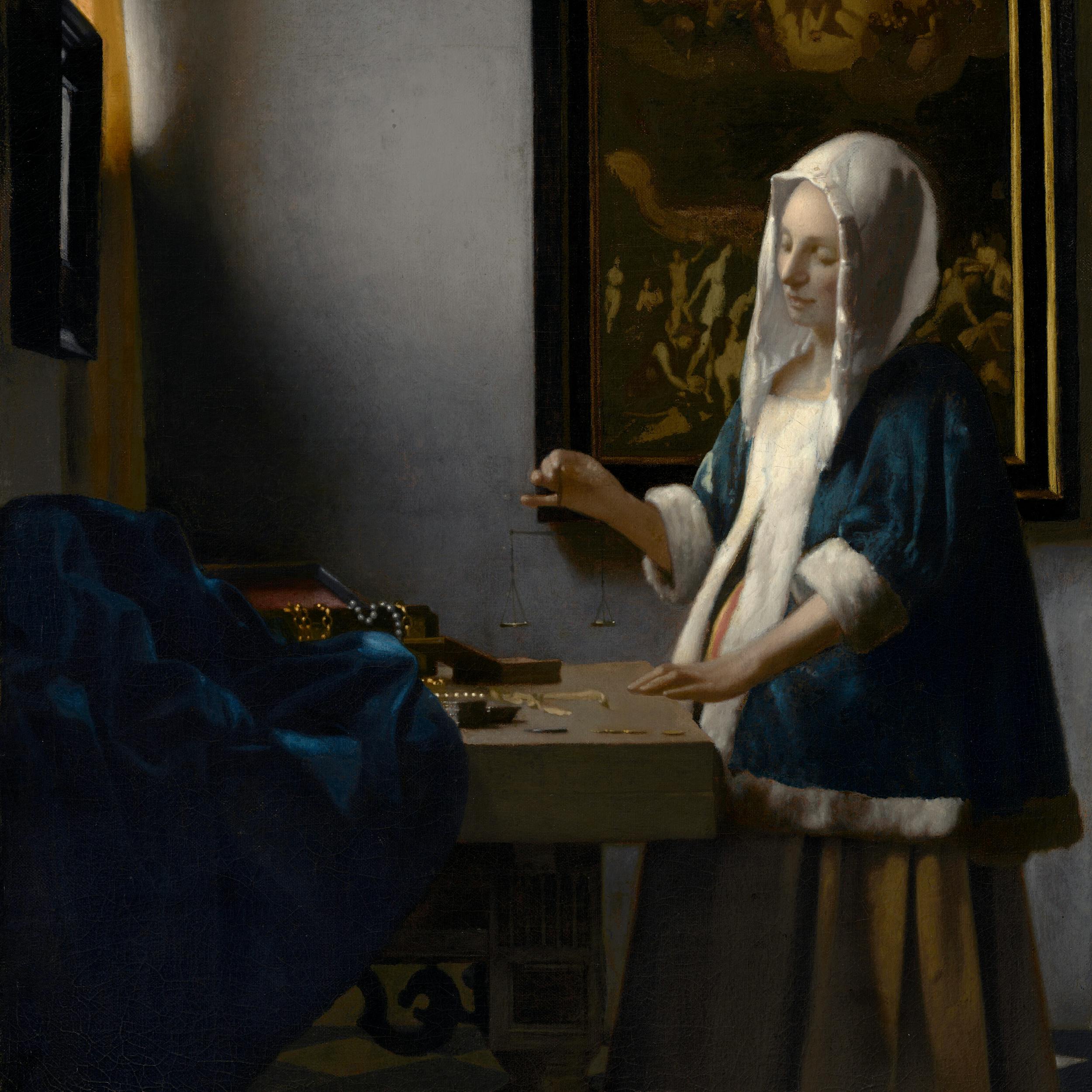
Vermeer created stunning works and he is widely celebrated as one of the greatest painters of the Dutch Golden Age. This painting, Woman Holding a Balance is a work intended to encourage temperance and moderation being mindful that divine judgment is looming in the end. Related episodes: The Unbelievable Story of Han van Meegeren Jan van Eyck | The Arnolfini Portrait Arts Madness 2024 links: The Brackets Spotify Playlist Prediction Form Check out my other podcasts Art Smart | Rainbow Puppy Science Lab Who ARTed is an Airwave Media Podcast. If you are interested in advertising on this or any other Airwave Media show, email: advertising@airwavemedia.com Learn more about your ad choices. Visit megaphone.fm/adchoices

The transformation mask is a carved and painted sculpture, a status symbol, a costume element and a simple machine all at once. Pulling the strings on the mask allows the wearer to move parts that effectively animate the mask and bring it to life in front of the gathered crowd. Kwakwaka’wakw artists created a number of different masks representing different figures. Arts Madness 2024 links: The Brackets Spotify Playlist Prediction Form Check out my other podcasts Art Smart | Rainbow Puppy Science Lab Who ARTed is an Airwave Media Podcast. If you are interested in advertising on this or any other Airwave Media show, email: advertising@airwavemedia.com Learn more about your ad choices. Visit megaphone.fm/adchoices

Today's mini-episode is about Auguste Rodin and his sculpture of The Burghers of Calais. The story behind the piece is an inspiring tale that defines courage. During the Hundred Years' War, the English had the city of Calais surrounded. As the days went on and the French army was unable to break the siege, the townspeople were forced to begin negotiating terms of surrender. They were told the town would be spared if 6 burghers (a burgher was a title, so these were the town leaders) would sacrifice themselves. Six men stepped up. While they were ultimately spared, one can imagine the mix of feelings as some might feel proud to do something noble and heroic and yet terrified at the grim reality. Traditional depictions of these men showed them as larger-than-life heroic figures, but Rodin gives us the stark reality. I think the brilliance of Rodin's work is that it recognizes that true courage means facing reality, and experiencing fear but still finding the strength to do what is right. Arts Madness 2024 links: The Brackets Spotify Playlist Prediction Form Check out my other podcasts Art Smart | Rainbow Puppy Science Lab Who ARTed is an Airwave Media Podcast. If you are interested in advertising on this or any other Airwave Media show, email: advertising@airwavemedia.com Learn more about your ad choices. Visit megaphone.fm/adchoices

On the peninsula at Rozel Point on Utah’s Great Salt Lake, Smithson created his most famous monumental sculpture using over six thousand tons of black basalt rocks and earth from the site. The spiral forms a path out onto the lake. It is intended to be not only witnessed but also experienced. Walking the spiral would be an almost meditative act similar to circumambulating or walking around a Hindu temple. Other content mentioned in this episode: The Nazca Lines Arts Madness 2024 links: The Brackets Spotify Playlist Prediction Form Check out my other podcasts Art Smart | Rainbow Puppy Science Lab Who ARTed is an Airwave Media Podcast. If you are interested in advertising on this or any other Airwave Media show, email: advertising@airwavemedia.com Learn more about your ad choices. Visit megaphone.fm/adchoices

Vincent van Gogh saw little commercial success during his lifetime, but he loved art and he worked to forge relationships with other artists he could learn from. The Starry Night came about late in his short career after Vincent van Gogh was hospitalized. He painted the view from his window, but rather than painting things exactly as he saw them, he painted a sort of composite landscape of views from different nights and even different locations. He moved the cypress tree to the foreground and added a little town nestled in the mountains despite the town not being visible from his window. This marked a major shift in painting away from observation of the external world to artists creating work as a show of their internal thoughts and feelings. Related episodes: Vincent van Gogh (part 1) | The Potatoe Eaters Vincent van Gogh (part 2) | Starry Night Vincent van Gogh | Sunflowers Loving Vincent - a Film Made of Paintings Did Vincent van Gogh Really Only Sell One Painting? Art Smart: Impressionism & Post Impressionism Arts Madness 2024 links: The Brackets Spotify Playlist Prediction Form Check out my other podcasts Art Smart | Rainbow Puppy Science Lab Who ARTed is an Airwave Media Podcast. If you are interested in advertising on this or any other Airwave Media show, email: advertising@airwavemedia.com Learn more about your ad choices. Visit megaphone.fm/adchoices

Jean-Antoine Houdon was one of the greatest neoclassical sculptors in the late 18th century. Shortly after the American Revolution, the governor of Virginia asked Thomas Jefferson to find a sculptor to make a marble statue of George Washington for the state capital building. Jefferson was a self-taught architect and a big believer in the neoclassical movement's use of symbolism in art to convey a message that would leave the viewer wiser. He naturally turned to Houdon who traveled from France to Virginia to take Washington's measurements and even made a life mask (a plaster cast of the subject's face). Houdon created what many consider to be the most accurate representation we have today of George Washington. This is one of the 64 artworks up for listeners to vote on in this year's Arts Madness Tournament. Check the links below to see the brackets, learn about the artists and fill out the prediction form before voting starts next week. Arts Madness 2024 links: The Brackets Spotify Playlist Prediction Form Check out my other podcasts Art Smart | Rainbow Puppy Science Lab Who ARTed is an Airwave Media Podcast. If you are interested in advertising on this or any other Airwave Media show, email: advertising@airwavemedia.com Learn more about your ad choices. Visit megaphone.fm/adchoices

Piet Mondrian is best known for painting primary colored squares and rectangles. For this episode, fellow art teacher, Jeff Arndt and I talked about the big ideas that led Mondrian to make such simple work. He pushed the ideas of modern abstract art further than anyone else. Mondrian limited himself to basic elements of simple lines, shapes, and colors to focus on the principles of design like balance and proportion. A common misconception about Mondrian is that his personal life was as bland as his art. Mondrian was actually quite charming. He took pains to be elegantly dressed at all times, he was kind and an avid dancer. He was said to be great at the foxtrot and the Charleston in particular. The ladies loved him, and he had multiple relationships including an engagement he called off in 1911, but he never married. I think my favorite odd bit though is according to a biographer, among the women of Amsterdam, Mondrian “developed a reputation for interesting, prolonged kisses, sometimes lasting for more than half an hour.” but back on point, he loved dancing and he loved music. While he was in Paris, he was particularly fond of the black American musicians that passed through including greats like Louis Armstrong. Mondrian talked about how the pianist accompanying Armstrong “allowed the bass line played with his left hand to fall out of sync, contrasting with the rhythmically varied ‘melody’ played by his right hand” Mondrian was all about the rhythm. Arts Madness 2024 links: The Brackets Spotify Playlist Prediction Form Check out my other podcasts Art Smart | Rainbow Puppy Science Lab Who ARTed is an Airwave Media Podcast. If you are interested in advertising on this or any other Airwave Media show, email: advertising@airwavemedia.com Learn more about your ad choices. Visit megaphone.fm/adchoices

Rachel Ruysch was an incredibly skilled Dutch painter in the late 17th and early 18th centuries. She was renowned for her still lives. The objects in this work were carefully selected and the image is loaded with symbolism. Her painting, Fruit and Insects is one of the works on the list for the AP Art History curriculum. Those prepping for the test may want to check out my Spotify playlist: AP Art History Cram Session to learn about a number of artists and works that may appear on the test. Arts Madness 2024 links: The Brackets Spotify Playlist Prediction Form Check out my other podcasts Art Smart | Rainbow Puppy Science Lab Who ARTed is an Airwave Media Podcast. If you are interested in advertising on this or any other Airwave Media show, email: advertising@airwavemedia.com Learn more about your ad choices. Visit megaphone.fm/adchoices

Diego Velazques was one of the most significant painters of Spain's Golden Age in the 17th century. He was a master of both portraiture and genre painting, Las Meninas is a sort of mix of both. We see people who seem rather formally dressed by today’s standards, but the subject is also, it was a peak behind the curtain of royal life. Withing the work, the first focal point would be the little girl, the infanta margarita, daughter of the king and queen of spain. She is dramatically lit from the side by light streaming in from the window. The top half of the composition is essentially in shadow, and we see her looking out at us, the viewers. Diego Velazquez included himself in the scene as he stands before his giant canvas. Within this oil on canvas painting, we see a representation of a painter working on canvas. Velazquez also seems to break the fourth as he looks out at the viewer. There is a figure standing in the doorway in the back of the composition. The strong light in the doorway pulls our focus there as a secondary focal point, and that figure seems to be caught in motion and again, he looks out at us, the viewers. In this episode, I referenced Jan van Eyck's Arnolfini Portrait. To learn more about that, check out my previous episode: Jan van Eyck | The Arnolfini Portrait Arts Madness 2024 links: The Brackets Spotify Playlist Prediction Form Check out my other podcasts Art Smart | Rainbow Puppy Science Lab Who ARTed is an Airwave Media Podcast. If you are interested in advertising on this or any other Airwave Media show, email: advertising@airwavemedia.com Learn more about your ad choices. Visit megaphone.fm/adchoices

Faith Ringgold is a contemporary American artist. She studied art education and started as a painter, but she is best known for her story quilts. She has written and illustrated seventeen children's books. The most famous was Tar Beach which started as a quilt but later became an award-winning, best-selling book. In this episode I discussed her story quilt Dancing at the Louvre, which is one of the 250 artworks required for AP Art History courses across the US. For listeners prepping for the AP Art History test, check out my Spotify playlist (AP Art History Cram Session) with episodes about artworks and artists from that list. Arts Madness 2024 links: The Brackets Spotify Playlist Prediction Form Check out my other podcasts Art Smart | Rainbow Puppy Science Lab Who ARTed is an Airwave Media Podcast. If you are interested in advertising on this or any other Airwave Media show, email: advertising@airwavemedia.com Learn more about your ad choices. Visit megaphone.fm/adchoices

Maria Martinez belonged to the Tewa-speaking Pueblo people, known for their rich artistic heritage. Pottery-making was deeply rooted in Puebloan culture, serving as a means of artistic expression and a reflection of their close connection with the natural world. Maria grew up watching her family members create pottery, learning the traditional techniques. Of course, we seldom talk about those who simply carry on a tradition. Maria Martinez and her husband Julian revolutionized pottery production and shared their methods with their community. In doing so, they raised the profile of pottery as an art form while helping others understand and appreciate their cultural heritage. If you would like to learn more about modern clay production, check out the clay episode of my other podcast, Art Smart. Art Smart | Clay Art Smart | Glaze This is one of the 64 pieces in this year's Arts Madness Tournament. Starting Feb 26, voting will begin in a series of head to head matches. For more information, go to https://www.whoartedpodcast.com/arts-madness This is also one of many episodes I have created covering artists and artworks required for AP Art History. Check out my Spotify playlist AP Art History Cram Session to learn more. Check out my other podcasts Art Smart | Rainbow Puppy Science Lab Who ARTed is an Airwave Media Podcast. If you are interested in advertising on this or any other Airwave Media show, email: advertising@airwavemedia.com Learn more about your ad choices. Visit megaphone.fm/adchoices
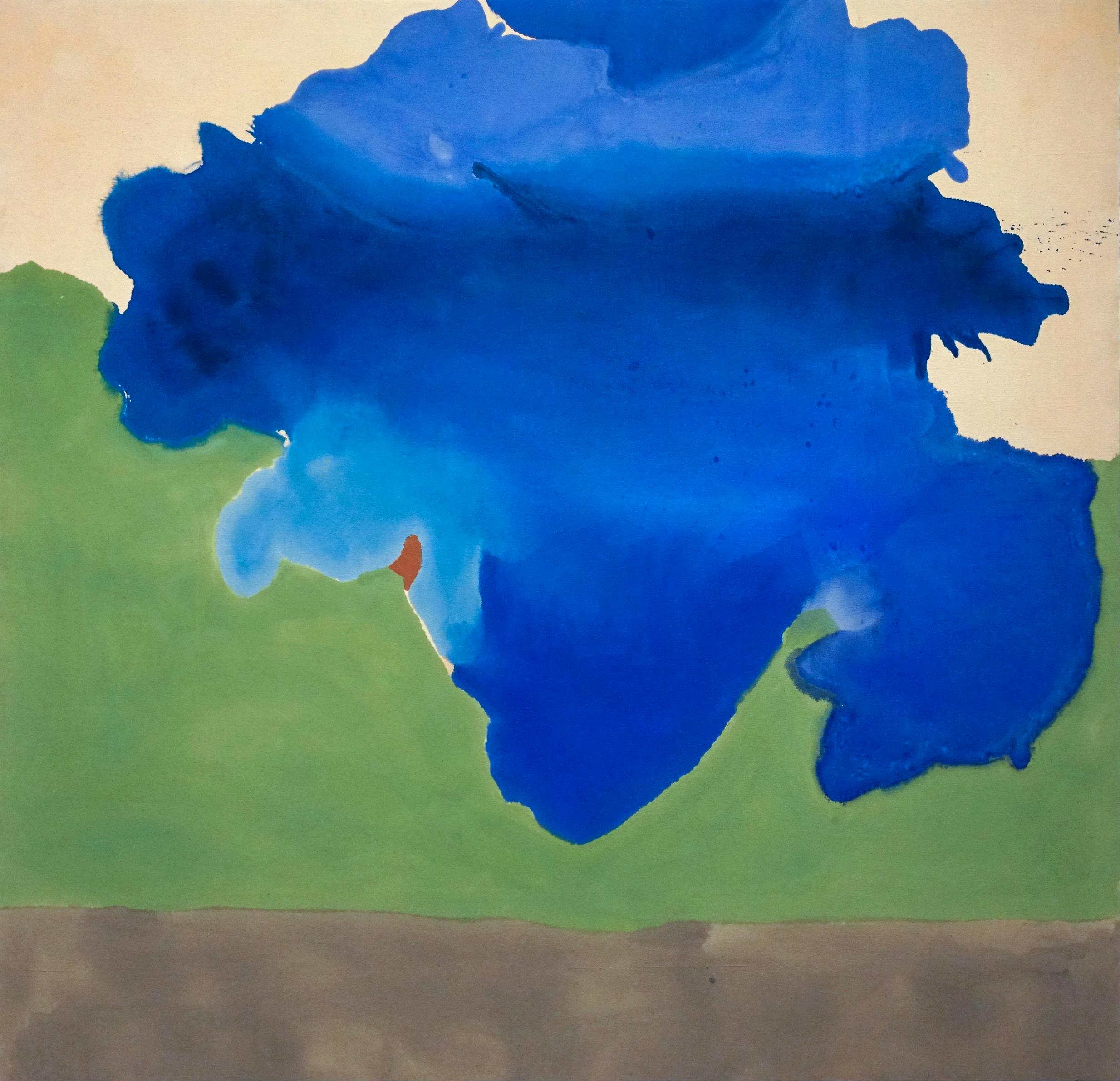
The Bay was painted in 1963 as Frankenthaler had refined her soak and stain process. While Mountains and Sea was made with diluted oil paints, The Bay is acrylic on unprimed canvas. She had found that using acrylics gave her greater control over the viscosity or how fluid the paint was. As I look at The Bay, the title indicates a landscape and the brightness, the organic shapes of blue and green give me a sense of a Bay, but it feels like it is more about a happy, contented sort of tone. There is movement, but it seems gentle like sitting out on a boat drifting in calm waters. The Bay represents a different sort of take on Abstract Expressionism. While many followed Jackson Pollock’s and Willem de Kooning’s aggressive and agsty style, Helen Frankenthaler’s color fields are more gentle and at peace. Her work was a breath of fresh air showing that painting could reduce art to fundamental elements in line with esoteric modernist philosophy and still be beautiful and joyous. Related episodes: Jackson Pollock Diego Rivera The Bay from 1963 is one of the required artworks for AP Art History. Check out my Spotify playlist, AP Art History Cram Session to learn about other artists and artworks from that curriculum. Check out my other podcasts Art Smart and Rainbow Puppy Science Lab Who ARTed is an Airwave Media Podcast. If you are interested in advertising on this or any other Airwave Media show, email: advertising@airwavemedia.com Learn more about your ad choices. Visit megaphone.fm/adchoices

Thomas Jefferson may be a surprising person to find in an art history podcast, but the writer of the Declaration of Independence, third president of the US was also a self-taught architect. Monticello is considered a UNESCO Heritage Site. Jefferson believed that great architecture could not only reflect the community, but also inspire the people to seek enlightenment. Monticello is a neoclassical masterpiece that illustrates the duality of Jefferson as a brilliant idealist who was also a flawed man failing to live up to his ideals. Check out my other podcasts Art Smart | Rainbow Puppy Science Lab Who ARTed is an Airwave Media Podcast. If you are interested in advertising on this or any other Airwave Media show, email: advertising@airwavemedia.com Learn more about your ad choices. Visit megaphone.fm/adchoices

Jean-Michel Basquiat has created some of the most highly valued American paintings ever to go on auction. Basquiat sought to remake art history in his image, and I would say he was successful. His triptych, Horn Players, is one of the artworks required for the AP Art History curriculum studied by American high school students. In the middle of February 1981, a group exhibition opened at P.S.1 in New York. The show featured over a hundred different artists from the underground art scene. There were paintings, drawings, photographs, objects and graffiti all mixed together in an explosive portrait of the post-punk scene. The show was called New York/New Wave and many affectionately referred to it as the armory show of the 80s. The armory show was of course the famous exhibition from 1913 that introduced European modern art to the American audience. This time though, it wasn’t European artists upending the New York gallery scene. This time, the revolution was coming from inside the community. Among the artists on display was a 20 year old by the name of Jean-Michel Basquiat. He had previously made a name for himself as a graffiti artist. Basquiat and his friend Al Diaz created a text-based project SAMO spraypainting messages around new york. They were particularly active in the area where numerous gallery spaces were located. SAMO often sought to be a little bit humorous, but also gives an outsider’s perspective on the art world with phrases like “SAMO AS AN END TO PLAYING ART” or “SAMO FOR THE SO-CALLED AVANT-GARDE”. Check out my other podcasts Art Smart | Rainbow Puppy Science Lab Who ARTed is an Airwave Media Podcast. If you are interested in advertising on this or any other Airwave Media show, email: advertising@airwavemedia.com Learn more about your ad choices. Visit megaphone.fm/adchoices

Turner's painting of The Slave Ship from 1840 was originally titled "Slavers Throwing Overboard the Dead and Dying" and the event that inspired this work is exactly as horrific as it sounds. The captain of the ship was throwing men overboard in order to collect insurance money on those lost at sea, or to use a more accurate term, murdered. In this episode, I mentioned that one of my favorite fellow Airwave Media podcasts, The Constant, did an episode about how ships would be sent to sea to sink for the insurance money. Check out that episode here: The Constant | Shipwreckless Check out my other podcasts Art Smart | Rainbow Puppy Science Lab Who ARTed is an Airwave Media Podcast. If you are interested in advertising on this or any other Airwave Media show, email: advertising@airwavemedia.com Learn more about your ad choices. Visit megaphone.fm/adchoices
