



Grand Tamasha


About
Available on








Community
203 episodes

In today’s India, there are few historical figures whose writing and thinking help explain the current ideological zeitgeist more than Vinayak Damodar Savarkar. Despite this newfound attention, Savarkar is often viewed in black and white—as a staunch Hindu nationalist who devoted his life to expounding the virtues of conservative, Hindu majority rule. A new book by the Berkeley historian Janaki Bakhle https://history.berkeley.edu/janaki-bakhle, https://press.princeton.edu/books/hardcover/9780691250366/savarkar-and-the-making-of-hindutva?utm_content=277826158&utm_medium=social&utm_source=twitter&hss_channel=tw-20715956, paints a much more nuanced picture of the Hindutva ideologue. Savarkar was certainly a Hindu champion, but he was also an anti-caste progressive, a pioneering advocate for women’s rights, and a patriotic poet. To talk more about Savarkar’s multiple identities—and his legacy in today’s India—Janaki joins Milan on the podcast this week. They discuss Savarkar’s life under surveillance, shifts in his views on Muslims, and his desire to jettison caste in order to strengthen Hindu identity. Plus, the two discuss Savarkar’s Marathi poetry and his ideas about the nation-state. Episode notes: 1. Janaki Bakhle, “Savarkar accepted intercaste marriages for one reason—it kept Hindus within the community https://theprint.in/pageturner/excerpt/savarkar-accepted-intercaste-marriages-for-one-reason-it-kept-hindus-within-the-community/1976873/,” , February 24, 2024. 2. Janaki Bakhle, https://global.oup.com/academic/product/two-men-and-music-9780195166118?cc=us&lang=en& (Oxford: Oxford University Press, 2005).


A few weeks ago, the Indian government formally notified the rules implementing the controversial 2019 Citizenship Amendment Act, or CAA. The law provides persecuted religious minorities hailing from Afghanistan, Bangladesh, and Pakistan an expedited pathway to Indian citizenship, provided they belong to the Buddhist, Christian, Hindu, Jain, Parsi, or Sikh communities. Notably, the law does not provide such a pathway to those who belong to the Muslim faith. The notification of the CAA rules—on the eve of India’s 2024 general election—has kicked off a fresh debate over the law, its implementing provisions, and the resulting implications for the future of secularism in India. To discuss all of this and more, Milan is joined on the show this week by legal scholar M. Mohsin Alam Bhat https://www.qmul.ac.uk/law/people/academic-staff/items/bhat.html. Mohsin is a Lecturer in Law at Queen Mary University of London, where he specializes in constitutional law and human rights. Mohsin has written extensively about law and citizenship in India. Milan and Mohsin discuss the origins of the CAA, its constitutionality, and the fine print of the CAA rules. Plus, the two discuss the situation in Assam, that state’s National Register of Citizens (NRC), and the prospects of an all-India NRC exercise. Episode notes: 1. “What’s Happening to India’s Rohingya Refugees? https://grand-tamasha.simplecast.com/episodes/whats-happening-to-indias-rohingya-refugees (with Priyali Sur and Daniel Sullivan),” , May 24, 2023. 2. Mohsin Alam Bhat and Aashish Yadav, “CAA will not help persecuted Hindus, Sikhs from neighbouring countries https://indianexpress.com/article/opinion/columns/caa-will-not-help-persecuted-hindus-sikhs-from-neighbouring-countries-9222168/,” , March 19, 2024. 3. “The Citizenship (Amendment) Bill, 2019 https://prsindia.org/billtrack/the-citizenship-amendment-bill-2019,” PRS Legislative Research. 4. Madhav Khosla and Milan Vaishnav, “The Three Faces of the Indian State https://vaishnavmilan.files.wordpress.com/2021/03/khosla-vaishnav-2021.pdf,” 32, no. 1 (2021): 111-125. 5. Mohsin Alam Bhat, “The Constitutional Case Against the Citizenship Amendment Bill https://papers.ssrn.com/sol3/papers.cfm?abstract_id=3367310,” 54, no.3 (2019): 12-14. 6. Mohsin Alam Bhat, “‘The Irregular’ and the Unmaking of Minority Citizenship: The Rules of Law in Majoritarian India https://papers.ssrn.com/sol3/papers.cfm?abstract_id=4274814,” Queen Mary Law Research Paper No. 395/2022. 7. Niraja Gopal Jayal, “Faith-based Citizenship https://www.theindiaforum.in/article/faith-criterion-citizenship,” , October 31, 2019.
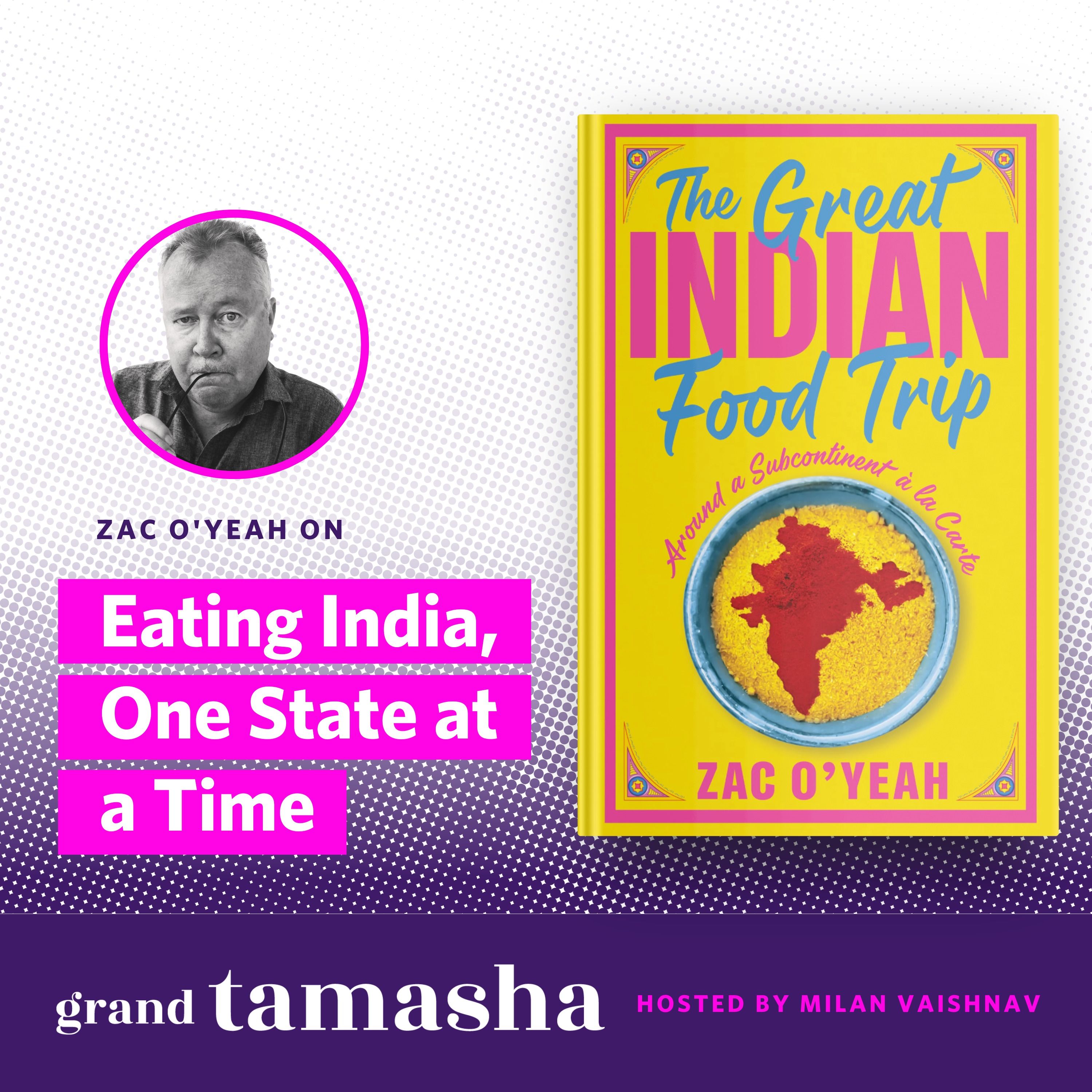
Zac O’Yeah https://www.zacoyeah.com/ is a Swedish novelist, rock musician, and author of the Majestic Trilogy https://frontline.thehindu.com/books/the-detective-from-majestic/article10085010.ece—a trio of detective stories set in his adopted home of Bengaluru. And if that were not enough, he’s also the author of the brand-new book, https://www.hurstpublishers.com/book/the-great-indian-food-trip/. In the book, O’Yeah catalogues his travels crisscrossing India on a gluttonous search for the best food and drink—from the pickled mussels of Kerala to the goat’s brain of Mumbai’s Irani cafes and the signature masala dosas of Mysore. The book offers readers a mouth-watering, whirlwind tour of Indian cuisine. On this week’s show, O’Yeah joins Milan to talk about the culinary wonders of India. They discuss the simple pleasure of Koshy’s in Bengaluru, where to eat proper “club” food, and the surprising “pizza-lovers’ paradise” that is Puducherry. Plus, O’Yeah dishes about his boozy night drinking in Goa with writers Orhan Pamuk and Amitav Ghosh and reveals what Indian dishes are on his list of essentials. Episode notes: 1. Sidharth Bhatia, “An Eating and Drinking Tour of India, With Some Misadventures Along the Way https://thewire.in/books/an-eating-and-drinking-tour-of-india-with-some-misadventures-along-the-way,” , July 8, 2023. 2. Zac O’Yeah, “A culinary trip across Southeast Asia https://indianexpress.com/article/express-sunday-eye/vietnam-mekong-khmer-9096942/,” , January 6, 2024.
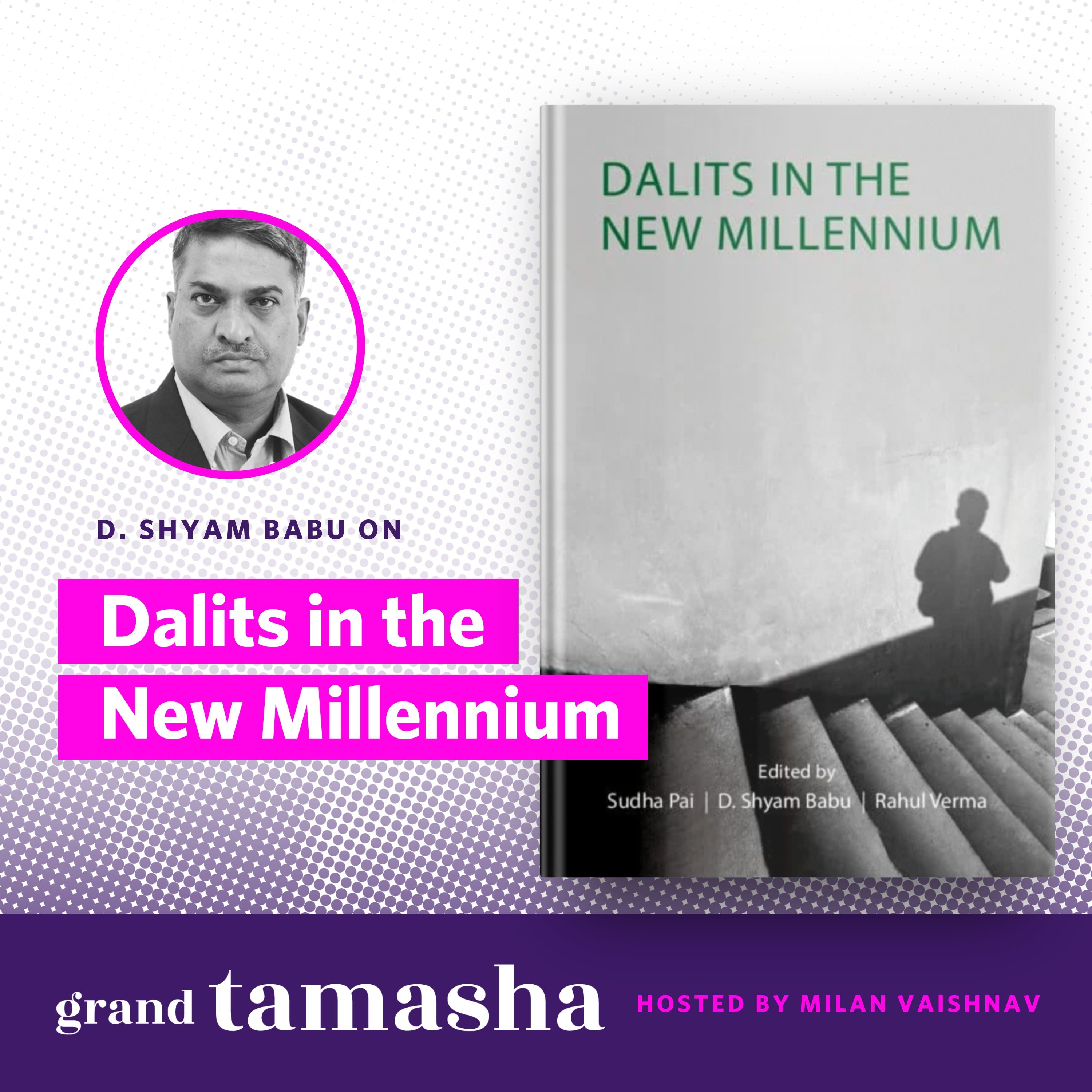
Over the last several decades, there have been monumental changes in the social, economic, and political lives of Dalits, who have historically been one of the most oppressed groups in all of South Asia. A new volume edited by three leading scholars of India— https://www.amazon.in/Dalits-New-Millennium-Sudha-Pai/dp/1009441604—examines these changes, interrogates their impacts on Dalit lives, and traces the shift in Dalit politics from a focus on social justice—to a focus on development and socio-economic mobility. D. Shyam Babu https://cprindia.org/people/d-shyam-babu/, who along with Sudhai Pai https://twitter.com/sudhapai2?lang=en and Rahul Verma https://twitter.com/rahul_tverma, is one of the co-editors of this important new book joined Milan on the show this week to talk more about their findings. Shyam Babu is a Senior Fellow at the Centre for Policy Research https://cprindia.org/ in New Delhi. His research focuses on how economic changes in India have been shaping social change and transformation for the benefit of marginalized sections, especially Dalits. The two discuss Dalits’ shift toward the Bharatiya Janata Party (BJP), the decline of the Bahujan Samaj Party (BSP) of Mayawati, and what “Ambedkarization” has done for the Dalit community. Plus, the two discuss the shortcomings Dalits experience in their “social citizenship” and the successes and challenges of Dalit capitalism. Episode notes: 1. Devesh Kapur, Chandra Bhan Prasad, Lant Pritchett, and D. Shyam Babu, “Rethinking Inequality: Dalits in Uttar Pradesh in the Market Reform Era https://www.jstor.org/stable/25742020,” 45, no. 35 (August 28-September 3, 2010): 39-49. 2. Devesh Kapur, Chandra Bhan Prasad, and D. Shyam Babu, https://www.amazon.com/Defying-Odds-Rise-Dalit-Entrepreneurs-ebook/dp/B00LPJ8T76 (New Delhi: Vintage, 2014). 3. D. Shyam Babu, “From empowerment to disenfranchisement: Lower caste mobilisation appears to have run its course https://outlook.office.com/local/path/file:///Users/milanvaishnav1/Library/CloudStorage/Dropbox/Grand%20Tamasha/Season%20Eleven/Shyam%20Babu/i,” , August 28, 2019. 4. Chandra Bhan Prasad, “Fellow Dalits, open your own bank: If no one else, Dalit middle class can fund Dalit capitalism to produce Dalit billionaires https://timesofindia.indiatimes.com/blogs/toi-editorials/fellow-dalits-open-your-own-bank-if-no-one-else-dalit-middle-class-can-fund-dalit-capitalism-to-produce-dalit-billionaires/,” , November 25, 2019. 5. Devesh Kapur, “Fraternity in the making of the Indian nation https://www.india-seminar.com/2018/701.htm,” 701 (2017).

Two weeks ago, a five-judge bench of India’s Supreme Court ruled that electoral bonds—a controversial instrument of political giving introduced by the Narendra Modi government—violated the Constitution and would immediately cease operating. Under the court’s ruling, the State Bank of India will immediately stop issuing bonds; the Election Commission of India must disclose details of all transactions since April 2019; and any bonds which have not yet been encashed are to be refunded. On this week’s podcast, host Milan Vaishnav https://twitter.com/MilanV?ref_src=twsrc%5Egoogle%7Ctwcamp%5Eserp%7Ctwgr%5Eauthor—who has written extensively about campaign finance in India—takes a turn in the hot seat. In a special collaboration with DAKSH https://twitter.com/daksh_india, a Bangalore-based non-profit working on judicial reforms and access to justice, Leah Verghese (host of the DAKSH Podcast https://www.dakshindia.org/the-daksh-podcast/) interviews Milan about the Court’s ruling and what it means for the future of political funding in India. The two discuss the history of campaign finance in India, the controversy around electoral bonds, and the controversy around foreign funding of elections. Plus, Milan and Leah discuss why ordinary Indians should care about the dynamics of election funding. Episode notes: 1. Milan Vaishnav, “On electoral bonds, a short-lived celebration https://www.hindustantimes.com/opinion/on-electoral-bonds-a-short-lived-celebration-101708170676086.html,” , February 17, 2024. 2. Crime and Politics with Milan Vaishnav https://www.dakshindia.org/crime-and-politics/,” , September 2022. 3. Devesh Kapur and Milan Vaishnav, eds., https://carnegieendowment.org/2018/05/25/costs-of-democracy-political-finance-in-india-pub-76399 (New Delhi: Oxford University Press, 2018). 4. Milan Vaishnav, https://carnegieendowment.org/2017/01/24/when-crime-pays-money-and-muscle-in-indian-politics-pub-66205 (New Haven: Yale University Press, 2017).

With general elections just months away, it is the era of the ten-year retrospective—a chance for India watchers to reflect on what has changed over the past decade under the Narendra Modi government—and what has not. One area especially deserving of scrutiny is India’s relations with the neighborhood. The Modi government came to power with an eye towards reimagining India’s relationships in South Asia, and across the Indo-Pacific. Yet, the past ten years have seen tremendous upheaval in the region--set against a backdrop of growing competition between India and China to gain the upper hand. Few people in India have watched this space more closely than Constantino Xavier https://twitter.com/constantinox?lang=en. Tino is a Fellow in Foreign Policy and Security Studies at the Centre for Social and Economic Progress https://csep.org/team/constantino-xavier/ in New Delhi, where he leads the Sambandh Initiative https://csep.org/sambandh-initiative/ on regional connectivity. Tino joins Milan on the show this week to discuss whether the Modi government’s approach to the neighborhood demonstrates more continuity than change. Plus, the two discuss the recent crisis in India-Maldives relations, the Ministry of External Affairs’ budget woes, and the potential of an India-Middle East-European Economic corridor. Episode notes: 1. Constantino Xavier and Riya Sinha, “How India Budgets to Become a Leading Power https://csep.org/blog/how-india-budgets-to-become-a-leading-power/,” Centre for Social and Economic Progress, February 8, 2023. 2. Constantino Xavier, “India: Looking to Help Frame a New Global Balance https://www.cscap.org/uploads/CSCAP%20Security%20Outlook%202023%20FA.pdf,” in (Canberra: Council for Security Cooperation in the Asia Pacific, 2022). 3. Constantino Xavier and Amitendu Palit, eds., https://csep.org/wp-content/uploads/2023/02/BBC_Report-F1-1.pdf (New Delhi: Centre for Social and Economic Progress, 2023). 4. Constantino Xavier and Jabin Jacob, eds., https://csep.org/wp-content/uploads/2023/05/How-China-Engages-South-Asia-Themes-Partners-and-Tools.pdf(New Delhi: Centre for Social and Economic Progress, 2023). 4. Hillary Rodham Clinton, “Remarks on India and the United States: A Vision for the 21st Century https://2009-2017.state.gov/secretary/20092013clinton/rm/2011/07/168840.htm,” Chennai, India, July 20, 2011.

Last Thursday, voters in Pakistan went to the polls in the country’s first general elections since the July 2018 election that brought former prime minister Imran Khan to power. In 2022, Khan was ousted in an unprecedented no confidence vote and now finds himself behind bars. In the months before the election, Khan’s political party, Pakistan Tehreek-e-Insaf (PTI), was repressed with party members jailed, harassed, and eventually forced to contest the 2024 elections as independents. Pakistan’s powerful military was widely seen as the guiding force behind these moves. But the election results appear to have caught the military—and perhaps many Pakistanis—by surprise. At last count, PTI-backed independent candidates emerged as the single largest party, with allegations of vote rigging rampant. Meanwhile, Pakistan’s traditional political heavyweights are engaged in a furious effort to form a coalition government. To talk about the election, and what it means for Pakistan and the region, Milan is joined on the show this week by Zoha Waseem https://twitter.com/ZohaWaseem?ref_src=twsrc%5Egoogle%7Ctwcamp%5Eserp%7Ctwgr%5Eauthor. Zoha is an Assistant Professor in the Department of Sociology at the University of Warwick and author of https://www.hurstpublishers.com/book/insecure-guardians/. Milan and Zoha discuss the tumultuous months leading up to the contested polls, the reasons for the PTI’s surprise showing, and what comes next. Plus, the two discuss what these election results mean for India-Pakistan relations. Episode notes: 1. “South Asia’s Economic Turmoil https://grand-tamasha.simplecast.com/episodes/south-asias-economic-turmoil (with Ben Parkin),” , September 21, 2022. 2. “Pakistan After Imran Khan https://grand-tamasha.simplecast.com/episodes/pakistan-after-imran-khan (with Aqil Shah),” , May 4, 2022. 3. Zoha Waseem, “A House Divided: Karachi’s Politics Remain in Flux https://carnegieendowment.org/2022/05/03/house-divided-karachi-s-politics-remain-in-flux-pub-87054,” Carnegie Endowment for International Peace, May 3, 2022.

From the Obama “birther” movement in the United States to the fringe politicians who believe congestion pricing in London is part of an international “socialist plot,” it is no exaggeration to say that conspiracy theories have become part of the standard political playbook the world over. But when it comes to outlandish conspiracy theories, India stands out as a country where such tales are driving everyday political conversations in a major way. Buoyed by politicians, the media, and social media forwards, they have come to be accepted as reality by many people. A new book, https://www.amazon.in/Love-Jihad-Other-Fictions-Falsehoods-ebook/dp/B0CNLXYBZG, takes aim at these conspiracy theories, subjecting them to strict journalistic scrutiny using ground reporting, data, and a bit of common sense. The authors—Sreenivasan Jain https://twitter.com/SreenivasanJain, Mariyam Alavi https://twitter.com/MariyamAlavi, and Supriya Sharma https://twitter.com/sharmasupriya—are veteran journalists with a long track record of ground reporting. On this week’s show, Mariyam and Supriya join Milan on the show to talk about the book. The trio discuss allegations of “love jihad,” rumors of widespread religious conversions, and claims of “minority appeasement.” Plus, the three discuss what lessons this book holds for journalism and civic discourse more generally. Episode notes: 1. Karan Thapar, “Debunking propaganda myths, restoring truths https://www.hindustantimes.com/opinion/debunking-propaganda-myths-restoring-truths-101706365527731.html,” , January 27, 2024. 2. Sreenivasan Jain, Mariyam Alavi, and Supriya Sharma, “Bringing Journalistic Scrutiny to Hindutva Conspiracy Theories https://thewire.in/books/new-book-debunks-myths-about-love-jihad-muslim-appeasement-and-other-falsehoods-about-minorities,” , January 17, 2024.

It seems like you cannot open a newspaper, listen to a foreign policy podcast, or open Twitter/X without somebody somewhere sounding off on the emerging geopolitical battle over semiconductors. Semiconductors, which we colloquially refer to as chips, have quickly moved from the periphery to center-stage of global high politics. To discuss this high-stakes race, and India’s role in it, Milan is joined on the show this week by the scholar Pranay Kotasthane https://twitter.com/pranaykotas?ref_src=twsrc%5Egoogle%7Ctwcamp%5Eserp%7Ctwgr%5Eauthor. Pranay is Chair of High-Tech Geopolitics at the Takshashila Institution https://takshashila.org.in/people/pranay-kotasthane-cwccs in Bangalore and, with Abhiram Manchi https://twitter.com/manchigaru?lang=en, is the author of the new book, https://www.bloomsbury.com/us/when-the-chips-are-down-9789356402454/. Pranay and Milan discuss the history of the technology, importance of semiconductors at the current geopolitical crossroads, and how the world will balance national security interests and with rapid technological change. Plus, the two discuss India’s most recent attempt to build a semiconductor ecosystem and the policy missteps that bedeviled past efforts. Episode notes: 1. “India's Tryst With Policymaking https://grand-tamasha.simplecast.com/episodes/indias-tryst-with-policymaking (with Pranay Kotasthane),” , January 25, 2023. 2. Pranay Kotasthane and Raghu S. Jaitley, https://www.amazon.in/Missing-Action-Should-Public-Policy/dp/0143459376/ref=sr_1_7?qid=1671075811&refinements=p_27%3APranay&s=books&sr=1-7 (New Delhi: Penguin India, 2023). 3. Pranay Kotasthane, “Anticipating the Unintended https://publicpolicy.substack.com/p/240-peering-into-the-future,” weekly Substack newsletter.

This week, Grand Tamasha kicks off its eleventh season with a special return guest to the podcast. https://www.amazon.in/THIRD-WAY-Revolutionary-Approach-Governance/dp/9353452635 is an important new book by the lawyer-scholar-and-author Rahul Matthan https://twitter.com/matthan?ref_src=twsrc%5Egoogle%7Ctwcamp%5Eserp%7Ctwgr%5Eauthor. Rahul is a partner at the law firm Trilegal https://trilegal.com/people/rahul-matthan/, where he heads their technology practice. Over the past several years, he has worked closely with the Government of India, most recently as DPI advisor to the Ministry of Finance during India’s G20 presidency. Rahul joins Milan on the show this week to discuss India’s unique approach to building digital public infrastructure (DPI)—an ecosystem that can have transformative impact at home but also build partnerships for India abroad. They talk about India’s DPI evolution, India’s unique public-private model, and whether India’s approach can be replicated abroad. Plus, the two discuss how India can mitigate the risks posed by excessive surveillance, privacy breaches, and beneficiary exclusion. Episode notes: 1. “What the Personal Data Protection Act Means for India https://grand-tamasha.simplecast.com/episodes/what-the-personal-data-protection-act-means-for-india (with Rahul Matthan),” , Septemner 27, 2023. 2. “Book Discussion: The Third Way: India’s Revolutionary Approach to Data Governance https://www.youtube.com/watch?v=jcaJN660KVE,” Carnegie India Global Technology Summit 2023, December 7, 2023. 3. Rahul Matthan, “Tech policy in India has had a year packed with action https://www.livemint.com/opinion/online-views/tech-policy-in-india-has-had-a-year-packed-with-action-11703616768632.html,” , December 27, 2023.

Back in 2019, we started the podcast on a whim. India’s 2019 general elections were around the corner, and we sensed that there might be a (temporary) marketplace for a weekly audio podcast focused on Indian politics and policy for diehards hoping to keep up with the campaign action. Nearly five years later, the podcast has become a weekly fixture and the marketplace has turned out to be more welcoming that we had imagined. For Milan, one of the joys of doing a podcast week-in and week-out is the ability to read some of the best new books on India and speak with their authors—from journalists to historians, and political scientists to novelists. Last year, we published our first annual list https://carnegieendowment.org/2022/12/20/grand-tamasha-s-best-books-of-year-pub-88668 of our favorite books featured on the podcast in 2022. As the current year comes to an end and we prepare for a mini-podcast hibernation for the holidays, here—in no particular order—are our top books of 2023 (drumroll, please): https://grand-tamasha.simplecast.com/episodes/an-unconventional-history-of-20th-century-south-asia By Joya Chatterji. Published by Yale University Press, Penguin Random House India, Vintage. https://grand-tamasha.simplecast.com/episodes/the-democratic-dynamism-of-indias-slums By Adam Michael Auerbach and Tariq Thachil. Published by Princeton University Press. https://grand-tamasha.simplecast.com/episodes/age-of-vice-when-art-meets-life By Deepti Kapoor. Published by Riverhead, Juggernaut. https://grand-tamasha.simplecast.com/episodes/how-bureaucracy-can-work-for-the-poor By Akshay Mangla. Published by Cambridge University Press. In this episode, Milan talks about why he loved each of these books and includes short clips from his conversations with Joya, Adam and Tariq, Deepti, and Akshay. Think of this final episode of our tenth season as our little holiday present to you—our listeners.

Over the past decade, India has witnessed significant conflict within—and around—several democratic institutions meant to act as a check on executive power. One of the most important theatres of conflict has been the judiciary—more specifically, the Supreme Court. A new book by the legal scholar Gautam Bhatia https://twitter.com/gautambhatia88 https://www.amazon.in/Unsealed-Covers-Decade-Constitution-Courts/dp/9356993637, takes readers through some of the most controversial cases that have come before the court during this critical decade. Gautam is a lawyer who has been personally involved in several important contemporary constitutional cases. He is the author of multiple books of fiction and non-fiction and founder of the influential, “Indian Constitutional Law and Philosophy https://indconlawphil.wordpress.com/” blog. Gautam joins Milan on the show this week to talk about the relationship between judicial assertiveness and the strength of the government in power, disconcerting signs of excessive judicial deference, and ongoing debates over the right to privacy. Plus, the two discuss the controversial issue of electoral bonds, the government’s proposed law outlining new procedures to select election commissioners, and the vagaries of the controversial anti-defection law. 1. Gautam Bhatia, “Decoding the Supreme Court’s Election Commission Judgment – I https://indconlawphil.wordpress.com/2023/03/03/decoding-the-supreme-courts-election-commission-judgment-i/,” (blog), March 3, 2023. 2. Gautam Bhatia, “A case that scans the working of the anti-defection law https://www.thehindu.com/opinion/lead/a-case-that-scans-the-working-of-the-anti-defection-law/article66545869.ece,” , February 24, 2023. 3. Gautam Bhatia, “The Supreme Court’s Right-to-Privacy Judgment https://www.epw.in/journal/2017/44/commentary/supreme-courts-right-privacy-judgment.html,” 52, no. 44 (November 4, 2017).

On December 3, votes were finally tallied in four Indian states which went for elections this past month—the last test parties and candidates will face before the general elections in April-May of next year. After much anticipation, Counting Day left very little to the imagination. In a big setback for the Congress Party and the opposition alliance more broadly, the Bharatiya Janata Party (BJP) won decisive elections in three big Hindi belt states—Chhattisgarh, Madhya Pradesh, and Rajasthan. The lone Congress Party victory came in the southern state of Telangana, where it displaced the once-dominant regional party—the Bharat Rashriya Samithi (BRS). To discuss the results—and what they tell us about the race for 2024—Milan is joined this week by two veteran political journalists: Sunetra Choudhury https://twitter.com/sunetrac, the political editor of the , and Dipankar Ghose https://twitter.com/dipankarghose31 serves, the paper’s deputy national editor. The trio discuss the impressive performance of the BJP, the Congress Party’s lingering weaknesses, and how these results will shape the 2024 campaign. Plus, Milan, Sunetra, and Dipankar talk about the next steps for the opposition I.N.D.I.A. alliance and whether Rahul Gandhi’s Bharat Jodo Yatra had any long-term impact. Episode notes: Prashant Jha, “What BJP wins in 3 states mean for the 2024 Lok Sabha elections https://www.hindustantimes.com/india-news/whats-bjp-win-in-3-states-mean-for-2024-lok-sabha-elections-101701622483782.html,” , December 4, 2023. Vaibhav Tiwari, “‘Conceit’: Congress slammed by INDIA bloc allies after 3-1 election drubbing https://www.hindustantimes.com/india-news/conceit-congress-slammed-by-india-bloc-allies-after-3-1-election-drubbing-101701663679678.html,” , December 4, 2023. Ritesh Mishra and Dipankar Ghose, “Misfired OBC gambit, infighting: How to lose a mandate in 5 years https://www.hindustantimes.com/india-news/misfired-obc-gambit-infighting-how-to-lose-a-mandate-in-5-years-101701630053121.html,” , December 4, 2023. Sunetra Choudhury, “HT Interview: Unsavoury words were used against me…Madhya Pradesh election results have silenced them: Scindia https://www.hindustantimes.com/india-news/ht-interview-unsavoury-words-were-used-against-me-madhya-pradesh-election-results-have-silenced-them-says-scindia-101701630837558.html,” , December 4, 2023.

Anyone who has even casually glanced at the news over the past several weeks would be hard pressed to miss the plethora of headlines about north India’s air pollution crisis. Every year as late Fall rolls around, air pollution across north India—including in the nation’s capital of Delhi—climbs to levels that make life almost unlivable for hundreds of millions of residents. As bad as the crisis is, the situation is not helpless. Milan’s guest on the show this week, the economist Anant Sudarshan, has spent years trying to evaluate solutions to what seems like an intractable problem. Anant is an Associate Professor in the Department of Economics at the University of Warwick and a Senior Fellow at the Energy Policy Institute at the University of Chicago (EPIC). Milan and Anant discuss the contours of India’s air pollution crisis, the country’s environmental data challenge, and the efficacy of Delhi’s controversial “odd-even” scheme. Plus, the two discuss strategies for managing industrial pollution, the potential of Indian emissions markets, and whether voters sufficiently value the air they breathe. Episode notes: Michael Greenstone et al., “The Solvable Challenge of Air Pollution in India https://www.ncaer.org/wp-content/uploads/2022/09/The-Solvable-Challenge-of-Air-Pollution-in-India_Michael-Greenstone-Santosh-Harish-Rohini-Pande-Anant-Sudarshan.pdf,” 2017-18: 1-51. Michael Greenstone et al., https://epic.uchicago.in/wp-content/uploads/2018/08/POLICY-BRIEF-A-ROADMAP-TOWARDS-CLEANING-INDIAS-AIR-1-1.pdf (EPIC India and Harvard Kennedy School, 2018). Michael Greenstone et al., “Can Pollution Markets Work in Developing Countries? Experimental Evidence from India https://warwick.ac.uk/fac/soc/economics/research/workingpapers/2023/twerp_1453_-_sudarshan.pdf,” Working Paper, January 27, 2023.

One of the most remarkable episodes in modern Indian history is the story of how the leaders of over 550 sovereign princely states were convinced that they should give up their independence to become a part of a free India. This monumental task of accession was carried out over weeks, not months or years. But accession was just the first step in an ongoing drama between India’s princes and the rulers of the Indian republic, a drama that would unfold over the next many decades. A new book, https://www.amazon.in/Dethroned-Patel-Menon-Integration-Princely/dp/9353451698, captures this incredible story in almost cinematic fashion. The book’s author is John Zubrzycki https://twitter.com/JohnZubrzycki, an Australia-based writer who has previously worked in India as a diplomat as well as a foreign correspondent. John joins Milan on the show this week to discuss life in princely India, the myth of India’s “bloodless revolution,” and the cast of characters tasked with integrating India. Plus, the two discuss the incredible story of the accession of Junagadh, Indira Gandhi’s decision to abolish privy purses, and the legacy of the princes seven-and-a-half decades on. Episode notes: “India’s Hidden Treatise on Statecraft https://grand-tamasha.simplecast.com/episodes/indias-hidden-treatise-on-statecraft (with Rahul Sagar),” , November 2, 2022. “The Hidden History of Conservative Economics in Post-1947 India https://grand-tamasha.simplecast.com/episodes/the-hidden-history-of-conservative-economics-in-post-1947-india (with Aditya Balasubramanian,” , October 11, 2023. “Ramachandra Guha Revisits India After Gandhi https://grand-tamasha.simplecast.com/episodes/ramachandra-guha-revisits-india-after-gandhi,” , April 19, 2023.

In recent years, there has a growing concern that the Supreme Court of India is not firing on all cylinders. Critics have argued that the court functions in an opaque manner, exhibits excessive deference to the executive, is sluggish in concluding cases, and is hampered by an excessive reliance on super-lawyers who can get their cases heard for exorbitant fees. A new book, https://www.amazon.in/Court-Trial-Data-Driven-Account-Supreme/dp/0670091588, examines each of these critiques, using hard data from the Court’s own functioning. Milan’s guest on the show this week is one of the book’s authors, constitutional lawyer Aparna Chandra https://twitter.com/ataparnachandra?lang=en. Aparna is an associate professor of law at the National Law School of India https://www.nls.ac.in/faculty/aparna-chandra/, and has previously worked at the National Judicial Academy in Bhopal and the National Law University in Delhi, where she founded the Centre for Constitutional Law, Policy and Governance. Milan and Aparna talk about the institutional crisis facing the Court, the Court’s shocking backlog, and the arbitrary powers of the Chief Justice. Plus, the two discuss the controversy around judicial appointments, the excessive deference the Court pays to the government of the day, and what if anything can be done to improve the Court’s effectiveness. Episode notes: “A Court in Crisis? Interview with the authors of 'Court on Trial', a data-driven analysis of the Supreme Court of India https://www.barandbench.com/interviews/a-court-in-crisis-interview-with-the-authors-of-court-on-trial-a-data-driven-analysis-of-the-supreme-court-of-india,” , September 7, 2023. [VIDEO] “How do we fix the Supreme Court of India? https://www.youtube.com/watch?v=DJLx2XbKgoI&embeds_referring_euri=https%3A%2F%2Fscroll.in%2F&embeds_referring_origin=https%3A%2F%2Fscroll.in&source_ve_path=MjM4NTE&feature=emb_title” , September 1, 2023. Soutik Biswas, “Supreme Court: Why India's powerful top court is in a 'crisis https://www.bbc.co.uk/news/world-asia-india-66292895,’” , July 31, 2023.

It’s been six weeks since Canadian Prime Minister Justin Trudeau took to the floor of Parliament to announce that Canadian security agencies had evidence of credible allegations that Indian authorities had a hand in the killing of a Canadian citizen, Hardeep Singh Nijjar, on Canadian soil in June 2023. Nijjar was a well-known activist in Sikh diaspora circles but someone Indian authorities branded a terrorist. Trudeau’s allegations led to a rapid downward spiral in bilateral relations between India and Canada, a spiral that shows no immediate sign of ending. To discuss these recent events—and the larger question of bilateral relations between Canada and India—Milan is joined on the show this week by Sanjay Ruparelia https://twitter.com/SVRuparelia?ref_src=twsrc%5Egoogle%7Ctwcamp%5Eserp%7Ctwgr%5Eauthor. Sanjay is Associate Professor in the Department of Politics and Public Administration at Toronto Metropolitan University https://www.torontomu.ca/politics/people/faculty/ruparelia-sanjay/, where he holds the Jarislowsky Democracy Chair https://www.jarislowskydemocracychair.ca/. He is the host of the podcast, “On the Frontlines of Democracy https://podcasts.apple.com/us/podcast/on-the-frontlines-of-democracy/id1685897034,” and the author of https://www.amazon.com/Divided-We-Govern-Coalition-Politics/dp/0190264918. Milan and Sanjay discuss how India fits into the Canadian government’s Indo-Pacific strategy, the two countries’ longstanding bilateral struggles over trade and investment, and the explosive growth of the Indian diaspora in Canada. Plus, the two discuss the allegations surrounding the killing of Hardeep Singh Nijjar, the Indian government’s response, and the precarious position the Biden administration finds itself in. Episode notes: Sanjay Ruparelia, “The opportunities and challenges of courting India https://link.springer.com/chapter/10.1007/978-3-031-35490-8_12,” in Maxwell A. Cameron, David Gillies and David Carment, eds., (Palgrave Macmillan, 2023): 241-268. “Reframing Canada’s Global Engagement: Ten Strategic Choices for Decision-Makers https://www.mcgill.ca/channels/files/channels/channels/attach/ten_strategic_choices_august_2020.pdf,” Global Canada, September 2020. Sanjay Ruparelia, “In India, the government’s election machine is humming – but the economy and democracy are at risk https://www.theglobeandmail.com/opinion/article-in-india-the-governments-election-machine-is-humming-but-the-economy/,” , March 22, 2022.

As the fighting between Israel and Hamas intensifies, the world is bracing for the widening of a conflict that has the potential to escalate quickly and bring in outside powers from the region and beyond. India’s position in the aftermath of the horrific Hamas attacks on Israel on October 7th—and the subsequent Israeli military response—has been noteworthy. Unlike many countries in the Global South, which offered qualified support for Israel after the attacks and have positioned themselves with the Palestinian cause, India’s initial response made no mention of Gaza at all. To make sense of India’s evolving position and the ways in which its Middle East policy has shifted over the decades, Milan is joined on the show this week by the political scientist Nicolas Blarel https://twitter.com/nicoblar?ref_src=twsrc%5Egoogle%7Ctwcamp%5Eserp%7Ctwgr%5Eauthor. Nicolas is Associate Professor of International Relations at the Institute of Political Science at Leiden University https://www.universiteitleiden.nl/en/staffmembers/nicolas-blarel#tab-1 in The Netherlands and the author of https://global.oup.com/academic/product/the-evolution-of-indias-israel-policy-9780199450626?cc=es&lang=en& Milan and Nicolas discuss India’s response to the conflict in Israel-Palestine, its growing embrace of Israel, and the growing bilateral security partnership. Plus, the two discuss the Modi government’s simultaneous outreach to Gulf Arab states and the factors that could shape how India responds to an expanded regional conflict. Episode notes: Crystal A. Ennis and Nicolas Blarel, eds., https://bristoluniversitypress.co.uk/the-south-asia-to-gulf-migration-governance-complex (Bristol, UK: Bristol University Press, 2022). Nicolas Blarel, https://global.oup.com/academic/product/the-evolution-of-indias-israel-policy-9780199450626?cc=es&lang=en&(Oxford: Oxford University Press, 2015). Sumit Ganguly and Nicolas Blarel, “Modi’s Comments on Israel-Gaza War Signal Shift https://foreignpolicy.com/2023/10/12/israel-hamas-gaza-war-modi-response-shift/,” , October 12, 2023. Nicolas Blarel, “Navigating Asian Rivalries: Israel’s ties with China and India https://mei.nus.edu.sg/wp-content/uploads/2023/07/Insights-300.pdf,” National University of Singapore-Middle East Institute, Singapore Insights No. 300, July 25, 2023.

In September, India’s parliament passed a long-anticipated piece of legislation, known as the Women’s Reservation Bill https://prsindia.org/billtrack/womens-reservation-bill-the-constitution-108th-amendment-bill-2008-45. The bill—which sailed through both houses of Parliament within days of being introduced— reserves one-third of seats in the national parliament and the various state assemblies for women—formalizing a quota that has long existed at the local levels in India, but never at higher levels of politics. To discuss the bill—what it says, why it was passed, and what it might mean for Indian politics more generally—Milan is joined on the show this week by the political scientist Carole Spary https://twitter.com/carolespary, who is Associate Professor at the University of Nottingham https://twitter.com/NottsPolitics and Director of the university’s Asia Research Institute https://twitter.com/UoN_ARI. She is the author of two important books related to female representation: https://www.routledge.com/Gender-Development-and-the-State-in-India/Spary/p/book/9780415610605 and https://global.oup.com/academic/product/performing-representation-9780199489053?cc=gb&lang=en& (with Shirin Rai). Milan and Carole discuss the state of female political representation in India today, why getting a women’s reservation bill passed has taken so long, and why its implementation is likely to be delayed for years. Plus, the two discuss the firsthand experience of women inside the halls of Parliament and whether India is witnessing a new era of “women-centric” governance. Episode notes: 1. Carole Spary, “Women candidates, women voters, and the gender politics of India’s 2019 parliamentary election https://www.tandfonline.com/doi/full/10.1080/09584935.2020.1765987,” 28, no. 2 (2020): 223-241. 2. Carole Spary, “Missed opportunities: time is running out for the Indian government to pass legislative gender quotas bill https://outlook.office.com/local/path/file:///Missed%20opportunities/%20time%20is%20running%20out%20for%20the%20Indian%20government%20to%20pass%20legislative%20gender%20quotas%20bill,” King’s India Institute, November 1, 2018. 3. Shireen M. Rai and Carole Spary, “Populism, parliament, and performance https://www.india-seminar.com/2022/752/752-SHIRIN_and_CAROLE.htm,” 752 (April 2022).
One of the major themes of India’s G20 presidency, which concludes later this year, has been the advancement of an ambitious green transition for the 21st century. If the world’s hopes of accelerating a clean, sustainable, just, affordable, and inclusive energy transition are to come to fruition, ensuring the spread of solar power—especially to the poorest parts of the globe—will be essential. Milan’s guest on the show this week is tasked with doing exactly this. Dr. Ajay Mathur is the Director General of the International Solar Alliance https://twitter.com/isolaralliance?ref_src=twsrc%5Egoogle%7Ctwcamp%5Eserp%7Ctwgr%5Eauthor (ISA), a relatively new international consortium of more than 120 countries. ISA’s overarching objective is to foster the efficient consumption of solar energy to reduce the world’s dependence on fossil fuels. Dr. Mathur was formerly the Director General of The Energy and Resources Institute and the Director General of India's Bureau of Energy Efficiency. He and Milan discuss the explosive growth in solar power and what that means for India—and the world. They also talk about the promise of green hydrogen, the impediments to solar adoption, and the expansion of mini-grid technology. Episode notes: 1. Ajay Mathur, “International finance must take a lead in mobilising solar investments https://www.business-standard.com/opinion/columns/international-finance-must-take-a-lead-in-solar-investments-123090700865_1.html,” , September 7, 2023. 2. Ajay Mathur, “Here's how solar can help triple renewable energy by 2030 https://www.weforum.org/agenda/2023/08/solar-power-renewable-energy-goals-2030/,” World Economic Forum, August 14, 2023. 3. “What COP26 Means for India—and the World https://grand-tamasha.simplecast.com/episodes/what-cop26-means-for-indiaand-the-world,” (with Navroz Dubash), , November 17, 2021. 4. “How India Can Get to Net Zero Emissions https://grand-tamasha.simplecast.com/episodes/how-india-can-get-to-net-zero-emissions,” (with Jayant Sinha), , October 13, 2021.
1. Aditya Balasubramanian, “Toward a Free Economy: Swatantra and Opposition Politics in Democratic India https://www.youtube.com/watch?v=zfVXkNMcxRk,” Lecture at King’s India Institute, July 5, 2023. 2. Aditya Balasubramanian, “Some lessons for INDIA from the Swatantra Party https://www.hindustantimes.com/opinion/some-lessons-for-india-from-the-swatantra-party-101693488534879.html,” , August 31, 2023.
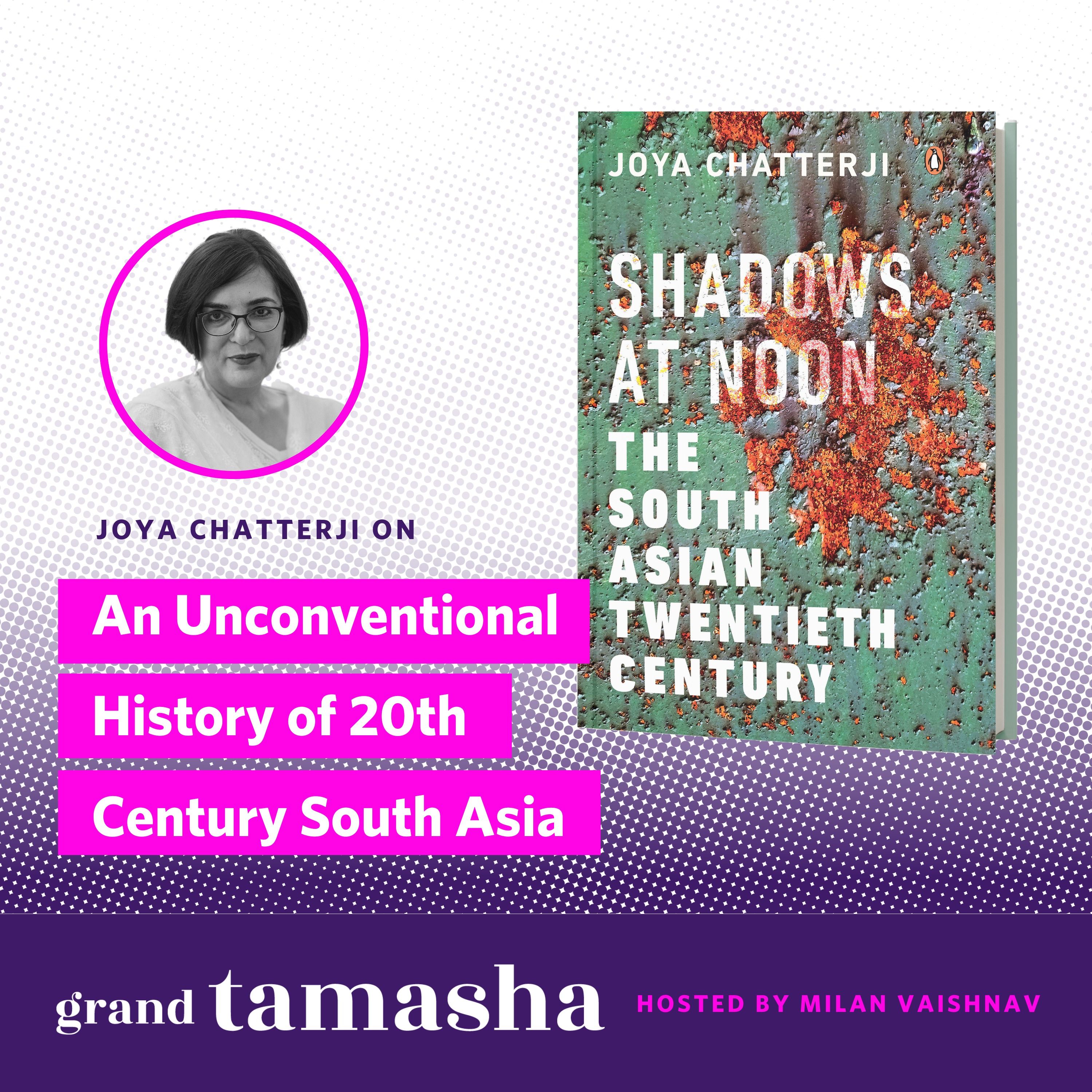
1. William Dalrymple, “Shadows at Noon: The South Asian Twentieth Century by Joya Chatterji review – charming, genre-defying study https://www.theguardian.com/books/2023/jul/03/shadows-at-noon-the-south-asian-twentieth-century-by-joya-chatterji-review-charming-genre-defying-study,” , July 3, 2023. 2. Rana Mitter, “Shadows at Noon — Joya Chatterji exposes the beating heart of south Asia https://www.ft.com/content/a1567043-0b7a-4d01-8de7-751f9ec865ba,” , August 11, 2023. 3. “Ramachandra Guha Revisits India After Gandhi https://grand-tamasha.simplecast.com/episodes/ramachandra-guha-revisits-india-after-gandhi,” , April 19, 2023.

1. Rahul Matthan, “Get on with data protection now that the law’s enacted https://www.livemint.com/opinion/online-views/get-on-with-data-protection-now-that-the-law-s-enacted-11692108114742.html,” , August 15, 2023. 2. Rahul Matthan, “Companies must work hard to ensure data protection https://www.livemint.com/opinion/online-views/companies-must-work-hard-to-ensure-data-protection-11691422491134.html,” , August 7, 2023. 3. Rahul Matthan, “The draft data privacy law surprises with its simplicity https://www.livemint.com/opinion/online-views/the-draft-data-privacy-law-surprises-with-its-simplicity-11689701218651.html,” , July 18, 2023. 4. Anirudh Burman, “Resisting the Leviathan: The Key Change in India’s New Proposal to Protect Personal Data https://carnegieindia.org/2022/11/28/resisting-leviathan-key-change-in-india-s-new-proposal-to-protect-personal-data-pub-88496,” Carnegie India, November 28, 2022.


“Reexamining America’s Bet on India (with Ashley J. Tellis) https://grand-tamasha.simplecast.com/episodes/reexamining-americas-bet-on-india,” , June 21, 2023. [VIDEO] Ely Ratner and Lindsey Ford, “Building a More Resilient Indo-Pacific Security Architecture, Hudson Institute https://www.youtube.com/watch?v=KG_lk3bs-vU,” March 2, 2023. The White House, “Joint Statement from the United States and India https://www.whitehouse.gov/briefing-room/statements-releases/2023/06/22/joint-statement-from-the-united-states-and-india/,” June 22, 2023. Rudra Chaudhuri, Konark Bhandari, and Ashima Singh, “The U.S.-India Initiative on Critical and Emerging Technology (iCET): The Way Forward https://carnegieindia.org/2023/01/24/u.s.-india-initiative-on-critical-and-emerging-technology-icet-way-forward-pub-88859,” Carnegie India, January 24, 2023.

Programming Note: This is the very last episode of Season Nine of Grand Tamasha. As is our usual, we are going to take July and August off to recharge our batteries. We will be back in September with our tenth season of podcasts, and we’re excited about the conversations we have planned for the Fall. Some of our listeners may recall way back in February 2020—the month before the world came to a standstill—Milan sat down with the journalistPramit Bhattacharya https://nam10.safelinks.protection.outlook.com/?url=https%3A%2F%2Ftwitter.com%2Fpramit_b%2F&data=05%7C01%7CIsabel.Villegas%40ceip.org%7C658561ca848d4ff1876208db7bd7dfb1%7C2f1b2c902dab43fdbb45e43dd6e09cc6%7C0%7C0%7C638239939336760373%7CUnknown%7CTWFpbGZsb3d8eyJWIjoiMC4wLjAwMDAiLCJQIjoiV2luMzIiLCJBTiI6Ik1haWwiLCJXVCI6Mn0%3D%7C3000%7C%7C%7C&sdata=XiJEu9GEUBslX6ukkMQ9m6x5gEYw0wiS6H4%2FuZiGokk%3D&reserved=0to discuss the unfolding crisis in Indian economic data. Pramit returns to the show today to discuss a new report that he’s just published with Carnegie titled, “India’s Statistical System: Past, Present, Future https://nam10.safelinks.protection.outlook.com/?url=https%3A%2F%2Fcarnegieendowment.org%2F2023%2F06%2F28%2Findia-s-statistical-system-past-present-future-pub-90065&data=05%7C01%7CIsabel.Villegas%40ceip.org%7C658561ca848d4ff1876208db7bd7dfb1%7C2f1b2c902dab43fdbb45e43dd6e09cc6%7C0%7C0%7C638239939336760373%7CUnknown%7CTWFpbGZsb3d8eyJWIjoiMC4wLjAwMDAiLCJQIjoiV2luMzIiLCJBTiI6Ik1haWwiLCJXVCI6Mn0%3D%7C3000%7C%7C%7C&sdata=M9MjCR3L%2Ba3lGY37aYg%2FmykVxi6QPIlavCe6osh%2FmL4%3D&reserved=0.” Pramit’s new report is the single-best resource on the trials and tribulations of India’s data machinery. It contains the kind of straight-ahead reporting and analysis that people have come to expect from Pramit, who writes the “Truth, Lies, and Statistics https://nam10.safelinks.protection.outlook.com/?url=https%3A%2F%2Fwww.livemint.com%2Fcolumn%2Ftruth%2C-lies-and-statistics&data=05%7C01%7CIsabel.Villegas%40ceip.org%7C658561ca848d4ff1876208db7bd7dfb1%7C2f1b2c902dab43fdbb45e43dd6e09cc6%7C0%7C0%7C638239939336760373%7CUnknown%7CTWFpbGZsb3d8eyJWIjoiMC4wLjAwMDAiLCJQIjoiV2luMzIiLCJBTiI6Ik1haWwiLCJXVCI6Mn0%3D%7C3000%7C%7C%7C&sdata=MxdRkm1ZNwiNmvH6tKq4oJSw41TXuemxlUGiyzvVN%2FI%3D&reserved=0” column forand the “Simply Economics https://nam10.safelinks.protection.outlook.com/?url=https%3A%2F%2Fwww.hindustantimes.com%2Fauthor%2Fpramit-bhattacharya-101644242128053&data=05%7C01%7CIsabel.Villegas%40ceip.org%7C658561ca848d4ff1876208db7bd7dfb1%7C2f1b2c902dab43fdbb45e43dd6e09cc6%7C0%7C0%7C638239939336760373%7CUnknown%7CTWFpbGZsb3d8eyJWIjoiMC4wLjAwMDAiLCJQIjoiV2luMzIiLCJBTiI6Ik1haWwiLCJXVCI6Mn0%3D%7C3000%7C%7C%7C&sdata=C45xeg4%2B29ryDGDjx723k22Qd2RnAzMIeII2gUFfL9A%3D&reserved=0” column for the. Milan and Pramit discuss why it is both the best and worst of times for data users in India, how India squandered its competitive advantage in statistical data, and just exactly what today’s data crisis means for the average Indian. Plus, the two discuss Pramit’s ideas for overhauling the system. Episode notes: “Pramit Bhattacharya on the Crisis in India’s Economic Data https://nam10.safelinks.protection.outlook.com/?url=https%3A%2F%2Fgrand-tamasha.simplecast.com%2Fepisodes%2Fpramit-bhattacharya-on-the-crisis-in-indias-economic-data-kg5zpZKK&data=05%7C01%7CIsabel.Villegas%40ceip.org%7C658561ca848d4ff1876208db7bd7dfb1%7C2f1b2c902dab43fdbb45e43dd6e09cc6%7C0%7C0%7C638239939336760373%7CUnknown%7CTWFpbGZsb3d8eyJWIjoiMC4wLjAwMDAiLCJQIjoiV2luMzIiLCJBTiI6Ik1haWwiLCJXVCI6Mn0%3D%7C3000%7C%7C%7C&sdata=g8GVKOjgStFElxI%2FIMFzXFvIGlNG0XJzd%2FJ6W7MUfmo%3D&reserved=0,”, February 12, 2020. Arvind Subramanian, “India's GDP Mis-estimation: Likelihood, Magnitudes, Mechanisms, and Implications https://nam10.safelinks.protection.outlook.com/?url=https%3A%2F%2Fwww.hks.harvard.edu%2Fcenters%2Fcid%2Fpublications%2Ffaculty-working-papers%2Findia-gdp-overestimate&data=05%7C01%7CIsabel.Villegas%40ceip.org%7C658561ca848d4ff1876208db7bd7dfb1%7C2f1b2c902dab43fdbb45e43dd6e09cc6%7C0%7C0%7C638239939336760373%7CUnknown%7CTWFpbGZsb3d8eyJWIjoiMC4wLjAwMDAiLCJQIjoiV2luMzIiLCJBTiI6Ik1haWwiLCJXVCI6Mn0%3D%7C3000%7C%7C%7C&sdata=DyMTmr%2BF5gSRqQdURqUVJ5jIkzmK3STqmQ7OVL4O%2Foc%3D&reserved=0,” Harvard Kennedy School Working Paper, June 2019. Pramit Bhattacharya, “How India’s Statistical System Was Crippled https://nam10.safelinks.protection.outlook.com/?url=https%3A%2F%2Fwww.livemint.com%2Fnews%2Findia%2Fhow-india-s-statistical-system-was-crippled-1557250292753.html&data=05%7C01%7CIsabel.Villegas%40ceip.org%7C658561ca848d4ff1876208db7bd7dfb1%7C2f1b2c902dab43fdbb45e43dd6e09cc6%7C0%7C0%7C638239939336760373%7CUnknown%7CTWFpbGZsb3d8eyJWIjoiMC4wLjAwMDAiLCJQIjoiV2luMzIiLCJBTiI6Ik1haWwiLCJXVCI6Mn0%3D%7C3000%7C%7C%7C&sdata=KlVyekSvjohKOqeIqYSb6mawfXpkIVd5sn%2B691K71xI%3D&reserved=0,”, May 7, 2019. Pramit Bhattacharya, “Make our statistics credible again https://nam10.safelinks.protection.outlook.com/?url=https%3A%2F%2Fwww.livemint.com%2Fopinion%2Fcolumns%2Flets-revamp-our-data-ecosystem-a-wish-list-for-2022-11641231517059.html&data=05%7C01%7CIsabel.Villegas%40ceip.org%7C658561ca848d4ff1876208db7bd7dfb1%7C2f1b2c902dab43fdbb45e43dd6e09cc6%7C0%7C0%7C638239939336760373%7CUnknown%7CTWFpbGZsb3d8eyJWIjoiMC4wLjAwMDAiLCJQIjoiV2luMzIiLCJBTiI6Ik1haWwiLCJXVCI6Mn0%3D%7C3000%7C%7C%7C&sdata=EidjVaP0%2F53aV5%2B7NZgwuDQcwvIm8Mf0wLv9u7e6%2FgA%3D&reserved=0,”, January 3, 2022.

Last week on the show, Milan sat down with the Carnegie Endowment’s Ashley J. Tellis to discuss his much talked about essay titled, “America’s Bad Bet on India https://nam10.safelinks.protection.outlook.com/?url=https%3A%2F%2Fwww.foreignaffairs.com%2Findia%2Famericas-bad-bet-india-modi&data=05%7C01%7CIsabel.Villegas%40ceip.org%7C0eef77e95d76490a70e408db73354d9d%7C2f1b2c902dab43fdbb45e43dd6e09cc6%7C0%7C0%7C638230445021376974%7CUnknown%7CTWFpbGZsb3d8eyJWIjoiMC4wLjAwMDAiLCJQIjoiV2luMzIiLCJBTiI6Ik1haWwiLCJXVCI6Mn0%3D%7C3000%7C%7C%7C&sdata=xZeWiy%2FSDqz4Aeb4dHdOuqdZUew1wwczbmZhW6cV2QM%3D&reserved=0.” In that piece, Ashley argues that if U.S. policymakers are expecting India to come to America’s aid in the event of a military conflict with China, they would be well advised to keep their expectations in check. Ashley argues that such a military coalition is highly unlikely in the foreseeable future. A month after Ashley’s piece was published, the scholar Arzan Tarapore https://nam10.safelinks.protection.outlook.com/?url=https%3A%2F%2Ftwitter.com%2Farzandc&data=05%7C01%7CIsabel.Villegas%40ceip.org%7C0eef77e95d76490a70e408db73354d9d%7C2f1b2c902dab43fdbb45e43dd6e09cc6%7C0%7C0%7C638230445021376974%7CUnknown%7CTWFpbGZsb3d8eyJWIjoiMC4wLjAwMDAiLCJQIjoiV2luMzIiLCJBTiI6Ik1haWwiLCJXVCI6Mn0%3D%7C3000%7C%7C%7C&sdata=Q%2FUts0u97K9If86egTmVYeFfcAZ4Z7MCb41i%2Fer5pyw%3D&reserved=0 penned a response in titled, “America’s Best Bet in the Indo-Pacific https://nam10.safelinks.protection.outlook.com/?url=https%3A%2F%2Fwww.foreignaffairs.com%2Funited-states%2Famericas-best-bet-indo-pacific&data=05%7C01%7CIsabel.Villegas%40ceip.org%7C0eef77e95d76490a70e408db73354d9d%7C2f1b2c902dab43fdbb45e43dd6e09cc6%7C0%7C0%7C638230445021533191%7CUnknown%7CTWFpbGZsb3d8eyJWIjoiMC4wLjAwMDAiLCJQIjoiV2luMzIiLCJBTiI6Ik1haWwiLCJXVCI6Mn0%3D%7C3000%7C%7C%7C&sdata=sFNiVEmLIZFBVrQJ%2FtqFOGYTwvZKHlOM1xInWzE%2BzCY%3D&reserved=0.” Arzan, a Research Scholar at the Walter H. Shorenstein Asia-Pacific Research Center at Stanford University, joins Milan on the show this week to discuss why coalition warfare is the wrong benchmark with which to assess U.S.-India security cooperation. Milan and Arzan discuss the policy differences between Delhi and Washington, the practical ways in which the United States and India can cooperate to constrain China, and the prospects of iCET (the U.S.-India Initiative on Critical and Emerging Technology). Plus, the two discuss the future of the Quad and how Australia fits into the budding U.S.-India partnership. Episode notes: “Reexamining America’s Bet on India (with Ashley J. Tellis) https://nam10.safelinks.protection.outlook.com/?url=https%3A%2F%2Fgrand-tamasha.simplecast.com%2Fepisodes%2Freexamining-americas-bet-on-india&data=05%7C01%7CIsabel.Villegas%40ceip.org%7C0eef77e95d76490a70e408db73354d9d%7C2f1b2c902dab43fdbb45e43dd6e09cc6%7C0%7C0%7C638230445021533191%7CUnknown%7CTWFpbGZsb3d8eyJWIjoiMC4wLjAwMDAiLCJQIjoiV2luMzIiLCJBTiI6Ik1haWwiLCJXVCI6Mn0%3D%7C3000%7C%7C%7C&sdata=9UWYqk7rRhSFpYXAO3nXh45fxbkv7rDIv8G6pohx1HE%3D&reserved=0,” , June 21, 2023. Arzan Tarapore, “What the Quad could learn from AUKUS https://nam10.safelinks.protection.outlook.com/?url=https%3A%2F%2Fwww.lowyinstitute.org%2Fthe-interpreter%2Fwhat-quad-could-learn-aukus&data=05%7C01%7CIsabel.Villegas%40ceip.org%7C0eef77e95d76490a70e408db73354d9d%7C2f1b2c902dab43fdbb45e43dd6e09cc6%7C0%7C0%7C638230445021533191%7CUnknown%7CTWFpbGZsb3d8eyJWIjoiMC4wLjAwMDAiLCJQIjoiV2luMzIiLCJBTiI6Ik1haWwiLCJXVCI6Mn0%3D%7C3000%7C%7C%7C&sdata=bBXxC6HziUafgZR7yYSUGlpdf2asC0Bzh24DTe0vWhA%3D&reserved=0,” The Interpreter (blog), April 3, 2023. Christopher Chivvis, “What Biden Wants From Modi’s State Visit https://nam10.safelinks.protection.outlook.com/?url=https%3A%2F%2Fcarnegieendowment.org%2F2023%2F06%2F20%2Fwhat-biden-wants-from-modi-s-state-visit-pub-90013%3Futm_source%3Dcarnegieemail%26utm_medium%3Demail%26utm_campaign%3Dannouncement%26mkt_tok%3DODEzLVhZVS00MjIAAAGMfZsY2hai9qKsrIH99GWuEod9qsfy85Gpk_FoQtF3HWM91Rx-XD3mX0GHHoHdTEVUH2OSyEjuwEdhbQtHYDc5b4Y5EOuCKacySNL_ww4c&data=05%7C01%7CIsabel.Villegas%40ceip.org%7C0eef77e95d76490a70e408db73354d9d%7C2f1b2c902dab43fdbb45e43dd6e09cc6%7C0%7C0%7C638230445021533191%7CUnknown%7CTWFpbGZsb3d8eyJWIjoiMC4wLjAwMDAiLCJQIjoiV2luMzIiLCJBTiI6Ik1haWwiLCJXVCI6Mn0%3D%7C3000%7C%7C%7C&sdata=XUteU0otXfKcjpmBY25V%2BbCTQ7w4rGSonIvOY1j7ltI%3D&reserved=0,” Carnegie Endowment for International Peace, June 20, 2023. “Pivotal States: What Direction for the U.S.-India Partnership (with Christopher Chivvis, Lisa Curtis, and Ashley J. Tellis) https://nam10.safelinks.protection.outlook.com/?url=https%3A%2F%2Fwww.youtube.com%2Fwatch%3Fv%3DKqm-gPl4OSk&data=05%7C01%7CIsabel.Villegas%40ceip.org%7C0eef77e95d76490a70e408db73354d9d%7C2f1b2c902dab43fdbb45e43dd6e09cc6%7C0%7C0%7C638230445021533191%7CUnknown%7CTWFpbGZsb3d8eyJWIjoiMC4wLjAwMDAiLCJQIjoiV2luMzIiLCJBTiI6Ik1haWwiLCJXVCI6Mn0%3D%7C3000%7C%7C%7C&sdata=hmQ%2F31OE%2BDpsPdIPqx0xV58HHhqebxoleyiBVMVOBHA%3D&reserved=0,” Carnegie Endowment for International Peace, June 9, 2023 Arzan Tarapore, “India and the US gear up for strategic competition https://www.aspistrategist.org.au/india-and-the-us-gear-up-for-strategic-competition/,” The Strategist, June 26, 2023.

In a few days, Indian Prime Minister Narendra Modi will arrive in Washington, D.C. to begin a historic state visit that is expected to further cement ties between the United States and India. Over the past two decades, this relationship has gone from awkward resentment during the Cold War to full-throated embrace after the year 2000. But a new essay by Ashley J. Tellis https://nam10.safelinks.protection.outlook.com/?url=https%3A%2F%2Fcarnegieendowment.org%2Fexperts%2F198&data=05%7C01%7CIsabel.Villegas%40ceip.org%7C1db1352b67524ea3d9b208db6ce8bbe6%7C2f1b2c902dab43fdbb45e43dd6e09cc6%7C0%7C0%7C638223519077384375%7CUnknown%7CTWFpbGZsb3d8eyJWIjoiMC4wLjAwMDAiLCJQIjoiV2luMzIiLCJBTiI6Ik1haWwiLCJXVCI6Mn0%3D%7C3000%7C%7C%7C&sdata=EY%2B253QzXyAMMgbumQnuNmTebu6GPXvbsY%2F4qUx%2BtZ4%3D&reserved=0 in titled, “America’s Bad Bet on India https://nam10.safelinks.protection.outlook.com/?url=https%3A%2F%2Fwww.foreignaffairs.com%2Findia%2Famericas-bad-bet-india-modi&data=05%7C01%7CIsabel.Villegas%40ceip.org%7C1db1352b67524ea3d9b208db6ce8bbe6%7C2f1b2c902dab43fdbb45e43dd6e09cc6%7C0%7C0%7C638223519077384375%7CUnknown%7CTWFpbGZsb3d8eyJWIjoiMC4wLjAwMDAiLCJQIjoiV2luMzIiLCJBTiI6Ik1haWwiLCJXVCI6Mn0%3D%7C3000%7C%7C%7C&sdata=wzSnBIroG%2FBvROvOJXBwApuGYiRejcbhZ2rt5B8AEA4%3D&reserved=0,” warns that there are limits to U.S.-India cooperation and Washington would be wise to wake up to them. Ashley, who holds the Tata Chair for Strategic Affairs at the Carnegie Endowment for International Peace, joins Milan on the podcast this week to discuss his essay and his motivations for writing it. Ashley and Milan discuss the bipartisan bet U.S. officials have made on India since the year 2000, the logic of “strategic altruism,” and the challenges facing the bilateral defense partnership. Plus, the two preview Modi’s state visit and discuss both its symbolic importance as well as it’s substantive significance. Episode notes: 1. Ashley J. Tellis, “America’s Bad Bet on India https://nam10.safelinks.protection.outlook.com/?url=https%3A%2F%2Fwww.foreignaffairs.com%2Findia%2Famericas-bad-bet-india-modi&data=05%7C01%7CIsabel.Villegas%40ceip.org%7C1db1352b67524ea3d9b208db6ce8bbe6%7C2f1b2c902dab43fdbb45e43dd6e09cc6%7C0%7C0%7C638223519077384375%7CUnknown%7CTWFpbGZsb3d8eyJWIjoiMC4wLjAwMDAiLCJQIjoiV2luMzIiLCJBTiI6Ik1haWwiLCJXVCI6Mn0%3D%7C3000%7C%7C%7C&sdata=wzSnBIroG%2FBvROvOJXBwApuGYiRejcbhZ2rt5B8AEA4%3D&reserved=0,” , May 1, 2023. 2. “U.S.-India Relations, With Ashley J. Tellis https://nam10.safelinks.protection.outlook.com/?url=https%3A%2F%2Fwww.cfr.org%2Fpodcasts%2Fus-india-relations-ashley-j-tellis&data=05%7C01%7CIsabel.Villegas%40ceip.org%7C1db1352b67524ea3d9b208db6ce8bbe6%7C2f1b2c902dab43fdbb45e43dd6e09cc6%7C0%7C0%7C638223519077540597%7CUnknown%7CTWFpbGZsb3d8eyJWIjoiMC4wLjAwMDAiLCJQIjoiV2luMzIiLCJBTiI6Ik1haWwiLCJXVCI6Mn0%3D%7C3000%7C%7C%7C&sdata=FWTsxuK0YKcF1aD0F5eO%2BAPX%2BtJi6cuXz7Y8aBHPweI%3D&reserved=0,” (podcast), May 16, 2023. 3. Ashley J. Tellis, Bibek Debroy, and C. Raja Mohan, eds., https://nam10.safelinks.protection.outlook.com/?url=https%3A%2F%2Fcarnegieendowment.org%2F2022%2F12%2F01%2Fgrasping-greatness-making-india-leading-power-pub-88523&data=05%7C01%7CIsabel.Villegas%40ceip.org%7C1db1352b67524ea3d9b208db6ce8bbe6%7C2f1b2c902dab43fdbb45e43dd6e09cc6%7C0%7C0%7C638223519077540597%7CUnknown%7CTWFpbGZsb3d8eyJWIjoiMC4wLjAwMDAiLCJQIjoiV2luMzIiLCJBTiI6Ik1haWwiLCJXVCI6Mn0%3D%7C3000%7C%7C%7C&sdata=TLc8k%2FnLPthx%2FfZok2f%2BrbEhPNVN4s7kGAXRKQwLKkI%3D&reserved=0 (New Delhi: Penguin Viking, 2022) 4. Arzan Tarapore, “America’s Best Bet in the Indo-Pacific https://nam10.safelinks.protection.outlook.com/?url=https%3A%2F%2Fwww.foreignaffairs.com%2Funited-states%2Famericas-best-bet-indo-pacific&data=05%7C01%7CIsabel.Villegas%40ceip.org%7C1db1352b67524ea3d9b208db6ce8bbe6%7C2f1b2c902dab43fdbb45e43dd6e09cc6%7C0%7C0%7C638223519077540597%7CUnknown%7CTWFpbGZsb3d8eyJWIjoiMC4wLjAwMDAiLCJQIjoiV2luMzIiLCJBTiI6Ik1haWwiLCJXVCI6Mn0%3D%7C3000%7C%7C%7C&sdata=kZdyzexHB0kgTFRUNWFAWgyo7Y4r2lHtuYfW6XqguzU%3D&reserved=0,” , May 29, 2023.

Later this summer, California could be first American state to ban discrimination on the basis of caste. California’s move, and the moves by universities, cities, and towns across the country, to raise issues of caste discrimination has generated a massive controversy that is roiling the Indian American community in the United States. One reporter, the freelance journalist Sonia Paul https://nam10.safelinks.protection.outlook.com/?url=https%3A%2F%2Ftwitter.com%2Fsonipaul&data=05%7C01%7CIsabel.Villegas%40ceip.org%7C44fcd5198c4a4f144b1708db67f57853%7C2f1b2c902dab43fdbb45e43dd6e09cc6%7C0%7C0%7C638218076222614536%7CUnknown%7CTWFpbGZsb3d8eyJWIjoiMC4wLjAwMDAiLCJQIjoiV2luMzIiLCJBTiI6Ik1haWwiLCJXVCI6Mn0%3D%7C3000%7C%7C%7C&sdata=RaLqLsp%2BwbrhqunTLyN3RxmUqJxmM9BHvfb7oxnA6s4%3D&reserved=0, has been doggedly pursuing this story for years, even before it became a mainstream news issue. Sonia is an award-winning journalist, writer, producer and story editor based in Oakland, California, and she is the daughter of immigrants from India and the Philippines. Sonia joins Milan on the show this week to talk more about her reporting and the state of caste in America. Sonia and Milan discuss the difficulties of reporting on caste in America, the coded ways in which discrimination often takes place, and the debates in the Indian American community over moves to add caste as a protected category. Plus, the two discuss the fierce contest over California’s draft legislation. Episode notes: 1. Sonia Paul, “The hidden caste codes of Silicon Valley https://nam10.safelinks.protection.outlook.com/?url=https%3A%2F%2Fwww.bbc.co.uk%2Fsounds%2Fplay%2Fw3ct5fbq&data=05%7C01%7CIsabel.Villegas%40ceip.org%7C44fcd5198c4a4f144b1708db67f57853%7C2f1b2c902dab43fdbb45e43dd6e09cc6%7C0%7C0%7C638218076222614536%7CUnknown%7CTWFpbGZsb3d8eyJWIjoiMC4wLjAwMDAiLCJQIjoiV2luMzIiLCJBTiI6Ik1haWwiLCJXVCI6Mn0%3D%7C3000%7C%7C%7C&sdata=SlYlykR%2BH4yOB%2B4G6uFacLEsougVlNlxtxtnDMwVfiA%3D&reserved=0,” , April 18, 2023. 2. Sonia Paul, “Trapped in Silicon Valley’s Hidden Caste System https://nam10.safelinks.protection.outlook.com/?url=https%3A%2F%2Fwww.wired.com%2Fstory%2Ftrapped-in-silicon-valleys-hidden-caste-system%2F&data=05%7C01%7CIsabel.Villegas%40ceip.org%7C44fcd5198c4a4f144b1708db67f57853%7C2f1b2c902dab43fdbb45e43dd6e09cc6%7C0%7C0%7C638218076222614536%7CUnknown%7CTWFpbGZsb3d8eyJWIjoiMC4wLjAwMDAiLCJQIjoiV2luMzIiLCJBTiI6Ik1haWwiLCJXVCI6Mn0%3D%7C3000%7C%7C%7C&sdata=K3mR517zdSy%2B2JQaGGDZ2jLrdX8sqIofF9m1HQ6KhRo%3D&reserved=0,” , March 1, 2022. 3. “California Could Become the First State to Ban Caste Discrimination https://nam10.safelinks.protection.outlook.com/?url=https%3A%2F%2Fwww.kqed.org%2Fnews%2F11952188%2Fcalifornia-caste-discrimination&data=05%7C01%7CIsabel.Villegas%40ceip.org%7C44fcd5198c4a4f144b1708db67f57853%7C2f1b2c902dab43fdbb45e43dd6e09cc6%7C0%7C0%7C638218076222614536%7CUnknown%7CTWFpbGZsb3d8eyJWIjoiMC4wLjAwMDAiLCJQIjoiV2luMzIiLCJBTiI6Ik1haWwiLCJXVCI6Mn0%3D%7C3000%7C%7C%7C&sdata=jgmqoIR0%2FYTBfTxK8LCu3uGLkMeaWIH2OhHYS%2B9q1cE%3D&reserved=0,” (podcast), June 5, 2023. 4. Sumitra Badrinathan, Devesh Kapur, Jonathan Kay, and Milan Vaishnav, “Social Realities of Indian Americans: Results From the 2020 Indian American Attitudes Survey,” Carnegie Endowment for International Peace, June 9, 2021. 5. Maari Zwick-Maitreyi, Thenmozhi Soundararajan, Natasha Dar, Ralph F. Bheel, and Prathap Balakrishnan, https://nam10.safelinks.protection.outlook.com/?url=https%3A%2F%2Fstatic1.squarespace.com%2Fstatic%2F58347d04bebafbb1e66df84c%2Ft%2F603ae9f4cfad7f515281e9bf%2F1614473732034%2FCaste_report_2018.pdf&data=05%7C01%7CIsabel.Villegas%40ceip.org%7C44fcd5198c4a4f144b1708db67f57853%7C2f1b2c902dab43fdbb45e43dd6e09cc6%7C0%7C0%7C638218076222770746%7CUnknown%7CTWFpbGZsb3d8eyJWIjoiMC4wLjAwMDAiLCJQIjoiV2luMzIiLCJBTiI6Ik1haWwiLCJXVCI6Mn0%3D%7C3000%7C%7C%7C&sdata=oIJ2dfDgvw3VPVFWumNAmsZCAYoSw9nY4tRhh4FxPNA%3D&reserved=0 (Equality Labs, 2018). 6. Sonia Paul, “From Black Lives Matter, activists for India’s discriminated Dalits learn tactics to press for dignity https://theworld.org/stories/2015-11-08/black-lives-matter-activists-indias-discriminated-dalit-learn-tactics-press,” , November 12, 2015. 7. Patrick Cox, “Which version of Indian history do American school students learn? https://theworld.org/stories/2017-04-27/which-version-indian-history-do-american-school-students-learn,” , April 27, 2017. 8. Sonia Paul, "When Caste Discrimination Comes To The United States https://www.npr.org/sections/codeswitch/2018/04/25/605030018/when-caste-discrimination-comes-to-the-united-states," podcast, April 25, 2018
