


Talk of the Bay from KSQD


About
Available on








Community
668 episodes
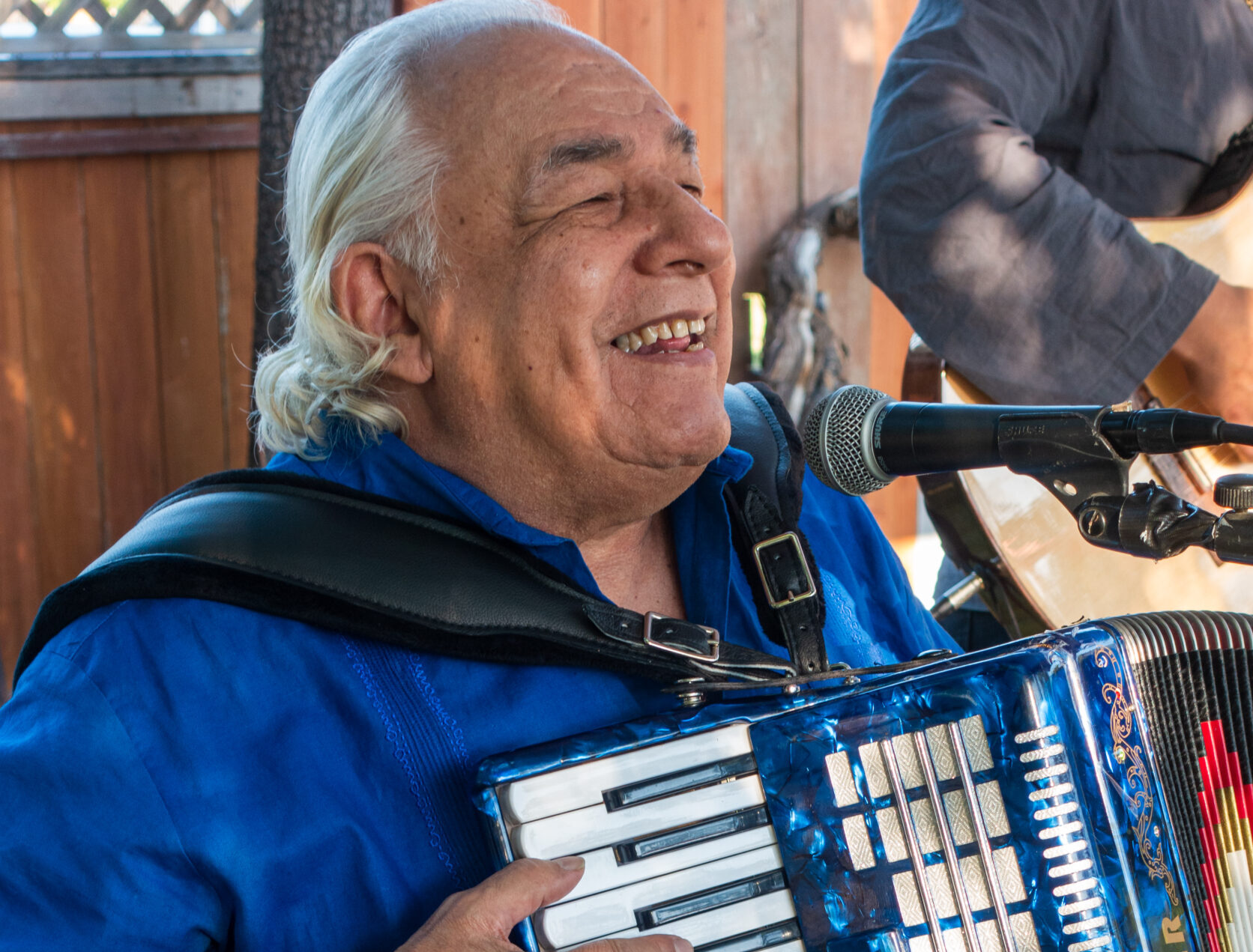
As the Watsonville Film Festival https://watsonvillefilmfest.org/ approaches its final weekend, documentary filmmakers Jeff Dunn and Jon Silver talk about the changing world of their craft. Jon Silver’s short film, “Living in in Exile”, about the life of Nicaraguan “nuevo cancion” singer, Carlos Mejia Godoy, is playing at the festival in Seaside on March 15th. Mejia Godoy was forced to flee his homeland after speaking out against the government of Daniel Ortega, who he had once supported through his music and his work as a radio host.

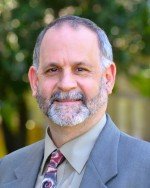
Woody Hastings is the Phase Out Polluting Fuels program manager for The Climate Center https://theclimatecenter.org. He is an energy and environmental policy analyst, strategic planner, and community organizer with over thirty years of experience in the non-profit, governmental, and private sectors. Woody has been with The Climate Center since 2010 when he was hired to help lead the formation of what became California’s second Community Choice Agency https://www.cpuc.ca.gov/consumer-support/consumer-programs-and-services/electrical-energy-and-energy-efficiency/community-choice-aggregation-and-direct-access-/consumer-information-on-ccas---frequently-asked-questions (CCA), Sonoma Clean Power (SCP). After the launch of SCP Woody worked to expand CCA in other parts of California including the Central Coast https://3cenergy.org. In 2020, with CCAs established throughout the state, Woody’s focus shifted to work in the oil & gas supply side issues of extraction and refining of fossil fuels. The emphasis is on how to advance a comprehensive, coordinated, equity-centered, worker-friendly managed transition away from fossil fuels in California. The initiative he manages also includes demand-side end-use of fossil and other polluting fuels, particularly in transportation policy and building electrification. Woody received his bachelor’s degree in Environmental Studies from San Francisco State University with an emphasis on sustainability and social justice. He is also a Fellow of the Leadership Institute for Just and Resilient Communities https://dailyacts.org/leadershipinstitute/.
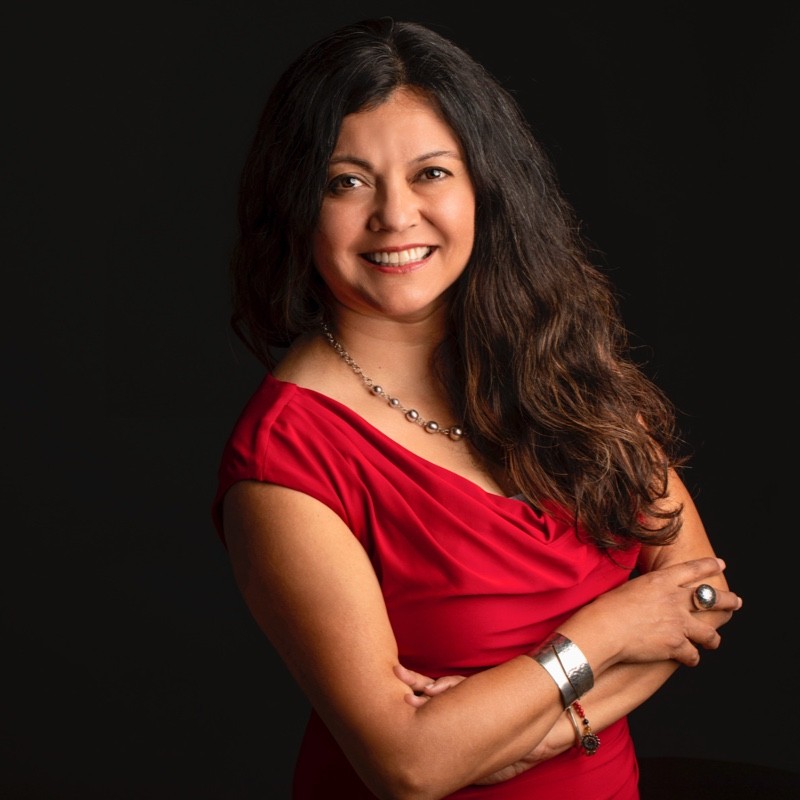
It’s no small task to start something new and keep it going for 12 years. That’s the story for film maker and mover and shaker, Consuelo Alba. Seeing a lack of Latino/a representation in film, and especially film festivals, she decided to do something about it. Now in its 12th year, the festival has become the landmark event for Latine film makers from local and Bay Area cities.

Sifting through the results of the primary election, we find some trends locally and statewide and discuss the future of the progressive movement in Santa Cruz. Is it dead, or just dormant?

AMERICAN ISRAEL PUBLIC AFFAIRS COMMITTEE (AIPAC) PACS have been flooded with donations since the Hamas attack on Israel on Oct. 7, 2023. Congressional Candidate in CALIFORNIA DISTRICT 19 (Santa Cruz to Paso Robles) SEAN DOUGHERTY is running against incumbent JIMMY PANETTA, an establishment Democrat whose father, LEON PANETTA, served as Chief of Staff for BILL CLINTON, and as both CIA Director and Defense Secretary under PRESIDENT OBAMA. Dougherty called a press conference on Feb. 28 at the Santa Cruz, CA County Courthouse to discuss Panetta’s “windfall” contributions from the AIPAC PAC, totaling $184,400.00. Panetta received the largest, single-day donation from the AIPAC PAC in December of 2023—more than any other Congressional candidate. And this amount represents Panetta’s largest single donation. Why is the AIPAC PAC spending so much money on this California Congressional district? AMI CHEN MILLS interviews Sean about campaign finance; polling figures on the American public’s feelings about a ceasefire in Israel and Gaza; big money in US political campaigns; why Jimmy Panetta is being accused of voting to “end social security,” according to critics–and what the candidate (Sean) would do with the US military budget, after cutting it in half, if elected. A special news segment produced by the team. NOTES AND RESOURCES: Sean Dougherty website: www.SeanforPeace.com http://www.SeanforPeace.com The Lever Online News and Commentary: https://www.levernews.com/ On AIPAC’s new funds and how it is spending them: https://www.levernews.com/inside-the-israel-lobbys-new-90-million-war-chest/ Interviews with global journalists on the ongoing death toll and destruction in Gaza, and on AIPAC funds. Plus: US Senate Candidates and more–excellent and in-depth election coverage from ROSE AGUILAR at (a KSQD morning program produced by Pacifica’s KALW): https://www.kalw.org/people/rose-aguilar

Talk of the Bay hosted by Bodie Shargel features an interview with County Supervisor of District 3 Justin Cummings about Measure K and L, a 1/2 cent sales tax for the County and City respectively. Later Bodi talks with Tony Nuñez, committee member for YES on Measure N, supporting a bond for the Pajaro Valley Health Care District. https://santacruzlocal.org/election/2024-mar-05/measures/k-county-sales-tax/ https://santacruzlocal.org/election/2024-mar-05/measures/l-santa-cruz-sales-tax/ https://santacruzlocal.org/election/2024-mar-05/measures/l-santa-cruz-sales-tax/https://santacruzlocal.org/election/2024-mar-05/measures/measure-n-pajaro-health/
Political reporter for Lookout Santa Cruz, Chris Neely takes us through the California and Santa Cruz races as we near the March 5th election.
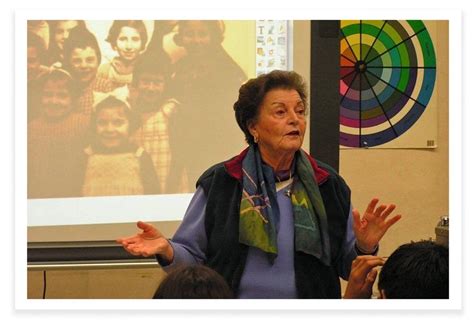
Gitta Ryle was 7 when her mother sent her and her 10-year-old sister Renee from their home in Vienna, Austria to France to be hidden from the Nazis. What followed was seven years of separation and fear, always hiding and hoping not to be caught and killed. Her father was killed in Auschwitz. Gitta tells her story and reflects on what it means in our current time and how therapy helped her want to live and shed the anger that was weighing her down. She is approaching her 92nd birthday and finds purpose in telling about what happened so that no one can deny history and hopefully, we will learn from the past not to repeat the tragedies of fear and fascism.
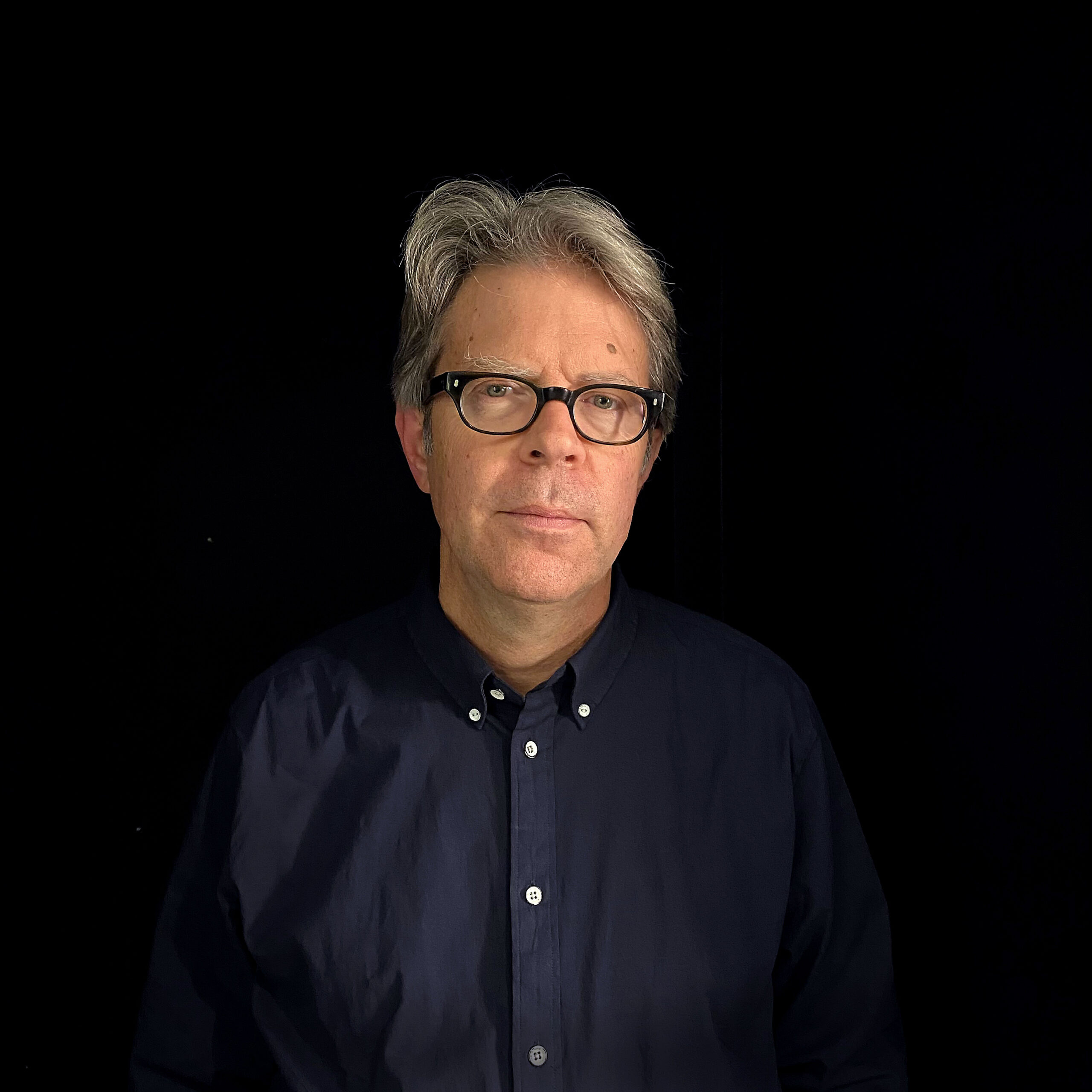
Jonathan Franzen is a novelist and essayist whose sprawling multilayered novels about contemporary America have elicited critical acclaim. His novels combine brilliant storytelling while exploring the intimate connections of family relations. Franzen’s 2001 novel, “The Corrections,” won the National Book Award and the James Trait Black Memorial Prize and was a finalist for the Pulitzer Prize for Fiction. Since then, he has written four more novels, including “Crossroads,” a national bestseller named one of the New York Times 100 Notable Books of 2021. It was also cited by Barack Obama, Financial Times, Good Housekeeping, Oprah Daily, Newsweek, NPR, Publishers Weekly, TIME, USA Today, Vogue, The Washington Post and many more. His recent essay in the New Yorker magazine Cats of L.A. https://www.newyorker.com/magazine/2024/01/01/how-the-no-kill-movement-betrays-its-name takes on the issue of feral cats and the efforts of communities to try to reduce their numbers in humane ways. He is also a resident of Santa Cruz County, which is why we have the honor of having this time with him on KSQD.
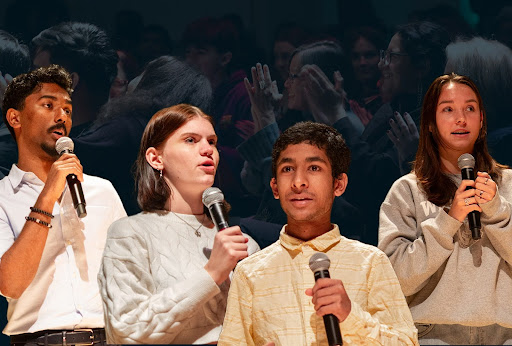
In this episode, we hear three heartfelt stories of struggle and healing from freshmen at UCSC. Each fall quarter, UCSC students write and perform personal “Slug” stories in front of an audience of peers and faculty as part of John R. Lewis College’s Social Justice and Community core course. Modeled after The Moth Radio Hour, this project has been collecting student stories for the past several years in an audio archive. Read more in this article: https://news.ucsc.edu/2023/12/slug-stories.html?utm_source=12-12-2023&utm_medium=email&utm_campaign=tuesday-newsday
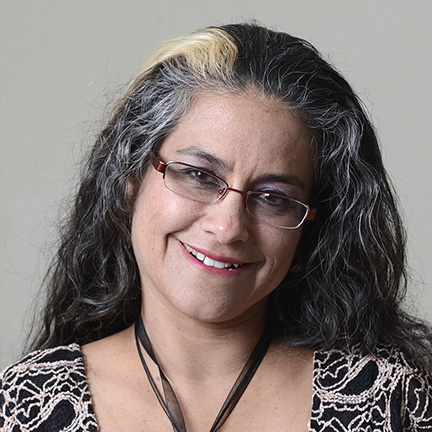
Award-winning journalist Claudia Melendez Salinas has been writing in-depth articles about people at the margins who do not traditionally get covered by local or national daily papers. Voices of Monterey Bay http://voicesofmontereybay.org is a passion project of local journalists Julie Reynolds, Royal Calkins, Joe Livernois, and Melendez covering in-dept stories impacting Monterey County. She talks about her recent investigative work and the need for local journalism.
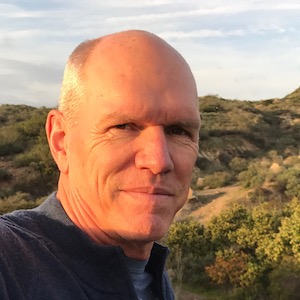
Craig James started his professional career as a Cabrillo College dropout at the age of seventeen. Four years as a sailing instructor, boatbuilder, machinist, and carpenter taught him the value of craftsmanship and what it means to have real responsibilities. He also figured out that laboring in the hot sun can make college seem quite attractive. Born and raised in California, he graduated from UC Davis with a degree in electrical engineering, and some years later earned his master’s degree in Computer Science (Artificial Intelligence and linguistics) from Stanford University. It was while at Stanford studying artificial intelligence, linguistics, and philosophy that James got his first inspiration to write a book. In addition to his writing, James is an accomplished amateur guitarist, a tolerable clarinet player, a deep-sea sailor, and the father of three. In his spare time, he enjoys sailing, hiking and bicycling in the beautiful beaches and mountains of Northern California. The books: https://authorcajames.com/books/the-religion-virus/ https://authorcajames.com/books/affairs-of-state/ (a novel)
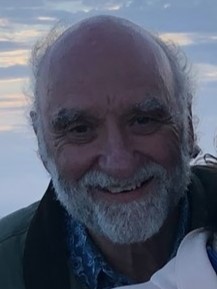
Thom Zajac began publishing the Santa Cruz Comic News in September of 1984. Now in its 40th year, each issue of the Comic News features well over 100 cartoons from the nation’s leading political cartoonists. The Comic News is the longest running cartoon newspaper and granddaddy of them all, having inspired over 100 copycat publications, many of which are still going to this day. Thom has adapted to changing technology and media markets over the decades, and the Comic News website https://thecomicnews.com now features weekly updates and highlighted cartoonists, among other things, while the print edition continues to grace local newsstands.
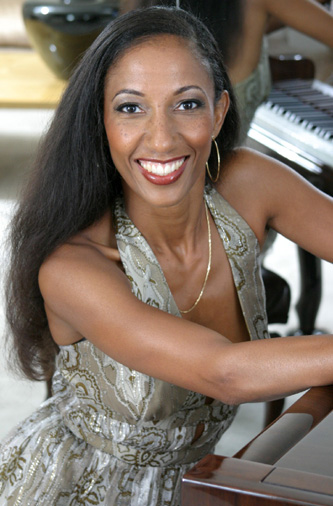
Musical Soulmates Performer's Collabortive is a group of local musicians who lift up black musical voices and talents. Victoria Theodore, Anthony Jones, and Kate Saphir Alm visited KSQD and shared some soulful songs by the likes of Stevie Wonder, Bach, and Bill Withers in anticipation of their upcoming concert series. They sing, play keyboards, and chat with the host about their music and careers. Victoria Theodore spent seven years touring with Stevie Wonder as his keyboard and percussion player and six years with Beyonce. http://victoriatheodore.com/index.php/about/

What is an EIR? How will the creation of the Santa Cruz Rail Trail affect the local flora and fauna? And, what plans are being created to mitigate its existence? Talk of the Bay Co-hosts Rocky and Jack Snyder interview Justin Davilla, Senior Ecologist for Ecosystems West Consulting to dig deep into the present Environmental Impact Report being developed for segments 8 &9 of the Rail and Trail, which are being overseen by the city and county of Santa Cruz. Davilla specializes in resource inventory and planning, as well as biological and aquatic impacts of projects. If you don't know what charismatic mega-fauna are, you are about to find out! Justin speaks thoughtfully about the creatures and plants that have made their home along the railroad tracks over the past one-hundred years since the tracks were laid. Plus, What about the trees? Three-hundred and eighty-one trees will be removed along segments 8 & 9, including heritage and native species. Justin goes into detailed descriptions of how government agencies work thoughtfully to mitigate damage to the ecosystem during public works projects. His insights into the environmental impact of the Rail Trail are in-depth and sure to answer questions you may have and inspire some you have never even thought of before!

It is said that there are more opinions than people in Santa Cruz county, and the Rail and Trail project has not only spanned decades, it swarms with opinions, ideas, and contradictions. As the Santa Cruz Regional Transportation Commission takes its next steps towards studying the nuts and bolts of what an integrated rail and trail could look like for the Santa Cruz Branch Rail Line, Christine Barrington continues her Rail-Trail series and digs into common questions and conundrums that have beset the project. This is episode #3 in a 5-part series and features former Regional Transportation Commission Executive Directors Linda Wilshusen (1985-2005) and George Dondero (2006-2018) along with Board members of Friends of the Rail and Trail: Barry Scott, Sally Arnold and Bruce Sawhill. SANTA CRUZ COUNTY REGIONAL TRANSPORTATION COMMISSION: ZERO EMISSION PASSENGER RAIL & TRAIL PROJECT STUDY https://sccrtc.org/projects/multi-modal/zeprt/ OFFER YOUR FEEDBACK at the Preliminary Project and Need Open Houses: IN PERSON: __ Feb. 12, 6-7:30 p.m. Ramsay Park Family Center 1301 Main St., Watsonville, Ca 95076 __ __ Feb. 13, 6-7:30 p.m. Live Oak Grange 1900 17th Ave. Santa Cruz, CA 95062 __ VIRTUAL: Beginning on Feb. 5, 2024 online at www.zeprt.com http://www.zeprt.com/ PREVIOUS RAIL & TRAIL EPISODES: #1) The Rail & Trail: Visiting the Past; Finding the Future https://ksqd.org/the-rail-and-trail-visiting-the-past-finding-the-future/ #2) The Rail & Trail Part 2: 2206-2018: George Dondero, Cory Caletti and John Leopold https://ksqd.org/the-rail-and-trail-part-2-2006-2018-george-dondero-john-leopold-and-cory-caletti/
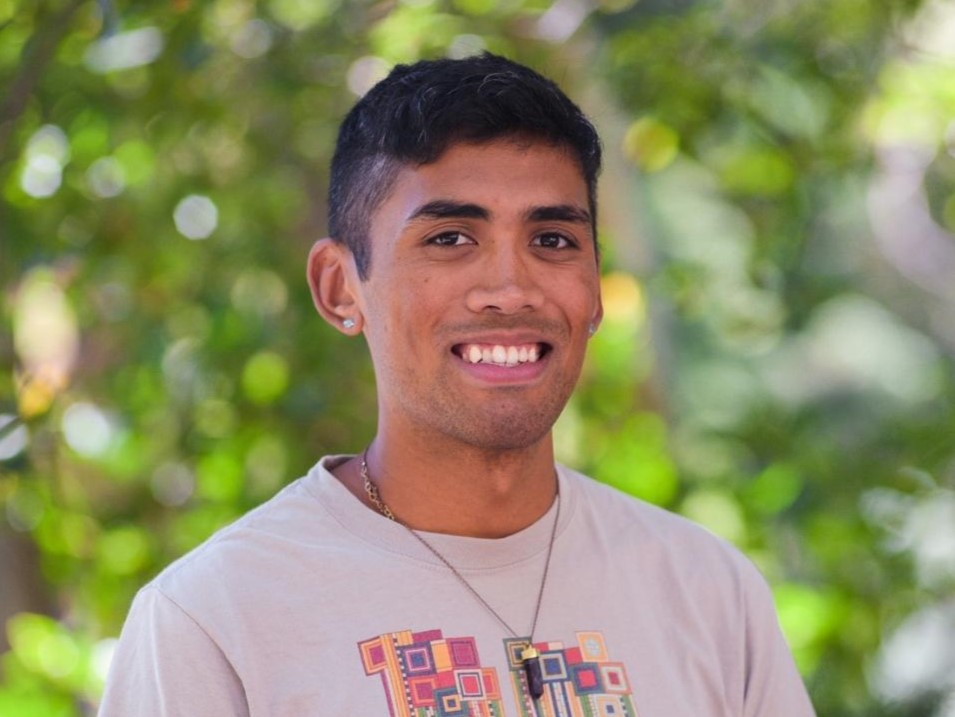
Kieren Rudge is a doctoral student in the Society & Environment Division of the Department of Environmental Science, Policy, and Management at UC Berkeley. Their research interests lie at the intersection of climate justice, critical race theory, and decolonization studies. Before coming to UC Berkeley, Kieren researched climate policy, planning, and discourse across various geographies within the continental United States, as well as in the U.S. Virgin Islands. Currently, they are focused on analyzing how systems of climate change adaptation may reproduce military colonial power structures and environmental injustice in Pacific Islands. In particular, they are studying how these systems are impacting communities in the territory of Guåhan (Guam) considering how political status impacts self-determination of Indigenous peoples with regard to climate action. Kieren has a Master in Environmental Science from Yale, and a Bachelor’s in Environmental Sicence from Johns Hopkins University. Their research has been published in Nature Climate Change https://www.nature.com/articles/s41558-023-01690-9, Urban Climate https://www.nature.com/articles/s41558-023-01690-9, and Climate Risk Management https://www.sciencedirect.com/science/article/pii/S2212096321000796, among other journals.

As the presidential primary season gets underway, how will fake news influence how people, or whether people vote? How will it impact the views people hold about the nominees? What are deep fakes and how can we deal with them? Those are a few questions tackled by Dr. Nolan Higdon, professor of media studies at UCSC and author of The Anatomy of Fake News in this timeley interview.
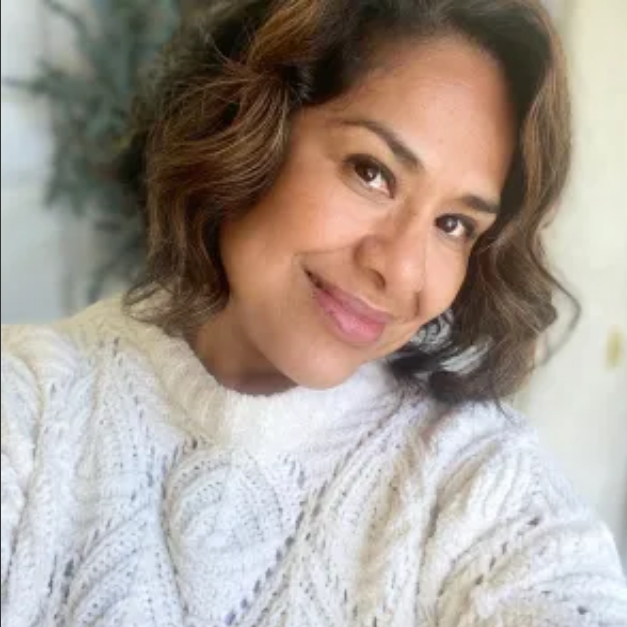
As we watch public meetings devolve into shouting, politicians doxing and being doxed, private and public figures being harassed for their statements or views, and even a death threat on the life of Santa Cruz's mayor, how do we walk it back? That was a question I posed to Silvia Morales, Executive Director of the Resource Center for Nonviolence in Santa Cruz. What can the concepts of Kingian nonviolence and civil disobedience help with as we strive for a more civil public discourse? For a list of their programs, see their website: https://rcnv.org/events/
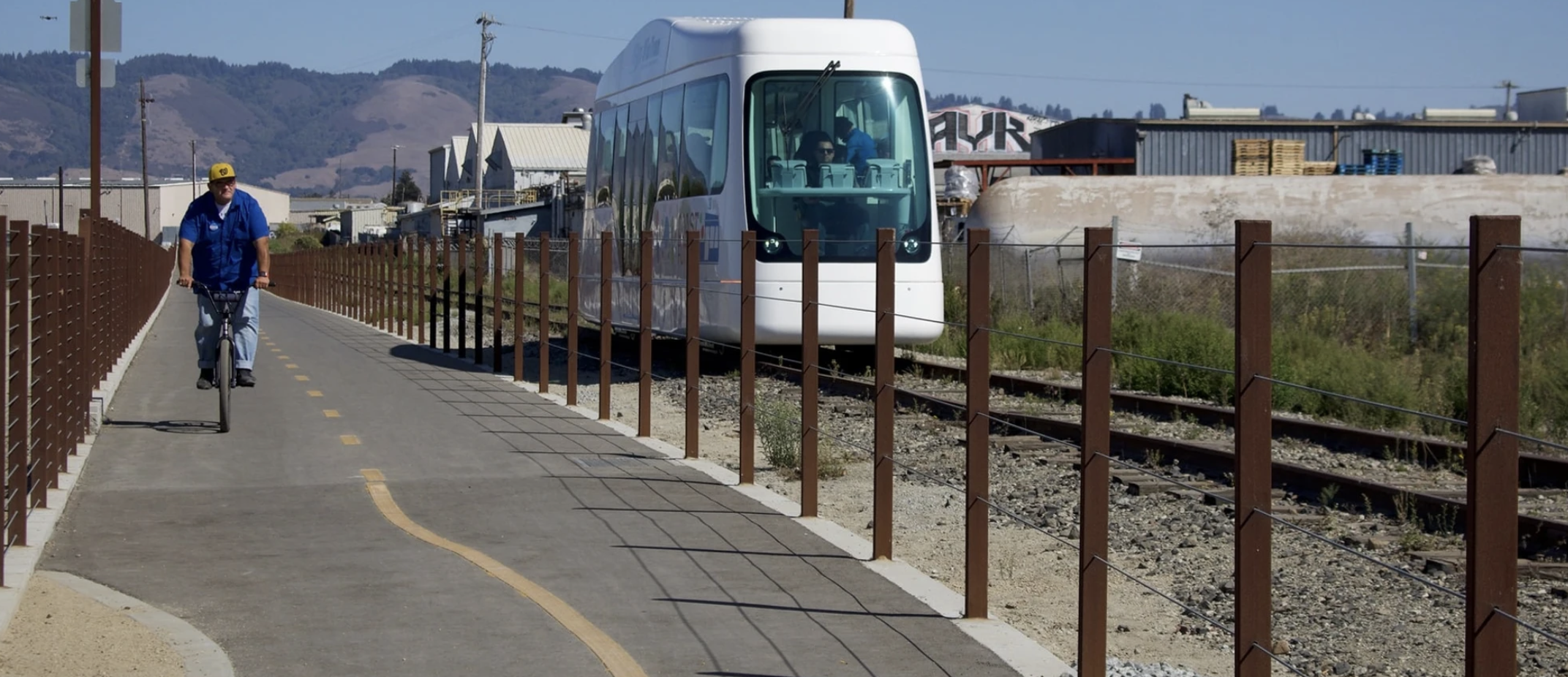
The question of whether to develop a passenger rail system along the Santa Cruz Branch Rail Line has been explored, questioned, developed, studied, contested and voted on across an arc of nearly four decades. Santa Cruz county stands before two important inflection points related to this project. One is an imminent Regional Transportation Commission in-depth study to explore the engineering and environmental realities of delivering a light-rail system to our region; The other is a critical election coming up March 5 for three open District Supervisor seats. Those who claim these posts will be in powerful positions relative to the rail question. I am Christine Barrington and a regular talk show host at KSQD. If you are anything like me, you have likely felt confused and perhaps befuddled by the complication and contentiousness of the Rail and Trail. And, what is this project, really? Is it Rail? Is it a Trail. Both? Neither? Given the dire state of traffic in our region, and the deep concern I feel around climate issues, I set out to clarify my own confusion and document my journey to understand. Along the way I discovered that projects of this scale and complexity are epic, with champions and challengers, visionaries and volunteers, policy makers and politicians--and so many studies and story lines it makes the head spin. What I also discovered is that, ultimately, the story of the Rail and Trail is about people–people who vote, people who plan, and people who politic. I met some incredible people in my quest to grasp the arc of the Rail and Trail possibility, and I hope you enjoy the journey with me. In this initial episode we go back in time to capture the first glimpses of the vision for the Rail-Trail. Featured Guests: Congressman SAM FARR, Former Regional Transportation Executive Director (1985-2005) LINDA WILSHUSEN, JOHN BRISSENDEN, Co-Founder of Land Trust Santa Cruz, the Community Foundation, as well as Life Lab, and MICAH POSNER, former Executive Director of People Power, and co-founder of Friends of the Rail and Trail. For a history of rail in Santa Cruz please enjoy this excellent show from KSQD's Len Beyea: Derek Whaley shares the history of train routes through the Santa Cruz mountains and how they changed the destiny of this region https://ksqd.org/derek-whaley-shares-the-history-of-train-routes-through-the-santa-cruz-mountains-and-how-they-changed-the-destiny-of-this-region/

In this extraordinary interview with Palestinian Dr. and Professor IZZELDIN ABUELAISH, who lost three daughters and a niece to Israeli tank shelling in Gaza in 2009—the same day, 15 years ago, as this program--and who recently lost 22 family members in the Gaza Strip to the Israel-Hamas war, Dr. Izzeldin pleads for an end to the siege on Gaza and addresses co-existence, hate, anger, forgiveness and how to move forward toward peace. … We begin with a report on the tumultuous events of JAN. 9 and beyond, when the SANTA CRUZ CITY COUNCIL considered a community-drafted ceasefire resolution; what happened at that meeting and what happened after that. Dr. Abuelaish addresses comments from local participants in that meeting as well as calls and emails from live listeners. This show was aired as a special production of both the "TALK OF THE BAY” program and "MOMENT OF TRUTH WITH AMI CHEN MILLS" at KSQD. SHOW NOTES AND RESOURCES Professor and Doctor Izzeldin Abuelaish is a Palestinian Canadian physician and internationally recognized human rights and peace activist devoted to advancing health and education opportunities for women and girls in the Middle East. Dr. Abuelaish was born and raised in Jabalia Refugee Camp in the Gaza Strip. He lived through many hardships there, including poverty, violence, and the horrific tragedy of his three daughters’ and a niece’s deaths in the 2009 Gaza War. Professor Abuelaish has been nominated five times for the NOBEL PEACE PRIZE, and is known as the Nelson Mandela and “Martin Luther King of the Middle East,” having dedicated his life to using health as a vehicle for peace. Prof. Abuelaish’ s book, I Shall Not Hate: A Gaza Doctor’s Journey on the Road to Peace and Human Dignity, an international best seller and autobiography of his loss and transformation, has achieved worldwide acclaim. Published in 2010, now translated into 23 languages, this book was inspired by the loss of his three daughters – BESSAN, MAYAR, AND AYA – and their cousin NOOR who were murdered by Israeli tank shelling on January 16th, 2009, the book has become a testament to Izzeldin’s commitment to forgiveness as the solution to conflict and the catalyst towards peace. I Shall Not Hate has become both a documentary, due out this year and a play. Past US PRESIDENT JIMMY CARTER has said of Dr Abuelaish … “He has expressed a remarkable commitment to forgiveness and reconciliation that describes the foundation for a permanent peace in the Holy Land.” Professor Abuelaish has been awarded nine honorary doctorates, The Order of Ontario, The Meritorious Service Cross, the Mahatma Gandhi Peace Award of Canada; and many other international-level awards. Doctor Abuelaish founded the Canadian charity, Daughters for Life, in memory of his daughters. Daughters for Life provides young women with the opportunity to pursue higher education and to become strong agents of change. Currently, Dr. Abuelaish lives in Toronto and is a Professor at the Dalla Lana School of Public Health at the University of Toronto. , the book: https://www.amazon.com/Shall-Not-Hate-Doctors-Journey/dp/0802779492 The DAUGHTERS FOR LIFE Foundation: https://daughtersforlife.com/
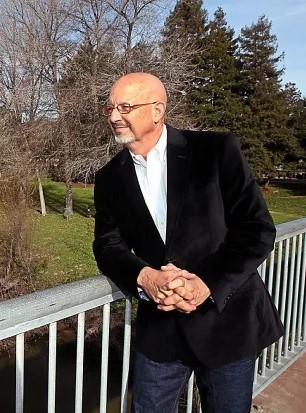
Fresh off a meeting with the person who threatened to kill him over his vote on a council resolution regarding violence in the Middle East, Santa Cruz Mayor, Fred Keeley talks about the necessity of being able to disagree without being disagreeable. While defending his vote and the people's right to have their say, Keeley talks about the necessity for peaceful disagreement. A half-hour before this interview, Keeley met with the teen who threatened to stab him to death over his vote, and the father, both of whom apologized both verbally, and in a written statement.
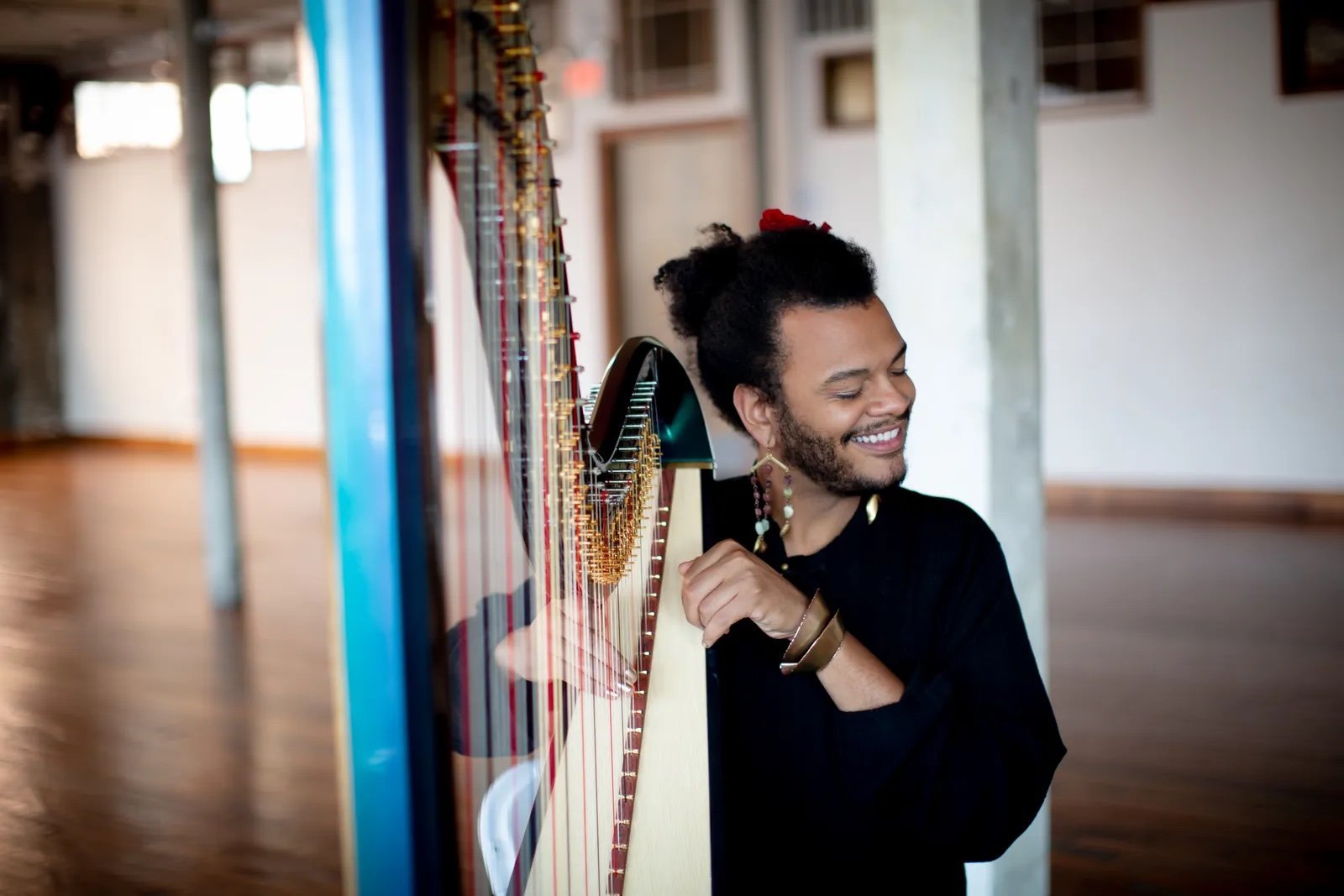
Each year, the Community Music School of Santa Cruz hosts the Santa Cruz Harp Festival, a celebration of this beautiful instrument. This year's festival includes Celtic, Classical and Improvisational music. In this interview, we hear from Executive Director, Susan Willats about the history of the harp, and the festival that celebrates it. Artists are Calvin Arsenia, Jesse Autumn, Shelley Phillips, and Jennifer Cass. https://www.communitymusicschool.org/harp-festival https://youtu.be/D8Ia_qQeO-E?si=i6RULTHG3gQ8rOWz
A Dream Deferred by Gail Thornton Borkowski THE DREAM A SHOT DEFERRED (A RADIO PRODUCTION) Narrator: It was April 3, 1968. My 3rd grade classmates and I were buzzing with anticipation for our Spring Festival performance. The two elementary schools, Hamilton Branch No. 3 and 4, in the heart of St. Louis, Missouri, had created a variety of performances for parents and teachers. It was a celebration we all looked forward to. My class had spent the last month practicing. Narrator: Our class had created a matador themed story, complete with sock puppets and a cha-cha line dance, choreographed by our young teacher. I was the narrator and I was excited, unlike my last public reading as a kindergartener, when I feared that God would strike me down for reading about holly & mistletoe in a Catholic church. I was taught that only members of my small, inner-city, Pentecostal church would make it to heaven, and I just knew this blasphemous reading in a Catholic church was surely my ticket to hell. Surviving until 3rd grade, I was hopeful that having dodged that bolt of lightning, God was okay with me reading in public. More importantly, so was my mother. Narrator: I was born to a mother, left single. She was a domestic worker living in poverty. One of the unnoticed, a mere statistic on the welfare roll. Faithful to God, her church and doing her best to raise a teenager and two young children. Sound: Narrator: She was strong, educated in life, not a classroom, and struggling to survive. Her political acumen consisted of reading every magazine she could get her hands on. And even when given the power to vote, she chose to pray for those leading the nation. Bittersweet to those of us who came to understand the power of voting and the memory of those who died in the struggle for one person, one vote. Narrator: As an 8-year-old, my world consisted of the 10 or so blocks that made up my inner-city neighborhood. The people, shabby like the sidewalks and alleys strewn with broken glass and dry dirt, existed like the dead grass that never seemed to have a chance to grow even in spring when the sun would shine. Narrator: There was the church, the laundromat, the five & dime, the butcher shop, the Velvet Freeze ice cream shop, and school. Aside fromchurch, school was the anchor in my neighborhood. School was the other place of order and discipline and occasionally creativity. Narrator: Wednesday, April 3, 1968, harsh light blocked my view of the parents and teachers in the auditorium. But, I read my heart out at that microphone, telling the story of the matador that fought the bull and won. I joined my classmates on the dance floor and cha-cha’d to rousing applause as we ended our presentation. It was a thrill to hear the praise of parents and teachers for my reading. Our class celebrated the next day with an impromptu party, hosted by our teacher. She was young compared to other teachers. Maybe in her 20s or 30s. She was brown, beautiful and shared her passion for experiential learning with a room full of eager, little Black boys and girls. Sound: Narrator: Friday, April 5th 1968, I walked into my 3rd grade classroom to see my teacher, head-down on her desk with a radio turned on next to her head. She sobbed Narrator: Most of my classmates, like me, were confused and scared. Why was our teacher crying? Why did she have a radio on in class? She (teacher's name forgotten) eventually told us, through choking tears, Dr. Martin Luther King, Jr. had been killed. Sound under: Narrator: Our shock was tempered by naïveté. Some of our Black families were politically astute, knew, followed and supported the work of Dr. King. Some families, like mine, although religious, stood on the political fringe, praying and hoping for change, with little to no personal activism. Narrator: My classmates and I huddled together in small groups, whispering our suspected understandings to each other. Then, I was called to the principal's office. I walked down that short hall even more confused and scared. Narrator: When the Principal motioned for me to quickly sit down, I was speechless with fear. The principal, finally registering my confusion, gently explained how impressed he was with my reading talent and how well I read during the Spring Festival. He then told me that Dr. Martin LutherKing, Jr. had been assassinated. I stared at him. He clarified. Reverend Martin Luther King, Jr. had been assassinated. Narrator: Assassinated was a big word for a 3rd grader. But I knew the definition. Still confused, I sat silent. He handed me a piece of paper with lots of words on it. I looked at the paper then at him still not quite understanding. He then asked if I could memorize the "I Have A Dream" speech and read it for assembly on Monday. Narrator: Nervously, I looked at the speech. It was then I noticed the other teachers in the office all staring at me, all smiling through what I would later understand as painful devastation. Narrator: So many thoughts rushed into my 8-year-old mind. Instantly, those words and that piece of paper felt weighted like a bowling ball. I sensed the anguish on the adult faces as I quickly scanned that crowded room. Narrator: The speech was long as I recall. I told the principal it was too much for me to memorize over the weekend and I would need to ask my momma if I could read it anyway. He cut me off and said he would call her. I quickly told him my home number, then, scared again, told him she wouldn’t be there until she walked home from work after 5 o’clock. He tried to hide his exasperation, but then told me he would write a note to my mother explaining. I hesitated, then asked him if I could just read it on Monday. He wrote the note and handed it to me. Narrator: That night, when momma got home, She walked into the living room, slowly took off her shoes and sat silently in the green chair for a long time looking out the windows. Our flat had three large windows in the living room that looked out onto the street. It was a place we all sat at times tracking life in our neighborhood. As she bowed her head, I knew she was praying. Narrator: I waited for a long as I could stand, then handed her the note. She motioned for the speech, which I handed to her. She read it, looked at me and said it was a lot to memorize by Monday. I told her I asked the principal if I could just read it. She bowed her head and took a breath. She handed me both papers, nodded, then walked back to the kitchen. I let out a breath and started to read the speech. Narrator: Monday, April 8, 1968, in the overflowing school auditorium of Hamilton Branch No. 4, the principal read his prepared welcome, choking up a bit at the announcement of Rev. King’s death. I stood in the glare of the lights, blinded beyond my view of the microphone. I could hear murmured words, greetings, coughs and laments in the crowded room. I caught a glimpse of two little ones, oblivious to the room saturated in sorrow, running and giggling with abandon away from their parents, until they were scooped up and hushed in harsh tones. Narrator: A teacher hurriedly motioned for me to read, the principal so overcome with emotion he had stepped aside to dry his eyes. Narrator (Little Girl): I don’t remember all of the words I read of Dr. Martin Luther King, Jr.s "I Have A Dream” speech in that auditorium of children, teachers, and family members (originally delivered on August 28, 1963 at the March on Washington). But I read my heart out, again. Words that I didn’t understand the deeper meaning of for years. READING: I have a dream… Deeply rooted in the American dream…that my four little children will one day live in a nation where they will not be judge by the color of their skin but by the content of their character… Narrator (Little Girl): I continued… “I have a dream that little black boys and black girls will be able to join hands with little white boys and white girls and walk together as sisters and brothers…” Narrator: Although I couldn’t see the faces in that auditorium, I heard the sobs and sniffles, the unrestrained tears. And my heart ached for the Black bodies and souls in that auditorium, and the overwhelming assemblage of pain. It was so much to bear. I found a space and I cried. I cried for my neighbors: the butcher, the clerk, my teacher, the principal; for feeling powerless in that assembly space steeped in unbearable sorrow. My 3rd grade mind struggled to understand a world so much more complex than my school yard, neighborhood and church. Narrator: I didn’t realize how intensely the anger and rage would follow this tragedy. Our TV was often broken, and having no money for replacement parts, it often sat in our living room large, black and devoid of any sound, picture or information. And yes, the rage and anger did follow with people rioting in the nation’s streets. And me sheltered in my flat blanketed in my mother prayers. Narrator: Fifty plus years later, my tears fall again recalling that day and the years in between. So much and so little has changed. I don’t remember all of his words I spoke on that Monday in 1968, but I do remember the collective anguish and sorrow. I could ask, “why kill a man speaking out for the rights of the oppressed and downtrodden? Speaking to the humanity we all deserve? But we all know the answer. Narrator: Rev. King, as he was known in my house was a faithful man, who walked in the middle of our Black struggle. He was the messenger, the voice of reason and an articulate witness to the horrors of poverty, oppression and bigotry. It wasn’t until I was older that I understood how that gunshot had shattered the hopes and dreams of my inner-city community. Narrator: I do remember reading: And even though we face the difficulties of today and tomorrow, I still have a dream. It is a dream deeply rooted in the American dream. I have a dream that one day this nation will rise up and live out the true meaning of its creed: “We hold these truths to be self-evident, that all men are created equal…. Sound under: And Rev. King spoke: “I don’t know what will happen now. We’ve got some difficult days ahead, but it really doesn’t matter with me now, because I’ve been to the mountain top. I don’t mind. Like anybody I would like to live a long life. Longevity has its place. But I’m not concerned about that now. I just want to do God’s will. And he’s allowed me to go up to the mountain and I’ve looked over and I’ve seen the promised land. I may not get there with you, But I want you to know tonight, that we as a people will get to the promised land. I’m not worried about anything. I’m not fearing any man. Mine eyes have seen the glory of the coming of the Lord.” Narrator: If Dr. Martin Luther King, Jr. were here with us, with me today, I’d hold his hand, walk with him, and we would all walk to that mountaintop; the oppressed, disenfranchised, the allies, and accomplices. Our work is not done until we can all stand in unity, compassion and love. Narrator: I remember these words he spoke: “Let us rise up tonight with a greater readiness…And when this happens, and when we allow freedom to ring, when we let it ring from every village and every hamlet, from every state and every city we will be able to speed up that day when ALL of God’s children, black men and white men, Jews and Gentiles, Protestants and Catholics will be able to join hands and sing in the words of the old Negro spiritual: Free at last! Free at last! Thank God Almighty, we are free at Last!” Narrator: We all deserve a better world. We are all responsible in realizingthat dream. You and me, together. Thank you, Dr. Martin Luther King, Jr. for your legacy, your faith and seeing the dream realized. Meet you on the mountaintop. By Gail Thornton Borkowski November 29, 2023 This was produced by GTBMediaworks/StyrdyByrd Productions for Bill Peter’s Radio Acting Workshop 2023. Sound: Freesound.org (non-copyrighted) Dr. Martin Luther King, Jr. audio- Youtube https://www.36north.org/ https://www.santacruzactorstheatre.org/tickets (https://www.santacruzactorstheatre.org/tickets)

Five local reporters convened in KSQD to review the top stories and discuss the year ahead in the news. They are Stephen Baxter and Kara Meyberg Guzman of Santa Cruz Local, Dan Schmalz of Monterey County Weekly, and Wallace Baine of Lookout Santa Cruz. We hear about housing/homelessness, water, octopus' garden, and, did anybody mention Otter 841? No, they did not! So, there you go.
John Mulry is a local community builder, founder of the Future Urbanist Club, a local chapter of the national non-profit StrongTowns https://www.strongtowns.org, a creative strategist by trade, and a devotee of trickster gods. He originally began his college education training to be an Episcopal priest, but turned his focus to social systems and human behavior.
As Director at Justicia Lab https://www.justicialab.org and Immigration Advocates Network https://www.immigrationadvocates.org, Rodrigo Camarena has more than five years of experience in leading and managing nonprofit legal tech initiatives that aim to transform immigrant justice through collaboration, creativity, and technology. He has a MSc in Economic History from the London School of Economics and Political Science, and is a graduate of the Stanford University Executive Program for Nonprofit Leaders. Rodrigo has worked hand in hand with immigrants and their advocates to identify common challenges and incubate scalable digital tools that help immigrants navigate the immigration system, find workplace justice, and more. He also supports innovative thinkers who turn strong concepts into prototypes and provide mentorship to participants of Civic Hall Labs’ CivicXcel program.

We're having some real fun in this Behind the Mic interview featuring KSQD Dj Jennifah, host of Friday night’s Zombie Jamboree. Together, we take raucous romp through Jennifah’s three decades as a broadcaster, how she found her way to Santa Cruz, and what fuels her eclectic joyful live shows each Friday from 8-10 pm. You can catch Jennifah every Friday night from 8-10 pm on her show Zombee Jamboree. Every week she curates an original program based on a theme. You may not know it, but you can view complete song playlists from all our excellent musical programming. Just click on a show off our schedule. It’s how I build my best playlists, and, of course, if you miss a show, you can enjoy all of them off of our archives. These late night shows are REALLY fun. Don’t miss ‘em.
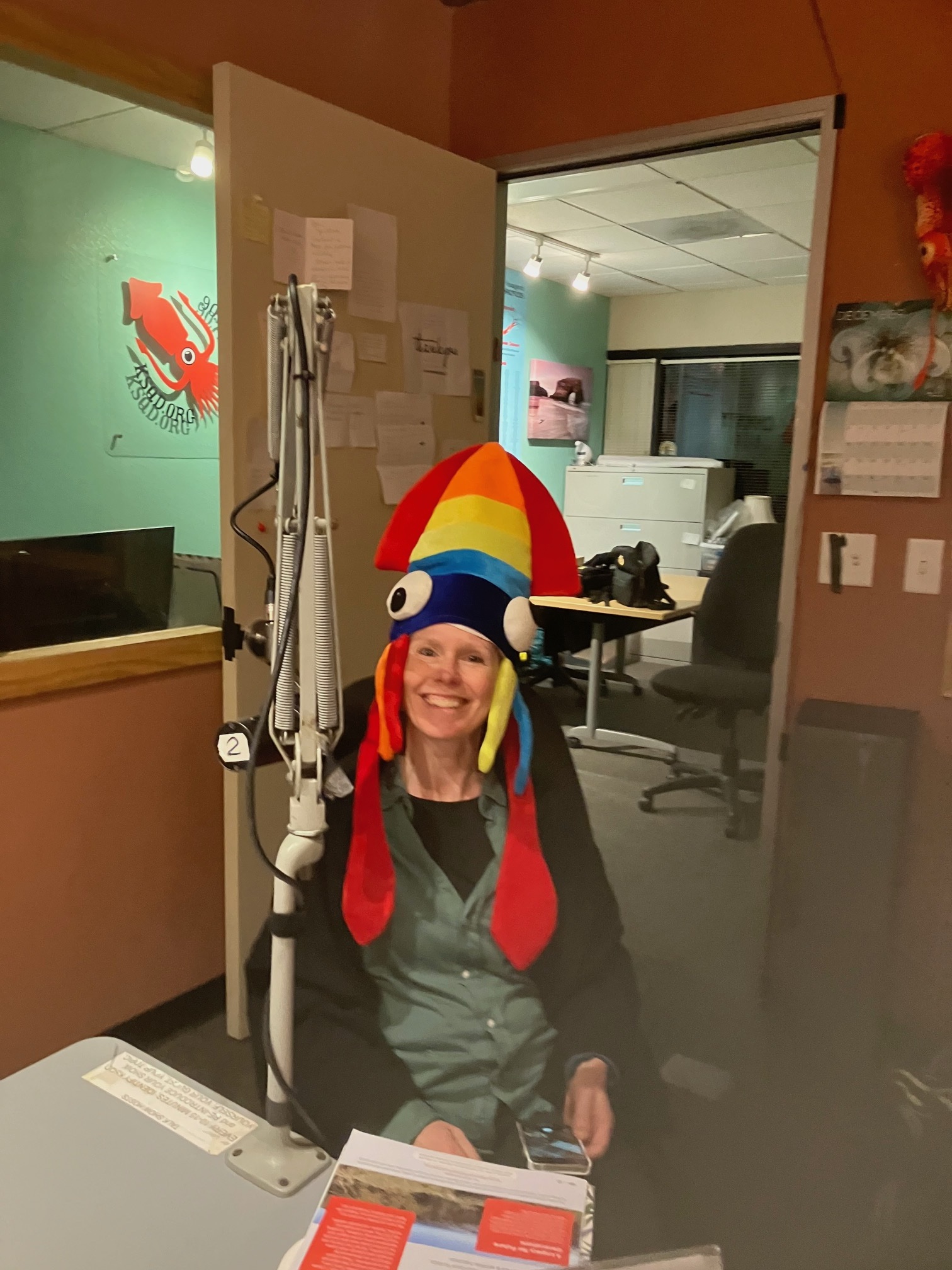
Efforts are underway to qualify a new citizen's ballot initiative that would raise over $7 million a year for environmental restoration efforts, from wildfire and flood recovery to clean water and beaches. It's called the “Santa Cruz County Safe Drinking Water, Clean Beaches, Wildfire Risk Reduction, and Wildlife Protection Act.” and it may be on the November 2024 ballot if environmental groups can gather enough signatures to qualify. We hear from Executive Director of the Land Trust of Santa Cruz County, Sarah Newkirk, one of the bill's supporters, about the benefits of a permanent fund to revive and preserve our local waterways and forests. In this picture, she is proudly wearing a K-Squid rainbow squid hat, which made discussing this serious topic without laughing, more than difficult.
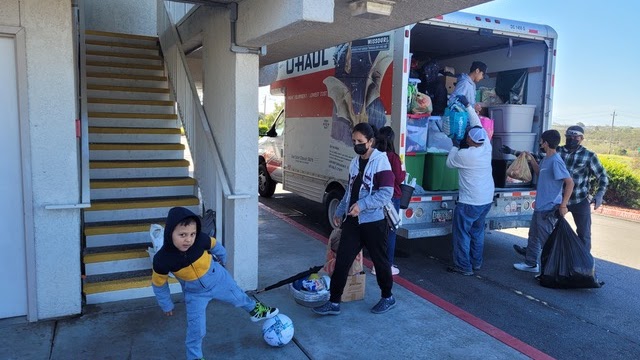
The Santa Cruz Welcoming Network https://www.santacruzwelcomingnetwork.com/ was founded a few years ago because local people felt the need to do something specific to help new arrivals to our community, whether it be practicing for a driver's test or getting help with asylum claims. In this interview, we hear from two members of an Afghani family of thirteen who recently found community and support getting settled in their new home after fleeing the Taliban after the takeover of that country. They are currently building a fund that would support legal assistance for asylum seekers. We talk with Najeeb, a former sports CEO for the Olympic search committee, and his 18 year-old daughter, Nadja, who is working toward a law degree so she can help others like her. We also hear from Network organizer, Paul Johnston and volunteer, Julie.
