


One Year


About
Available on








Community
102 episodes
From One Year host Josh Levin, a new series about history, sports, and the surprising threads connecting the past and present. In this episode: two mysterious Mets-related buttons kick off a journey that spans more than 60 years, with stops at a New York high school, the 1964 Republican Convention, a tiny town in rural Texas, and the courtroom where Donald Trump got fined $355 million. This episode was reported and written by Josh Levin. It was produced by Kevin Bendis, who also made the theme song and did the scoring. Derreck Johnson created our artwork. For a list of sources used in this episode and to stay updated on what we’re doing, go to replaybooth.show. Email us at replayboothpodcast@gmail.com. * Hosted on Acast. See acast.com/privacy https://acast.com/privacy for more information.

From One Year host Josh Levin, a new series about history, sports, and the surprising threads connecting the past and present. In this episode: two mysterious Mets-related buttons kick off a journey that spans more than 60 years, with stops at a New York high school, the 1964 Republican Convention, a tiny town in rural Texas, and the courtroom where Donald Trump got fined $355 million. This episode was reported and written by Josh Levin. It was produced by Kevin Bendis, who also made the theme song and did the scoring. Derreck Johnson created our artwork. For a list of sources used in this episode and to stay updated on what we’re doing, go to replaybooth.show. Email us at replayboothpodcast@gmail.com. Learn more about your ad choices. Visit megaphone.fm/adchoices
Why is it that we can tell someone “I’m totally fine!” and they instantly know we’re not? Gestures, facial expressions, tone of voice, and other subtle nonverbal cues play a huge role in how we connect with one another. In this episode, host Charles Duhigg explores how we communicate without words, including a deep dive into the visual and tonal cues embedded in one of the biggest sitcoms of all time, The Big Bang Theory. He talks with Dr. Dustin York, a professor at Maryville University who studies nonverbal communication and worked in public relations for Barack Obama’s 2008 presidential campaign. He also sits down with Dave Goetsch, a co-executive producer and longtime writer for The Big Bang Theory, and journalist Jessica Radloff, who wrote an exhaustive book about the show. This Slate miniseries dives into the art and science of meaningful conversations, inspired by Duhigg’s bestselling book, Supercommunicators. Supercommunicators was produced by Sophie Summergrad and Derek John, who also did the sound design. Our technical director is Merritt Jacob and our supervising producer is Joel Meyer. Learn more about your ad choices. Visit megaphone.fm/adchoices
Why are some people able to talk with just about anyone—about almost anything? One answer may lie in the questions we ask—and how deeply we ask them. Stick with us here… In this episode, host Charles Duhigg examines why deep questions are so powerful and how to ask them in everyday life. He talks to Nick Epley, psychology professor at the University of Chicago and lifelong researcher of deep questions. And we catch up with Mandy Len Catron, 10 years after she wrote the viral New York Times article “The 36 Questions That Lead to Love.” This Slate miniseries dives into the art and science of meaningful conversations, inspired by Duhigg’s bestselling book, Supercommunicators. Supercommunicators was produced by Derek John and Sophie Summergrad. Our technical director is Merritt Jacob. Joel Meyer is our supervising producer. Learn more about your ad choices. Visit megaphone.fm/adchoices

The 2004 presidential race would be the first fully Fox News election—a contest that was framed by Fox, and fought on its terms. But the fight over Fox News was about more than just partisan politics. It also launched covert ops against reporters and let loose a secret army of online trolls. And when a Fox producer made serious allegations against Bill O’Reilly, the network showed just how far it would go to defend its biggest star—no matter the cost. To read our full reporting on the most recent legal actions between Bill O'Reilly and Andrea Mackris, and learn more about how a non-disclosure agreement from two decades ago has kept Mackris silent, go to slate.com/foxnda. Want more from Slow Burn? Join Slate Plus to unlock full access to all seasons, including members-only bonus episodes from The Rise of Fox News. You'll also enjoy ad-free listening to all of your favorite Slate podcasts. Subscribe now by clicking "Try Free" at the top of the Slow Burn show page on Apple Podcasts. Or, visit slate.com/slowburnplus to get access wherever you listen. Season 10 of Slow Burn was written and reported by Josh Levin. It was executive produced by Lizzie Jacobs. Slow Burn is produced by Sophie Summergrad, Joel Meyer, and Rosie Belson with help from Patrick Fort, Jacob Fenston, and Julia Russo. Derek John is Slate’s executive producer of narrative podcasts. This season was edited by Susan Matthews and Hillary Frey. Merritt Jacob is our senior technical director. Mix and sound design by Joe Plourde. Our theme music was composed by Alexis Cuadrado. Derreck Johnson created the artwork for this season. Episode artwork by Ivylise Simones. Learn more about your ad choices. Visit megaphone.fm/adchoices

As Fox News gathered strength, progressive activists turned to comedian Al Franken and fledgling online communities to punch back. But could the left put up a real fight without a Fox News of its own? And what did Fox’s critics miss when they focused only on its politics? Want more from Slow Burn? Join Slate Plus to unlock full access to all seasons, including members-only bonus episodes from The Rise of Fox News. You'll also enjoy ad-free listening to all of your favorite Slate podcasts. Subscribe now by clicking "Try Free" at the top of the Slow Burn show page on Apple Podcasts. Or, visit slate.com/slowburnplus to get access wherever you listen. Season 10 of Slow Burn was written and reported by Josh Levin. It was executive produced by Lizzie Jacobs. Slow Burn is produced by Sophie Summergrad, Joel Meyer, and Rosie Belson with help from Patrick Fort, Jacob Fenston, and Julia Russo. Derek John is Slate’s executive producer of narrative podcasts. This season was edited by Susan Matthews and Hillary Frey. Merritt Jacob is our senior technical director. Mix and sound design by Joe Plourde. Our theme music was composed by Alexis Cuadrado. Derreck Johnson created the artwork for this season. Episode artwork by Ivylise Simones. Learn more about your ad choices. Visit megaphone.fm/adchoices

After 9/11, the Fox News Channel rallied a huge portion of the country around the Bush administration’s vision of the world. But as the U.S. marched to war in the Middle East, journalists, liberal watchdogs, and comedians began pushing back. Could The Daily Show, Fox News’ own liberal pundits, or an employee-turned-whistleblower take Fox down a peg? Want more from Slow Burn? Join Slate Plus to unlock full access to all seasons, including members-only bonus episodes from The Rise of Fox News. You'll also enjoy ad-free listening to all of your favorite Slate podcasts. Subscribe now by clicking "Try Free" at the top of the Slow Burn show page on Apple Podcasts. Or, visit slate.com/slowburnplus to get access wherever you listen. Season 10 of Slow Burn was written and reported by Josh Levin. It was executive produced by Lizzie Jacobs. Slow Burn is produced by Sophie Summergrad, Joel Meyer, and Rosie Belson with help from Patrick Fort, Jacob Fenston, and Julia Russo. Derek John is Slate’s executive producer of narrative podcasts. This season was edited by Susan Matthews and Hillary Frey. Merritt Jacob is our senior technical director. Mix and sound design by Joe Plourde. Our theme music was composed by Alexis Cuadrado. Derreck Johnson created the artwork for this season. Episode artwork by Ivylise Simones. Learn more about your ad choices. Visit megaphone.fm/adchoices

For a decade and a half, CNN was peerless and ambitious, and it understood its place in the world. At least, it thought it did—until Fox News burst onto television screens. Could CNN save itself by becoming conservative or by going tabloid? And how would CNN and Fox respond when September 11 made the news more important than ever? Want more from Slow Burn? Join Slate Plus to unlock full access to all seasons, including members-only bonus episodes from The Rise of Fox News. You'll also enjoy ad-free listening to all of your favorite Slate podcasts. Subscribe now by clicking "Try Free" at the top of the Slow Burn show page on Apple Podcasts. Or, visit slate.com/slowburnplus to get access wherever you listen. Season 10 of Slow Burn was written and reported by Josh Levin. It was executive produced by Lizzie Jacobs. Slow Burn is produced by Sophie Summergrad, Joel Meyer, and Rosie Belson with help from Patrick Fort, Jacob Fenston, and Julia Russo. Derek John is Slate’s executive producer of narrative podcasts. This season was edited by Susan Matthews and Hillary Frey. Merritt Jacob is our senior technical director. Mix and sound design by Joe Plourde. Our theme music was composed by Alexis Cuadrado. Derreck Johnson created the artwork for this season. Episode artwork by Ivylise Simones. Learn more about your ad choices. Visit megaphone.fm/adchoices

Before he ran Fox News, Roger Ailes launched a very different kind of channel. America’s Talking was his vision of the future of television: a strange, slapdash, mostly apolitical cable network. When that dream got snatched away from him, Ailes went on a revenge mission—and made a connection with Rupert Murdoch. Want more from Slow Burn? Join Slate Plus to unlock full access to all seasons, including members-only bonus episodes from The Rise of Fox News. You'll also enjoy ad-free listening to all of your favorite Slate podcasts. Subscribe now by clicking "Try Free" at the top of the Slow Burn show page on Apple Podcasts. Or, visit slate.com/slowburnplus to get access wherever you listen. Season 10 of Slow Burn was written and reported by Josh Levin. It was executive produced by Lizzie Jacobs. Slow Burn is produced by Sophie Summergrad, Joel Meyer, and Rosie Belson with help from Patrick Fort, Jacob Fenston, and Julia Russo. Derek John is Slate’s executive producer of narrative podcasts. This season was edited by Susan Matthews and Hillary Frey. Merritt Jacob is our senior technical director. Mix and sound design by Joe Plourde. Our theme music was composed by Alexis Cuadrado. Derreck Johnson created the artwork for this season. Episode artwork by Ivylise Simones. Learn more about your ad choices. Visit megaphone.fm/adchoices
When the Fox News Channel launched in 1996, critics called it disorganized, incompetent, and laughably inept. But it wouldn’t be a joke for long. During the 2000 election, Fox News would captivate the nation – and just maybe change the fate of American democracy. Want more from Slow Burn? Join Slate Plus to unlock full access to all seasons, including members-only bonus episodes from The Rise of Fox News. You'll also enjoy ad-free listening to all of your favorite Slate podcasts. Subscribe now by clicking "Try Free" at the top of the Slow Burn show page on Apple Podcasts. Or, visit slate.com/slowburnplus to get access wherever you listen. Season 10 of Slow Burn was written and reported by Josh Levin. It was executive produced by Lizzie Jacobs. Slow Burn is produced by Sophie Summergrad, Joel Meyer, and Rosie Belson with help from Patrick Fort, Jacob Fenston, and Julia Russo. Derek John is Slate’s executive producer of narrative podcasts. This season was edited by Susan Matthews and Hillary Frey. Merritt Jacob is our senior technical director. Mix and sound design by Joe Plourde. Our theme music was composed by Alexis Cuadrado. Derreck Johnson created the artwork for this season. Episode artwork by Ivylise Simones. Learn more about your ad choices. Visit megaphone.fm/adchoices
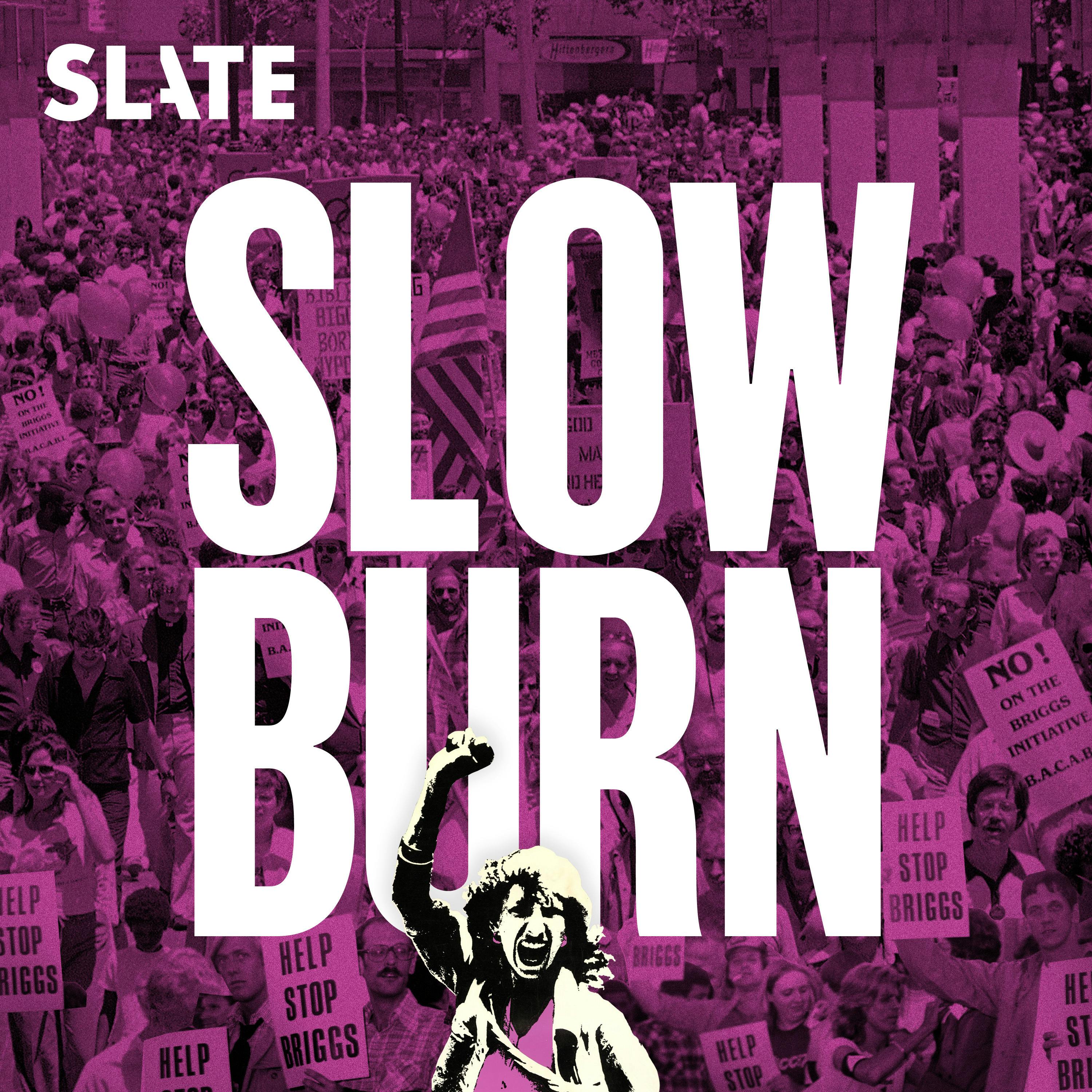
For the two years leading up to May 21, 1979, gay activists followed the rules. They engaged in civil debates. They sought justice at the ballot box. They peacefully mourned the assassination of Harvey Milk. But the verdict in Dan White’s murder trial changed everything. (If you—or anyone you know—are in crisis, contact the National Suicide Prevention Lifeline, anytime: Dial 988 or visit 988lifeline.org.) Season 9 of Slow Burn was written and produced by Christina Cauterucci. Slow Burn is produced by Sophie Summergrad, Kelly Jones, and Joel Meyer. Josh Levin is the editorial director of Slow Burn. Derek John is Slate’s executive producer of narrative podcasts. Susan Matthews is Slate’s executive editor. Merritt Jacob is our senior technical director. We had engineering help from Patrick Fort and Madeline Ducharme. Our theme music is composed by Alexis Cuadrado. Artwork by Ivylise Simones, based on an image of Silvana Nova and a poster designed by Larry Hermsen and the Too Much Graphics Collective. Join host Christina Cauterucci and special guests as they record a special, live episode of Slow Burn at the Tribeca Film Festival on June 13. Learn more about your ad choices. Visit megaphone.fm/adchoices
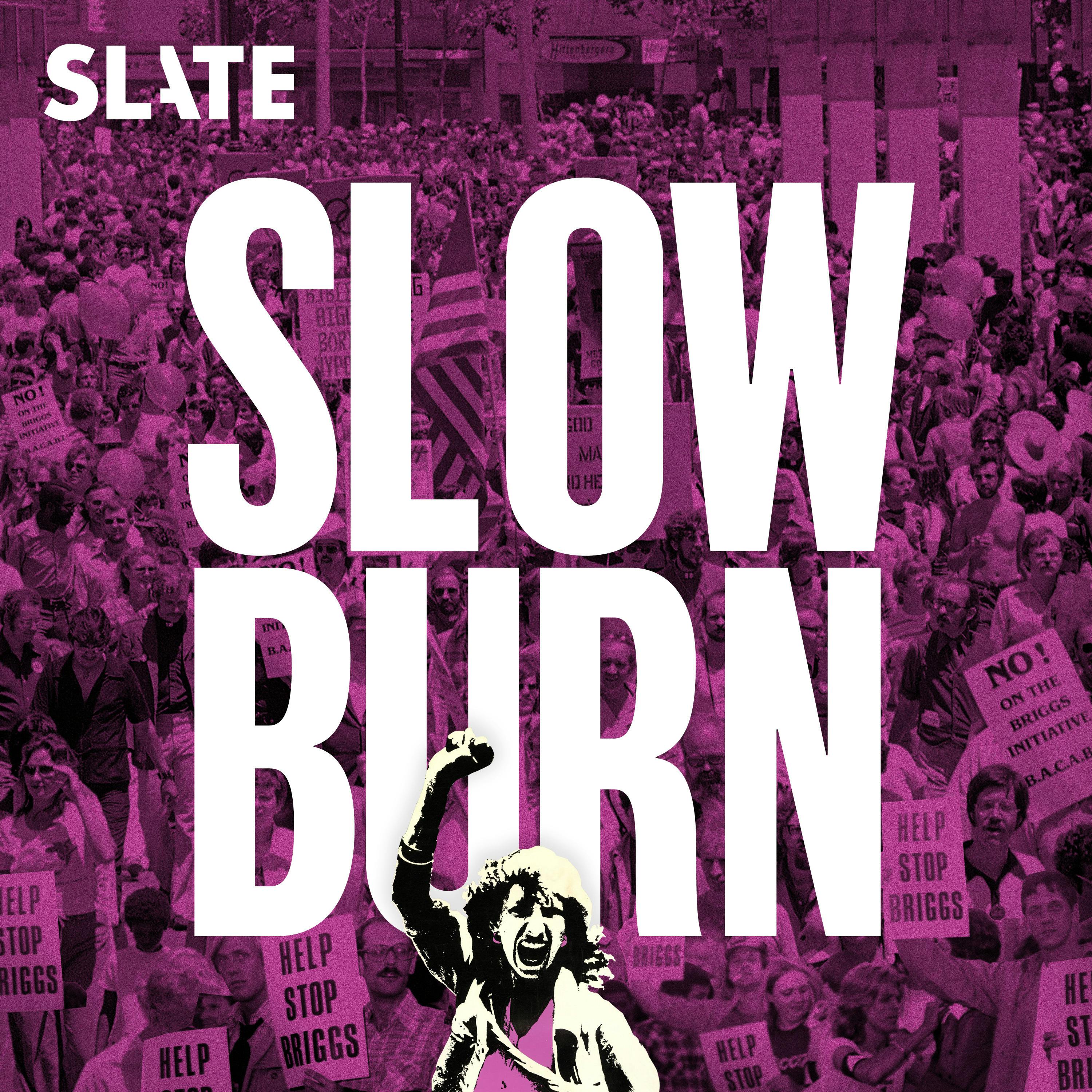
On election night in 1978, gays and lesbians in California braced themselves for the statewide vote on Proposition 6. Less than a month after the results came in, a pair of killings shocked San Francisco and the nation. Subscribe to Slate Plus to immediately unlock all episodes of Slow Burn: Gays Against Briggs. Your subscription also gets you ad-free access to all your favorite Slate podcasts, plus other member exclusive content. Join now on Apple Podcasts by clicking “Subscribe” at the top of our show page. Or, visit slate.com/slowburnplus to get access wherever you listen. Season 9 of Slow Burn was written and produced by Christina Cauterucci. Slow Burn is produced by Sophie Summergrad, Kelly Jones, and Joel Meyer. Josh Levin is the editorial director of Slow Burn. Derek John is Slate’s executive producer of narrative podcasts. Susan Matthews is Slate’s executive editor. Merritt Jacob is our senior technical director. We had engineering help from Patrick Fort and Madeline Ducharme. Our theme music is composed by Alexis Cuadrado. Artwork by Ivylise Simones, based on an image of Silvana Nova and a poster designed by Larry Hermsen and the Too Much Graphics Collective. Join host Christina Cauterucci and special guests as they record a special, live episode of Slow Burn at the Tribeca Film Festival on June 13. Learn more about your ad choices. Visit megaphone.fm/adchoices
As Election Day approached, the campaign to defeat Proposition 6 faced formidable odds. John Briggs’ fundraising juggernaut was churning out cash, and public opinion polls were solidly in his favor. To turn the tide, gay rights activists unveiled a powerful symbol and gambled on the support of an improbable ally: Ronald Reagan. (If you—or anyone you know—are in crisis, contact the National Suicide Prevention Lifeline, anytime: Dial 988 or visit 988lifeline.org.) Subscribe to Slate Plus to immediately unlock all episodes of Slow Burn: Gays Against Briggs. Your subscription also gets you ad-free access to all your favorite Slate podcasts, plus other member exclusive content. Join now on Apple Podcasts by clicking “Subscribe” at the top of our show page. Or, visit slate.com/slowburnplus to get access wherever you listen. Season 9 of Slow Burn was written and produced by Christina Cauterucci. Slow Burn is produced by Joel Meyer, Sophie Summergrad, and Kelly Jones. Josh Levin is the editorial director of Slow Burn. Derek John is Slate’s executive producer of narrative podcasts. Susan Matthews is Slate’s executive editor. Merritt Jacob is our senior technical director. We had engineering help from Patrick Fort and Madeline Ducharme. Our theme music is composed by Alexis Cuadrado. Artwork by Ivylise Simones, based on an image of Silvana Nova and a poster designed by Larry Hermsen and the Too Much Graphics Collective. Join host Christina Cauterucci and special guests as they record a special, live episode of Slow Burn at the Tribeca Film Festival on June 13. Learn more about your ad choices. Visit megaphone.fm/adchoices
In the early days of the anti-Briggs campaign, a Richard Pryor comedy set turned into a public fiasco and laid bare longstanding divisions in the gay community. With the movement low on cash and running out of time, thousands of gay Californians decided their only option was to tell the world who they really were. (If you—or anyone you know—are in crisis, contact the National Suicide Prevention Lifeline, anytime: Dial 988 or visit 988lifeline.org.) Subscribe to Slate Plus to immediately unlock all episodes of Slow Burn: Gays Against Briggs. Your subscription also gets you ad-free access to all your favorite Slate podcasts, plus other member exclusive content. Join now on Apple Podcasts by clicking “Subscribe” at the top of our show page. Or, visit slate.com/slowburnplus to get access wherever you listen. Season 9 of Slow Burn was written and produced by Christina Cauterucci. Slow Burn is produced by Kelly Jones, Joel Meyer, and Sophie Summergrad. Josh Levin is the editorial director of Slow Burn. Derek John is Slate’s executive producer of narrative podcasts. Susan Matthews is Slate’s executive editor. Merritt Jacob is our senior technical director. We had engineering help from Patrick Fort and Madeline Ducharme. Our theme music is composed by Alexis Cuadrado. Artwork by Ivylise Simones, based on an image of Silvana Nova and a poster designed by Larry Hermsen and the Too Much Graphics Collective. Join host Christina Cauterucci and special guests as they record a special, live episode of Slow Burn at the Tribeca Film Festival on June 13. Learn more about your ad choices. Visit megaphone.fm/adchoices
After decades of wandering and job-hopping, Harvey Milk found his purpose as a gay community leader with growing political ambitions. But his historic election was just the beginning. As John Briggs’ gay teacher ban gained momentum, it was up to Supervisor Milk and his allies to figure out how to stop him. Subscribe to Slate Plus to immediately unlock all episodes of Slow Burn: Gays Against Briggs. Your subscription also gets you ad-free access to all your favorite Slate podcasts, plus other member exclusive content. Join now on Apple Podcasts by clicking “Subscribe” at the top of our show page. Or, visit slate.com/slowburnplus to get access wherever you listen. Season 9 of Slow Burn was written and produced by Christina Cauterucci. Slow Burn is produced by Joel Meyer, Sophie Summergrad, and Kelly Jones. Josh Levin is the editorial director of Slow Burn. Derek John is Slate’s executive producer of narrative podcasts. Susan Matthews is Slate’s executive editor. Merritt Jacob is our senior technical director. We had engineering help from Patrick Fort and Madeline Ducharme. Our theme music is composed by Alexis Cuadrado. Artwork by Ivylise Simones, based on an image of Silvana Nova and a poster designed by Larry Hermsen and the Too Much Graphics Collective. Join host Christina Cauterucci and special guests as they record a special, live episode of Slow Burn at the Tribeca Film Festival on June 13. Learn more about your ad choices. Visit megaphone.fm/adchoices
In 1977, John Briggs was a small-time state senator with big dreams. But Briggs’ plan to ban gay and lesbian teachers from California schools changed the arc of his life and career. Suddenly, he was a right-wing hero, and a villain of the gay rights movement. And his message seemed to be catching on all over the country. Season 9 of Slow Burn was written and produced by Christina Cauterucci. Slow Burn is produced by Kelly Jones, Joel Meyer, and Sophie Summergrad. Josh Levin is the editorial director of Slow Burn. Derek John is Slate’s executive producer of narrative podcasts. Susan Matthews is Slate’s executive editor. Merritt Jacob is our senior technical director. We had engineering help from Patrick Fort and Madeline Ducharme. Our theme music is composed by Alexis Cuadrado. Artwork by Ivylise Simones, based on an image of Silvana Nova and a poster designed by Larry Hermsen and the Too Much Graphics Collective. Join host Christina Cauterucci and special guests as they record a special, live episode of Slow Burn at the Tribeca Film Festival on June 13. Learn more about your ad choices. Visit megaphone.fm/adchoices
The new season of Slate's Slow Burn continues a story you heard on the very first episode of One Year: 1977 - "Anita Bryant's War on Gay Rights." In the 1970s, San Francisco became a welcoming home for tens of thousands of new gay residents—and a modern-day Sodom for the American right. With a moral panic sweeping across the United States, a Florida orange juice spokeswoman inspired an ambitious California politician to launch his own campaign against lesbians and gays—one that would change the course of U.S. history. (If you—or anyone you know—are in crisis, contact the National Suicide Prevention Lifeline, anytime: Dial 988 or visit 988lifeline.org.) Season 9 of Slow Burn was written and produced by Christina Cauterucci. Slow Burn is produced by Sophie Summergrad, Kelly Jones, and Joel Meyer. Josh Levin is the editorial director of Slow Burn. Derek John is Slate’s executive producer of narrative podcasts. Susan Matthews is Slate’s executive editor. Merritt Jacob is our senior technical director. We had engineering help from Patrick Fort and Madeline Ducharme. Our theme music is composed by Alexis Cuadrado. Artwork by Ivylise Simones, based on an image of Silvana Nova and a poster designed by Larry Hermsen and the Too Much Graphics Collective. Learn more about your ad choices. Visit megaphone.fm/adchoices

Before 1990, there had never been a documented case of a patient getting HIV from a health care worker. Kimberly Bergalis changed that. Her claim that she’d been infected by her dentist would captivate and terrify the country. And the dentist, David Acer, would be made into a villain without America ever knowing who he really was. This episode was written by Kelly Jones and Josh Levin, One Year’s editorial director. One Year’s senior producer is Evan Chung. This episode was produced by Kelly Jones and Evan Chung, with additional production by Olivia Briley. It was edited by Joel Meyer and Derek John, Slate’s executive producer of narrative podcasts. Merritt Jacob is senior technical director. We had mixing help from Kevin Bendis. We had production help this season from Jabari Butler. Join Slate Plus to get a special behind-the-scenes conversation at the end of our season about how we put together our 1990 stories. Slate Plus members also get to listen to all Slate podcasts without any ads. Learn more about your ad choices. Visit megaphone.fm/adchoices

Robert Mapplethorpe was one of the most famous photographers in the world—and one of the most controversial. When his work came to Cincinnati in 1990, it would be at the center of a vicious fight over obscenity and the First Amendment, one that threatened the future of art in America. This episode of One Year was written by Evan Chung, One Year's senior producer. It was produced by Kelly Jones and Evan Chung, with additional production by Olivia Briley. It was edited by Josh Levin, One Year’s editorial director, with Joel Meyer and Derek John, Slate’s executive producer of narrative podcasts. Merritt Jacob is our senior technical director. Join Slate Plus to get a special behind-the-scenes conversation at the end of our season about how we put together our 1990 stories. Slate Plus members also get to listen to all Slate podcasts without any ads. Learn more about your ad choices. Visit megaphone.fm/adchoices
In March 1990, a story broke that shocked the nation: George H.W. Bush had banned broccoli from Air Force One. The frenzy that came next would change the fate of a vegetable—and maybe even alter the course of a presidency. This episode was written by Olivia Briley and Josh Levin, One Year’s editorial director. One Year’s senior producer is Evan Chung. This episode was produced by Olivia Briley and Kelly Jones. It was edited by Joel Meyer and Evan Chung. Derek John is Slate’s executive producer of narrative podcasts. Merritt Jacob is senior technical director. Join Slate Plus to get a special behind-the-scenes conversation at the end of our season about how we put together our 1990 stories. Slate Plus members also get to listen to all Slate podcasts without any ads. Learn more about your ad choices. Visit megaphone.fm/adchoices
A middle-aged single dad in Chicago was outraged by all the cigarette billboards popping up in Black communities. In 1990, he picked up a paint roller and became an anti-tobacco vigilante. And he did it all under a secret identity. This episode was written by Josh Levin, One Year’s editorial director. One Year’s senior producer is Evan Chung. This episode was produced by Kelly Jones, Olivia Briley, and Evan Chung. It was edited by Joel Meyer and Derek John, Slate’s executive producer of narrative podcasts. Merritt Jacob is our senior technical director. We had mixing help from Kevin Bendis. Join Slate Plus to get a special behind-the-scenes conversation at the end of our season about how we put together our 1990 stories. Slate Plus members also get to listen to all Slate podcasts without any ads. Learn more about your ad choices. Visit megaphone.fm/adchoices
Pizza Hut’s adventure in the Soviet Union was unlike any restaurant opening before or since. It involved a fleet of submarines, a very special pizza topped with tuna and salmon, and a casual dining spot on a mission to change the world. This episode was written by Kelly Jones and Josh Levin, One Year’s editorial director. One Year’s senior producer is Evan Chung. This episode was produced by Kelly Jones and Evan Chung, with additional production by Olivia Briley. It was edited by Joel Meyer and Derek John, Slate’s executive producer of narrative podcasts. Merritt Jacob is our senior technical director. Join Slate Plus to get a special behind-the-scenes conversation at the end of our season about how we put together our 1990 stories. Slate Plus members also get to listen to all Slate podcasts without any ads. Learn more about your ad choices. Visit megaphone.fm/adchoices
Coming Wednesday Nov. 22, the sixth season of One Year covers 1990. It was a year when a controversial art exhibit became a First Amendment battleground, a single dad with a secret identity took on Big Tobacco, and President George H.W. Bush spoke out against his most-hated enemy: broccoli. * Hosted on Acast. See acast.com/privacy https://acast.com/privacy for more information.
Coming Wednesday Nov. 22, the sixth season of One Year covers 1990. It was a year when a controversial art exhibit became a First Amendment battleground, a single dad with a secret identity took on Big Tobacco, and President George H.W. Bush spoke out against his most-hated enemy: broccoli. Learn more about your ad choices. Visit megaphone.fm/adchoices

Ten years after the atomic bombing of Hiroshima, 25 women who’d been disfigured by the blast came to the United States. Those Japanese survivors would go to the White House and end up on a bizarre proto reality TV show. They’d also put their lives in the hands of American doctors, hoping that risky, cutting-edge surgeries might repair their injuries and give them a chance for a fresh start. Josh Levin is One Year’s editorial director. One Year’s senior producer is Evan Chung. This episode was produced by Kelly Jones and Evan Chung, with additional production by Sophie Summergrad. It was edited by Joel Meyer and Derek John, Slate’s executive producer of narrative podcasts. Merritt Jacob is our senior technical director. Holly Allen created the artwork for this season. Join Slate Plus to get a bonus 1955 episode at the end of the season. Slate Plus members also get to listen to all Slate podcasts without any ads. Sign up now to support One Year. Learn more about your ad choices. Visit megaphone.fm/adchoices
Jonas Salk’s polio vaccine transformed America and the world in ways that seemed unimaginable. But in 1955, there was a moment when everything was in doubt. This week, Josh Levin talks with Dr. Paul Offit about the medical mystery that threatened to derail one of history’s most important scientific breakthroughs. Josh Levin is One Year’s editorial director. One Year’s senior producer is Evan Chung. This episode was produced by Kelly Jones, Evan Chung, and Sophie Summergrad. It was edited by Josh Levin, Joel Meyer, and Derek John, Slate’s executive producer of narrative podcasts. Merritt Jacob is our senior technical director. Join Slate Plus to get a bonus 1955 episode at the end of the season. Slate Plus members also get to listen to all Slate podcasts without any ads. Sign up now to support One Year. Learn more about your ad choices. Visit megaphone.fm/adchoices

When Alaskans wanted their own mental-health facility, a rumor took hold all over America. This week, Evan Chung traces the origins of that far-right conspiracy theory: that the government was building a concentration camp where Americans would get imprisoned for their political beliefs. Get ready for a strange tale that involves a brainwashing manual, Scientology, and a vast network of Communist-hunting housewives. Josh Levin is One Year’s editorial director. One Year’s senior producer is Evan Chung. This episode was produced by Kelly Jones and Evan Chung, with additional production by Sophie Summergrad. It was edited by Josh Levin, Joel Meyer, and Derek John, Slate’s executive producer of narrative podcasts. Merritt Jacob is our senior technical director. Join Slate Plus to get a bonus 1955 story at the end of the season. Slate Plus members also get to listen to all Slate podcasts without any ads. Sign up now to support One Year. Learn more about your ad choices. Visit megaphone.fm/adchoices
In the early days of television, women struggled to find their place. In 1955, they got it: forecasting the weather, on stations all across the country. But as these “weather girls” transformed the airwaves, a group of powerful men hatched a plan—one that had the potential to push women weathercasters off the air forever. Josh Levin is One Year’s editorial director. One Year’s senior producer is Evan Chung. This episode was produced by Kelly Jones and Evan Chung, with additional production by Sophie Summergrad. It was edited by Joel Meyer and Derek John, Slate’s executive producer of narrative podcasts. Merritt Jacob is our senior technical director. Join Slate Plus to get the first three episodes of One Year: 1955 right away—and a bonus 1955 story at the end of the season. Slate Plus members also get to listen to all Slate podcasts without any ads. Sign up now to support One Year. Learn more about your ad choices. Visit megaphone.fm/adchoices

In 1955, the frontiersman Davy Crockett became the most famous man in America, more than a century after his death at the Alamo. This week, Evan Chung dives into a cultural phenomenon nobody saw coming. Not the kids in coonskin caps who started the craze, not the parents whose money fueled it, and least of all Walt Disney, the legendary studio head who created it totally by accident. Josh Levin is One Year’s editorial director. One Year’s senior producer is Evan Chung. This episode was produced by Kelly Jones and Evan Chung, with additional production by Sophie Summergrad. It was edited by Joel Meyer and Derek John, Slate’s executive producer of narrative podcasts. Merritt Jacob is our senior technical director. Join Slate Plus to get the first three episodes of One Year: 1955 right away—and a bonus 1955 story at the end of the season. Slate Plus members also get to listen to all Slate podcasts without any ads. Sign up now to support One Year. Learn more about your ad choices. Visit megaphone.fm/adchoices

The Cannon Street All-Stars dreamed of playing in the 1955 Little League World Series. Their biggest obstacle didn’t come on the field. In the year that Rosa Parks refused to give up her seat on a public bus, these Black 12-year-olds became unlikely civil rights pioneers—and faced the wrath of a white society that wasn’t ready to change. Josh Levin is One Year’s editorial director. One Year’s senior producer is Evan Chung. This episode was produced by Kelly Jones and Evan Chung, with additional production by Sophie Summergrad. It was edited by Joel Meyer and Derek John, Slate’s executive producer of narrative podcasts. Merritt Jacob is our senior technical director. Join Slate Plus to get the first three episodes of One Year: 1955 right away—and a bonus 1955 story at the end of the season. Slate Plus members also get to listen to all Slate podcasts without any ads. Sign up now to support One Year. Learn more about your ad choices. Visit megaphone.fm/adchoices
