


Me, Myself, and AI


About
Available on








Community
113 episodes
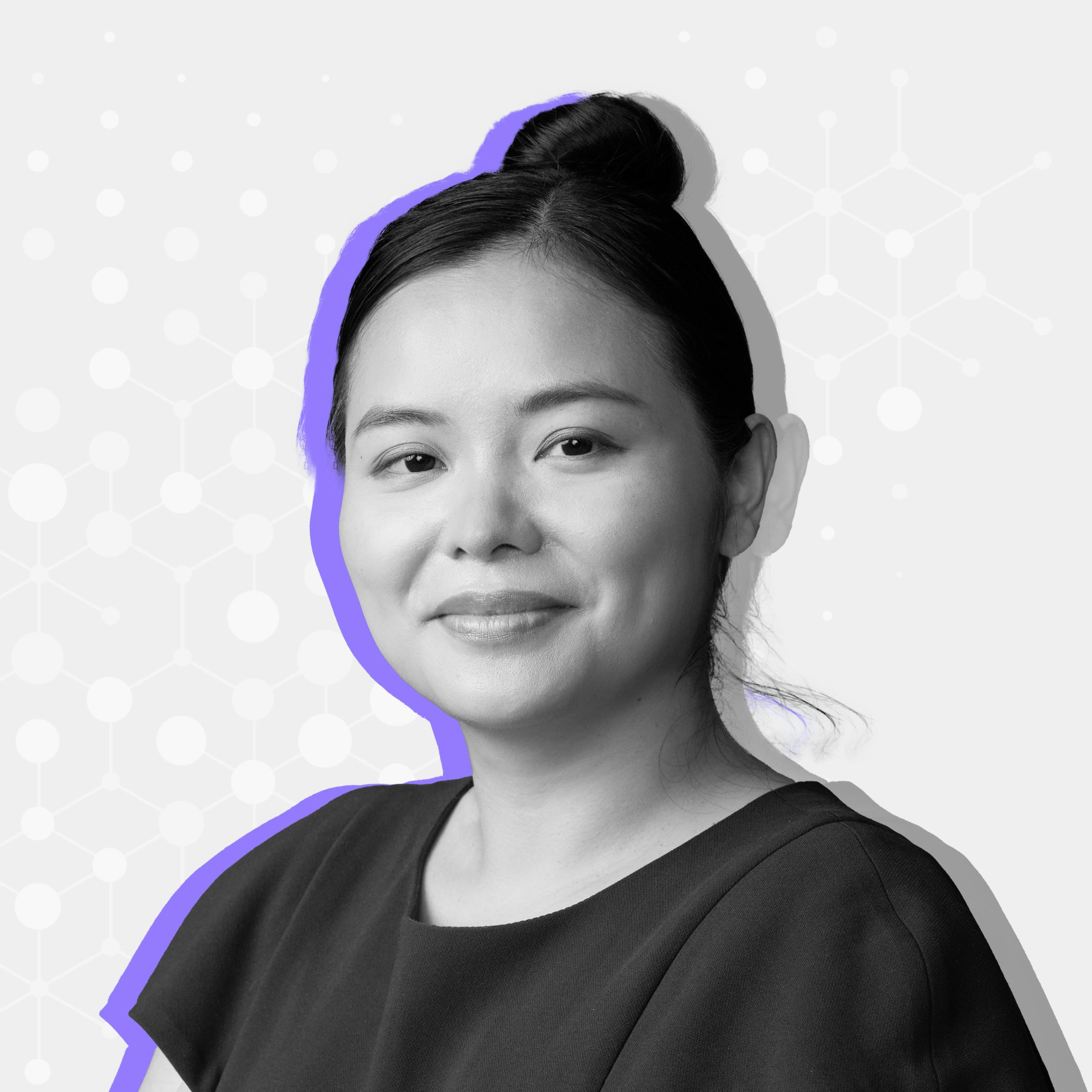
On today’s episode, Sam talks with Alice Xiang, global head of AI governance at Sony and lead research scientist for AI ethics at Sony AI, about what it actually takes to put responsible artificial intelligence into practice at scale. Alice shares how Sony moved early on AI ethics and why governance, not just principles, is now the real challenge as AI spreads across products and workflows. The conversation dives into FHIBE, Sony’s publicly available and ethically sourced benchmark for evaluating bias in computer vision, and why measuring fairness is often harder than fixing it. Along the way, they tackle data consent, “data nihilism,” and the very real risks of deploying biased systems in everyday and high-stakes contexts. Read the episode transcript here. Guest bio: As the global head of AI governance at Sony, Alice Xiang leads the team guiding the establishment of AI governance policies and governance frameworks across the company’s business units. She’s also the lead research scientist for AI ethics at Sony AI, which is working on cutting-edge sociotechnical research to enable the development of more responsible AI solutions. Xiang holds a Juris Doctor from Yale Law School, a master’s in development economics from Oxford University, and a master’s in statistics and bachelor’s in economics from Harvard University. *Please take our listener survey: mitsmr.com/podcastsurvey It's short — we promise! — and all respondents will receive a free MIT SMR article collection, "Maximizing the Value of Generative AI." Me, Myself, and AI is a podcast produced by MIT Sloan Management Review and hosted by Sam Ransbotham. It is engineered by David Lishansky and produced by Allison Ryder. We encourage you to rate and review our show. Your comments may be used in Me, Myself, and AI materials. ME, MYSELF, AND AI® is a federally registered trademark of Massachusetts Institute of Technology. All rights reserved.

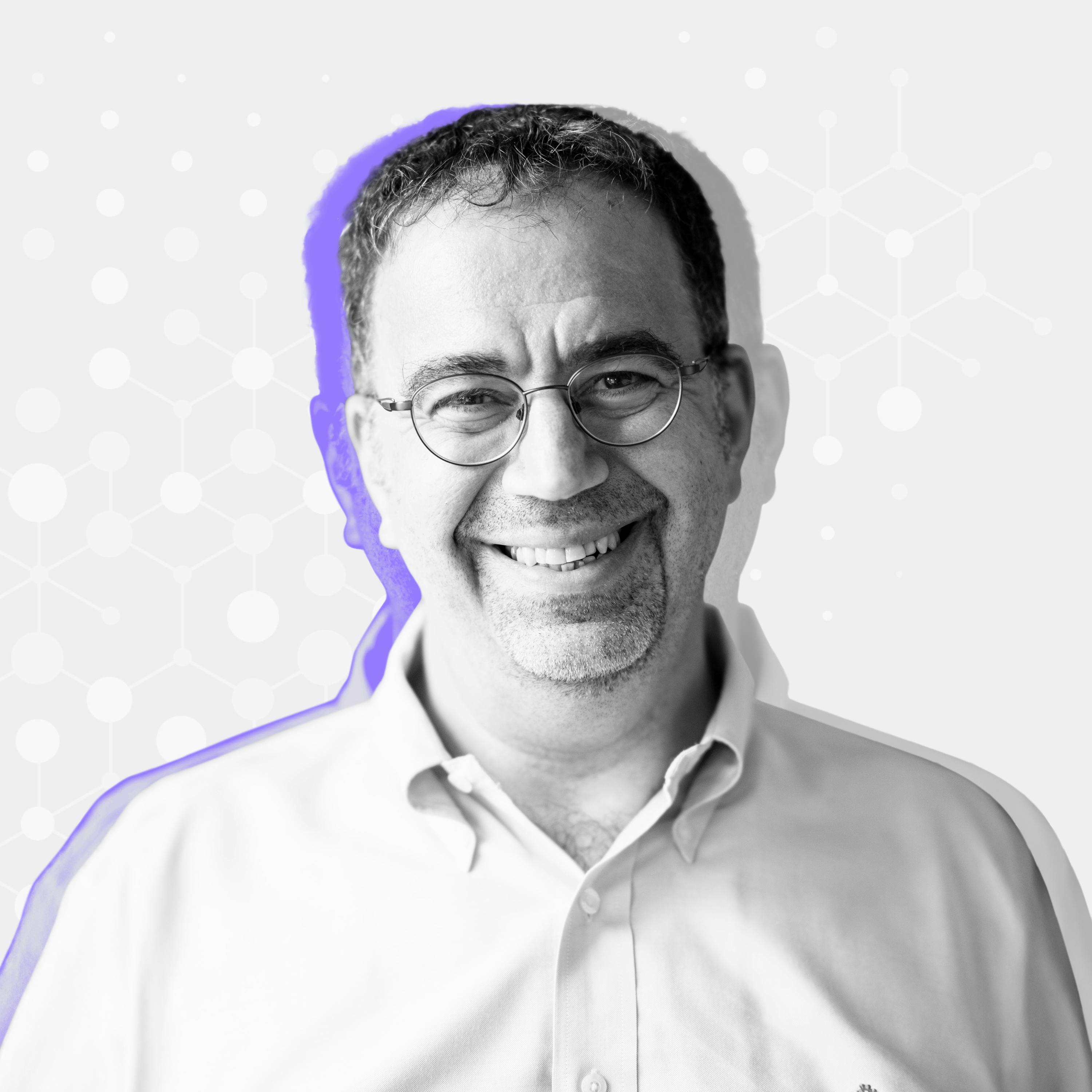
In this bonus episode, Nobel Prize-winning economist Daron Acemoglu joins Sam to challenge some of the most common assumptions about artificial intelligence’s future. Drawing on his book Power and Progress, Daron argues that technology doesn’t have a fixed destiny — and that today’s choices will determine whether AI boosts workers or simply accelerates automation and inequality. He makes a case for focusing on new tasks that complement human skills, rather than replacing them, and warns that current incentives push AI toward centralization and automation by default. The conversation tackles productivity myths, reliability risks, and why regulation should proactively steer AI toward social good. Read the episode transcript here. Guest bio: Daron Acemoglu is an institute professor at MIT, faculty codirector of the James M. and Cathleen D. Stone Center on Inequality and Shaping the Future of Work, and a research affiliate at MIT’s newly established Blueprint Labs. He is an elected fellow of the National Academy of Sciences, American Philosophical Society, the British Academy of Sciences, the Turkish Academy of Sciences, the American Academy of Arts and Sciences, the Econometric Society, the European Economic Association, and the Society of Labor Economists. He is also a member of the Group of Thirty. He has authored six books, including Power and Progress: Our Thousand-Year Struggle Over Technology and Prosperity with Simon Johnson. His work in economics has been recognized around the world, notably with the Nobel Prize in economic sciences, along with co-laureates Johnson and James A. Robinson, in 2024. *Please take our listener survey: mitsmr.com/podcastsurvey It's short — we promise! — and all respondents will receive a free MIT SMR article collection, "Maximizing the Value of Generative AI." Me, Myself, and AI is a podcast produced by MIT Sloan Management Review and hosted by Sam Ransbotham. It is engineered by David Lishansky and produced by Allison Ryder. We encourage you to rate and review our show. Your comments may be used in Me, Myself, and AI materials. ME, MYSELF, AND AI® is a federally registered trademark of Massachusetts Institute of Technology. All rights reserved.

In this bonus episode, Princeton University professor and artificial intelligence researcher Tom Griffiths joins Sam to unpack The Laws of Thought, his new book exploring how math has been used for centuries to understand how minds — human and machine — actually work. Tom walks through three main frameworks shaping intelligence today — rules and symbols, neural networks, and probability — and he explains why modern AI only makes sense when you see how those pieces fit together. The conversation connects cognitive science, large language models, and the limits of human versus machine intelligence. Along the way, Tom and Sam dig into language, learning, and what humans still do better — like judgment, curation, and metacognition. Read the episode transcript here. *Please take our listener survey: mitsmr.com/podcastsurvey It's short — we promise! — and all respondents will receive a free MIT SMR article collection, "Maximizing the Value of Generative AI." Me, Myself, and AI is a podcast produced by MIT Sloan Management Review and hosted by Sam Ransbotham. It is engineered by David Lishansky and produced by Allison Ryder. We encourage you to rate and review our show. Your comments may be used in Me, Myself, and AI materials. ME, MYSELF, AND AI® is a federally registered trademark of Massachusetts Institute of Technology. All rights reserved.

On today’s episode, Wendy’s product manager Will Croushorn joins host Sam to share how FreshAi, the fast-food restaurant’s voice-based AI ordering system, is reinventing the drive-through experience for millions of customers. From handling 200 billion ways to order a Dave’s Double burger to making fast food more accessible for guests in multiple languages, Will reveals how empathy and innovation will positively impact the future of convenience. Learn how his team turns speech data into insight, builds trust in automation, and can even hide a few Easter eggs in your next order. Read the episode transcript here. That's a wrap on Season 12! We'll back in January with a bonus episode. Guest bio: Will Croushorn is a product leader at Wendy’s and cocreator of its drive-through voice agent, FreshAi, which handles more than 150,000 orders each day across hundreds of stores throughout the U.S. Recognized by Fast Company as one of the “Next Big Things in Tech,” the artificial intelligence platform shows that AI can deliver measurable impact at enterprise scale. Croushorn’s career has been shaped by relentless curiosity: He started a school in northern Iraq, became fluent in Behdini Kurdish, and now advances vision and multimodal AI serve customers in entirely new ways. Me, Myself, and AI is a podcast produced by MIT Sloan Management Review and hosted by Sam Ransbotham. It is engineered by David Lishansky and produced by Allison Ryder. We encourage you to rate and review our show. Your comments may be used in Me, Myself, and AI materials. ME, MYSELF, AND AI® is a federally registered trademark of Massachusetts Institute of Technology. All rights reserved.
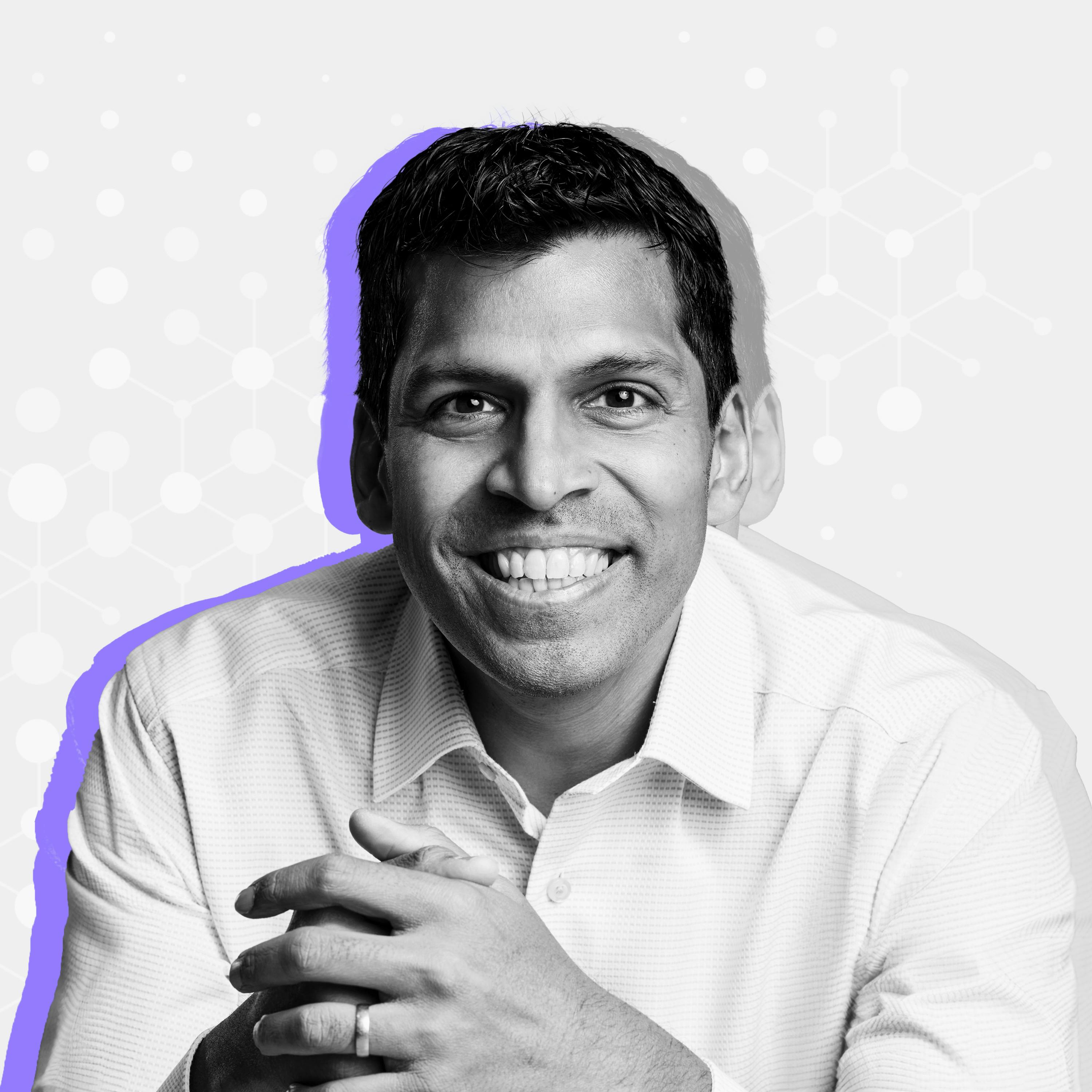
On this episode, OpenAI’s chief economist Ronnie Chatterji describes how artificial intelligence is reshaping both the economy and scientific innovation. Ronnie discusses the dual economic impacts of AI — the near-term boost from infrastructure investments like chips and data centers, and the longer-term productivity gains as AI tools integrate into enterprises and consumer life. Beyond consumer convenience, he notes, the key question for economists and corporate leaders alike is when — and how — AI will unlock sustained economic value inside organizations. Tune in for Ronnie's perspective on how AI can help researchers test ideas faster, combine insights across disciplines, and make better choices about which problems to pursue. Read the episode transcript here. Guest bio: Aaron (Ronnie) Chatterji is OpenAI’s first chief economist. He is also the Mark Burgess & Lisa Benson-Burgess Distinguished Professor at Duke University. He served in the Biden administration to implement the CHIPS and Sciences Act and was acting deputy director of the National Economic Council. Before that, he was chief economist at the Department of Commerce and a senior economist at the White House Council of Economic Advisers. He also previously taught at Harvard Business School, worked at Goldman Sachs, and was a term member of the Council on Foreign Relations. Chatterji is on leave as a research associate at the National Bureau of Economic Research. He holds a Ph.D. from University of California, Berkeley and a B.A. in economics from Cornell University. Me, Myself, and AI is a podcast produced by MIT Sloan Management Review and hosted by Sam Ransbotham. It is engineered by David Lishansky and produced by Allison Ryder. We encourage you to rate and review our show. Your comments may be used in Me, Myself, and AI materials. ME, MYSELF, AND AI® is a federally registered trademark of Massachusetts Institute of Technology. All rights reserved.

AI isn’t taking jobs — it’s changing what jobs are.On today’s episode, GeekWire’s Todd Bishop joins host Sam Ransbotham to dive into how artificial intelligence is reshaping work, learning, and creativity — not by replacing humans but by amplifying what we can do. From classrooms where students use AI on exams to newsrooms rethinking how news stories get written, they explore the opportunities (and headaches) of this new era. It’s a smart, funny, and refreshingly real look at how we’re all learning to work with our newestcoworker — artificial intelligence. Read the episode transcript here. Guest bio: Todd Bishop is cofounder of GeekWire, the Seattle-based business and technology news site, where he covers topics like AI, Microsoft, and Amazon, in addition to hosting a weekly podcast. A native of Orland, California, the longtime journalist previously worked at The Philadelphia Inquirer, Puget Sound Business Journal, and the Seattle Post-Intelligencer. Me, Myself, and AI is a podcast produced by MIT Sloan Management Review and hosted by Sam Ransbotham. It is engineered by David Lishansky and produced by Allison Ryder. We encourage you to rate and review our show. Your comments may be used in Me, Myself, and AI materials. ME, MYSELF, AND AI® is a federally registered trademark of Massachusetts Institute of Technology. All rights reserved.
Vishal Gupta, engineering manager, machine learning at Reddit, joins the podcast to explain how the social media community platform uses artificial intelligence to improve user experience and ad relevance. Much of the advertising work relies on increasingly sophisticated recommender systems that have evolved from simple collaborative filtering to deep learning and large language model–based systems capable of multimodal understanding. https://mitsmr.com/4onhUMgVishal and Sam also explore the philosophical and ethical aspects of AI-driven platforms. Vishal emphasizes the importance of balance — between exploration and exploitation in recommendations, between advertiser goals and user experience, and between human- and machine-generated content. He argues that despite the rise of AI-generated material, authentic human conversation remains vital and even more valuable as models depend on it for training. Read the episode transcript here. Guest bio: Vishal Gupta is a seasoned engineering leader who leads multiple artificial intelligence and machine learning teams at Reddit in the ads domain. He has a decade of experience working on cutting-edge machine learning techniques at companies like DeepMind, Google, and Twitter. Gupta is passionate about applied AI research that significantly contributes to a company’s top and bottom lines. Me, Myself, and AI is a podcast produced by MIT Sloan Management Review and hosted by Sam Ransbotham. It is engineered by David Lishansky and produced by Allison Ryder. We encourage you to rate and review our show. Your comments may be used in Me, Myself, and AI materials.
Kathleen Peters brings a background with digital communications companies and tech startups to her role as Experian’s chief innovation officer. On this episode, Kathleen shares a bit about Experian’s Innovation Lab, outlining some of its projects and explaining how the recent democratization of generative AI tools has made even more innovative thinking possible, both for tech experts and for contributors who have other core competencies. Read the episode transcript here. Guest bio: As Experian’s chief innovation officer, Kathleen Peters explores new ways to solve market challenges in identity, risk, and fraud detection. She and her team define business strategies and investment priorities while incubating new products, analyzing industry trends, and leveraging the latest technologies to bring ideas to life. Peters joined Experian in 2013 to lead business development and global product management for its newest fraud products. She later led its Fraud & Identity business in North America until being named chief innovation officer for decision analytics in 2020. Peters has twice been named a “Top 100 Influencer in Identity” by One World Identity (now Liminal), which annually recognizes influencers and leaders in the identity space. Peters is regularly quoted in prominent media outlets, including Forbes and Bloomberg, and she frequently shares her insights on innovation, AI, and fraud prevention at industry events. Me, Myself, and AI is a podcast produced by MIT Sloan Management Review and hosted by Sam Ransbotham. It is engineered by David Lishansky and produced by Allison Ryder. We encourage you to rate and review our show. Your comments may be used in Me, Myself, and AI materials.

Cisco is well known for its data, networking, security, and collaboration products. On today’s episode, Cisco’s president and chief product officer, Jeetu Patel, joins Sam for a discussion about artificial intelligence, a “megatrend” Jeetu sees as perhaps more significant than the development of the internet or the automobile because of its ability to build on past technological advances. Jeetu and Sam discuss how to manage AI and how to staff for it — Jeetu argues that replacing less experienced or younger workers with technology deprives organizations of key perspectives and new ideas, and instead advocates for developing reverse-mentoring programs inside organizations. Read the episode transcript here. Guest bio: Jeetu Patel, Cisco’s president and chief product officer, combines product design and development expertise, operational rigor, and market understanding to create high-growth businesses. He is tasked with building world-class products to solve customers’ problems, and connect and protect every aspect of their organization in the AI era. Previously a general manager at Cisco, he led the strategy and development of its Security and Collaboration businesses. Before Cisco, Patel was the chief product officer and chief strategy officer at cloud content management company Box. He’s also held roles at EMC, including chief executive of its Syncplicity business unit, CMO for the Information Intelligence Group, and chief strategy officer. He currently serves on the board of JLL, a commercial real estate services company. Jeetu has a bachelor’s degree in information decision sciences from the University of Illinois at Chicago, and lives in the San Francisco Bay Area. Me, Myself, and AI is a podcast produced by MIT Sloan Management Review and hosted by Sam Ransbotham. It is engineered by David Lishansky and produced by Allison Ryder. We encourage you to rate and review our show. Your comments may be used in Me, Myself, and AI materials.

A chemical engineer by training, Angela Nakalembe worked in the sciences and management consulting before landing at YouTube as the company’s engineering program manager for trust and safety. At YouTube, Angela explains, AI has become a first line of defense against harmful content. The technology not only accelerates content moderation tasks but makes the process more humane, by filtering out problematic content before it reaches a human reviewer. To combat the proliferation of AI-generated content that may be hard to discern from assets created by humans, YouTube, its parent company Google, and others have joined the Coalition for Content Provenance and Authenticity Alliance to establish standards for the origin of content they observe. Also on today’s episode, Angela shares some personal experiences using large language models (LLMs) and Google’s own AI tools to illustrate how she sees individuals using AI in the future. Read the episode transcript here. Guest bio Angela Nakalembe is an operations leader, internet safety expert, and advocate for responsible AI development. As an engineering program manager at YouTube, she leads strategic initiatives focused on protecting billions of users through innovative safety features and risk mitigation strategies, work that has earned multiple Google product excellence awards. Nakalembe developed her strategic expertise as a management consultant, when she supported multimillion-dollar technology migrations for Fortune 50 companies. She currently provides mentoring through TechWomen, a U.S. Department of State initiative creating the next generation of women technology leaders worldwide, and she teaches yoga. Me, Myself, and AI is a podcast produced by MIT Sloan Management Review and hosted by Sam Ransbotham. It is engineered by David Lishansky and produced by Allison Ryder. We encourage you to rate and review our show. Your comments may be used in Me, Myself, and AI materials.
Thomas Wolf is the cofounder and chief science officer of open-source AI platform Hugging Face, which provides access to thousands of pretrained AI models that can be downloaded and run locally. With over 10 million users, getting started on the site can be a daunting task. Thomas explains how the company aims to improve its accessibility through documentation on the company blog as well as community feedback, similar to social media likes and upvoting. Thomas and Sam discuss the benefits and trade-offs of both open-source and closed-source AI models, as well as the evolution of microchips and the future of hardware and software development — as well as the hopes Thomas has for the future of coding with AI, starting with his children’s generation. Read the episode transcript here. Guest bio: Thomas Wolf is cofounder and chief science officer of Hugging Face, a collaborative AI platform. Wolf likes creating open-source software (OSS) that makes complex research, models, and data sets widely accessible. He can also be found pushing for open science in research in AI and machine learning, to try lowering the gap between academia and industrial labs through projects like the BigScience Workshop. He also writes and produces education content on AI, machine language, and natural language processing, including the reference book Natural Language Processing with Transformers, The Ultra-Scale Playbook, his blog, and videos. Me, Myself, and AI is a podcast produced by MIT Sloan Management Review and hosted by Sam Ransbotham. It is engineered by David Lishansky and produced by Allison Ryder. We encourage you to rate and review our show. Your comments may be used in Me, Myself, and AI materials.

Today’s episode is a bonus drop from our friends over at the MIT CSAIL Alliances podcast. We'll be back on September 16 with new episodes of Me, Myself, and AI. Chris Miller is professor of international history at Tufts University. He joins the MIT CSAIL Alliances podcast to share insights from his recent book, Chip War: The Fight for the World's Most Critical Technology. Me, Myself, and AI is a collaborative podcast from MIT Sloan Management Review and Boston Consulting Group and is hosted by Sam Ransbotham and Shervin Khodabandeh. Our engineer is David Lishansky, and the executive producer is Allison Ryder. Stay in touch with us by joining our LinkedIn group, AI for Leaders at mitsmr.com/AIforLeaders or by following Me, Myself, and AI on LinkedIn. We encourage you to rate and review our show. Your comments may be used in Me, Myself, and AI materials.

Julian Adams tried but didn’t succeed at retirement after a productive career as a medical chemist with several U.S. Food and Drug Association approvals of cancer-related treatments, including cell therapy for bone marrow transplantation. Soon after, his participation in a Stand Up To Cancer advisory group led to his appointment as the nonprofit’s president and CEO. The research organization raises money to advance the diagnosis of numerous cancers. Given rapid technological advancements, our podcast hosts were eager to invite Julian on the show to share how Stand Up To Cancer uses artificial intelligence to aid in this pursuit. Read the episode transcript here. For more information on Stand Up To Cancer and how to donate to the organization, please visit this website. Guest bio Julian Adams, president and CEO of Stand Up To Cancer, is among the world’s foremost oncology researchers. He was previously CEO of biopharmaceutical company Gamida Cell and president of R&D at Infinity Pharmaceuticals, where he oversaw development of small molecule drugs to treat cancer. He has also held roles at Millennium Pharmaceuticals, Boehringer Ingelheim, LeukoSite, and ProScript. Adams’s recognitions include the 2012 Warren Alpert Foundation Prize for his role in the discovery and development of bortezomib, an anti-cancer drug; the 2012 C. Chester Stock Award Lectureship from Memorial Sloan Kettering Cancer Center; and the 2001 Ribbon of Hope Award for Velcade from the International Myeloma Foundation. He holds more than 40 patents and has authored more than 130 papers and book chapters. He received his bachelor’s degree and an honorary doctor of science degree from McGill University and his Ph.D. from MIT in synthetic organic chemistry. Me, Myself, and AI is a collaborative podcast from MIT Sloan Management Review and Boston Consulting Group and is hosted by Sam Ransbotham and Shervin Khodabandeh. Our engineer is David Lishansky, and the executive producer is Allison Ryder. Stay in touch with us by joining our LinkedIn group, AI for Leaders at mitsmr.com/AIforLeaders or by following Me, Myself, and AI on LinkedIn. We encourage you to rate and review our show. Your comments may be used in Me, Myself, and AI materials.

Josh Weiner, senior vice president of consumer engagement and analytics at CVS Health, is passionate about making health care more personalized, connected, preventative, and accessible. On today’s episode, Josh joins Sam and Shervin to explain how the integrated health care company is structured and how it is using AI to achieve those goals. Read the episode transcript here. Me, Myself, and AI is a collaborative podcast from MIT Sloan Management Review and Boston Consulting Group and is hosted by Sam Ransbotham and Shervin Khodabandeh. Our engineer is David Lishansky, and the executive producer is Allison Ryder. Guest bio At CVS Health, where Josh Weiner is the senior vice president of consumer engagement and analytics, his priority is personalizing consumer experiences and developing the health care company’s app. Previously, he was a health care leader at Meta, where he supported product development, algorithm engineering, and acquisitions. He was also a senior analytics expert at McKinsey and Co. Weiner is a board member at nonprofits Enduring Hearts and Docs for Tots. He holds a bachelor’s degree from Carnegie Mellon University and a master’s from Northwestern University. Stay in touch with us by joining our LinkedIn group, AI for Leaders at mitsmr.com/AIforLeaders or by following Me, Myself, and AI on LinkedIn. We encourage you to rate and review our show. Your comments may be used in Me, Myself, and AI materials.

The suggestions and support offered by AI are helpful only if they’re relevant. On today’s episode, Walter Sun, senior vice president and global head of artificial intelligence at SAP, joins Sam and Shervin to share how his organization is helping employees get smarter about artificial intelligence through the company’s AI Days. Additionally, Walter gives specific examples of support that AI agents could provide to an end user, and makes the case that small language models (fine-tuned large language models) can be built to assist in decision-making. Read the episode transcript here. Guest bio: Walter Sun is senior vice president and global head of artificial intelligence at SAP, where his team applies AI across applications for improved automation, natural human-machine interaction, and augmentation of decisions. Sun joined SAP in 2023 from Microsoft, where he was vice president of Copilot Applied Artificial Intelligence. While there he founded Bing Predicts, which leveraged anonymized and aggregated data for predictive analytics. He also delivered many AI features for the Bing search engine, Microsoft Windows, Microsoft Dynamics 365, and Microsoft Power Platform. Previously, Sun worked at BlackRock Financial Management and at Apple as a senior software engineer. Sun has taught at Seattle University and the University of Washington, and he is currently an advisory board member at Georgia Tech and the University of Rochester, and an MIT Tech Review Global Insights panelist. He obtained his bachelor’s from Georgia Tech and his Ph.D. and master’s from MIT. Me, Myself, and AI is a collaborative podcast from MIT Sloan Management Review and Boston Consulting Group and is hosted by Sam Ransbotham and Shervin Khodabandeh. Our engineer is David Lishansky, and the executive producer is Allison Ryder. Stay in touch with us by joining our LinkedIn group, AI for Leaders at mitsmr.com/AIforLeaders or by following Me, Myself, and AI on LinkedIn. We encourage you to rate and review our show. Your comments may be used in Me, Myself, and AI materials.

Many of us know Goodwill Industries International as a retailer that accepts and resells donated goods. What the average consumer may not know is that the nonprofit takes in over 5 billion pounds of goods each year — and not all of it can be resold. For those unwanted or unviable items, the organization can either look into recycling or upcycling, and with the help of AI, it’s able to efficiently make that determination while also improving its process for sorting and allocating sellable goods for different retail channels. Additionally, Goodwill helps its workforce with career-development skills. Much of this training has been enhanced with AI. Tune in to this episode to hear directly from Goodwill CEO Steve Preston about how the organization is using technology to fulfill a mission that extends beyond the retail store. Read the episode transcript here. Guest bio: As president and CEO of Goodwill Industries International, Steven C. Preston leads a network of 153 local Goodwill organizations with a combined revenue of $8.2 billion. In addition to being a secondhand retail leader, Goodwill is a leading nonprofit provider of workforce training and development in North America. Positioning the organization at the forefront of workforce development has been a top focus for Preston since he joined Goodwill in 2019. He has also forged partnerships with organizations focused on sustainable practices in the secondhand retail marketplace and developed mission-focused marketing efforts to elevate the Goodwill brand. Previously, Preston served in numerous operational and financial leadership positions in both the public and private sectors. After heading the U.S. Department of Housing and Urban Development and the Small Business Administration, he led successful turnarounds as the CEO of Oakleaf Global Holdings and Livingston International. He also served as the CFO of Waste Management and ServiceMaster. Me, Myself, and AI is a collaborative podcast from MIT Sloan Management Review and Boston Consulting Group and is hosted by Sam Ransbotham and Shervin Khodabandeh. Our engineer is David Lishansky, and the executive producer is Allison Ryder. Stay in touch with us by joining our LinkedIn group, AI for Leaders at mitsmr.com/AIforLeaders or by following Me, Myself, and AI on LinkedIn. We encourage you to rate and review our show. Your comments may be used in Me, Myself, and AI materials.

In today’s episode, Chandra Kapireddy, head of generative AI, machine learning, and analytics at Truist, delves into the evolving landscape of AI with a particular focus on how GenAI tools reshape the way Truist and similar organizations must navigate model risk management and regulations. GenAI is more versatile than traditional AI, he notes, yet its flexibility introduces new challenges around ensuring model reliability, validating outputs, and making sure that AI-driven decisions don’t lead to unfair or opaque outcomes. Chandra’s responsible AI approach at Truist is focused on risk mitigation while emphasizing the importance of human oversight in high-stakes decision-making. He points out that while GenAI can vastly improve productivity by handling repetitive or analysis-heavy tasks, it’s essential to properly train employees in order to use the tools effectively and not over-rely on their outputs, especially given their tendency to hallucinate or produce inaccurate results. Read the episode transcript here. Guest bio Chandra Kapireddy is head of generative AI, machine learning, and analytics, at Truist. He brings over 27 years of experience building and leading world-class data, analytics, and artificial intelligence teams to the financial services firm. Kapireddy has held key leadership positions at some of the industry’s leading companies, including Capital One, Wells Fargo, Bank of America, Oracle, and Amazon Web Services. Most recently, he served as managing director and head of AI/ML products for JPMorgan Chase, where he served on the firm’s AI Executive Council, which influences its strategy, products, controls, and governance. Me, Myself, and AI is a collaborative podcast from MIT Sloan Management Review and Boston Consulting Group and is hosted by Sam Ransbotham and Shervin Khodabandeh. Our engineer is David Lishansky, and the executive producer is Allison Ryder. Stay in touch with us by joining our LinkedIn group, AI for Leaders at mitsmr.com/AIforLeaders or by following Me, Myself, and AI on LinkedIn. We encourage you to rate and review our show. Your comments may be used in Me, Myself, and AI materials.

Linda Yao, chief operating officer and head of strategy for Lenovo’s Strategy, Solutions, and Services Group and vice president of hybrid cloud and AI solutions, joins us to explain the organization’s transition from technology product company to managed services provider. It’s now helping organizations with the change management required to implement AI in the enterprise. She shares both a framework around speed, ease, and expertise to facilitate this adoption, as well as the four pillars of AI readiness that Lenovo guides its clients to achieve. Tune in to this episode, also, for Linda’s perspective on the role of human connection in what she calls the era of inference, a time when we should focus on the implementation of maturing AI tools. Read the episode transcript here. Guest Bio: Linda Yao serves as vice president of hybrid cloud and AI solutions at Lenovo. Yao recently also took on the role of chief operating officer and head of Lenovo’s Strategy, Solutions, and Services Group and established the company’s AI Center of Excellence. Previously, at Boeing, she incubated a data science practice in the U.S. and India, built an M&A team, and oversaw investments for one of the largest corporate retirement plans in the world. She earned her finance chops at IBM in New York and Shanghai. Yao earned her bachelor’s and master’s degrees from Harvard University and an engineering certificate from MIT. She is an active liaison for the U.S. Presidential Scholars Foundation and the YoungArts, a national foundation. Me, Myself, and AI is a collaborative podcast from MIT Sloan Management Review and Boston Consulting Group and is hosted by Sam Ransbotham and Shervin Khodabandeh. Our engineer is David Lishansky, and the executive producer is Allison Ryder. Stay in touch with us by joining our LinkedIn group, AI for Leaders at mitsmr.com/AIforLeaders or by following Me, Myself, and AI on LinkedIn. We encourage you to rate and review our show. Your comments may be used in Me, Myself, and AI materials.

Harvard Business School professor Raffaella Sadun’s research has historically focused on digital reskilling. Now, rapid technological changes — like AI — are reshaping the nature of work. Raffaella’s research has explored how AI might empower those with intermediate expertise, such as store managers and blue-collar workers, to become more efficient and satisfied in their roles. She shares a bit about her research on today’s episode of Me, Myself, and AI and highlights the potential for AI to improve teamwork and innovation by bridging the gaps between different functional teams. Her experiments show that AI can enhance productivity and output quality, sometimes even substituting for team collaboration, while also improving speed and efficiency in problem-solving tasks. Read the episode transcript here. Guest bio: Raffaella Sadun is the Charles E. Wilson Professor of Business Administration at Harvard Business School, where she cochairs the Project on Managing the Future of Work and is coprincipal investigator of the Digital Reskilling Lab. Her research focuses on managerial and organizational drivers of productivity and growth in corporations and the public sector. She cofounded several large-scale projects to measure management practices and managerial behavior in organizations, such as the World Management Survey, the Executive Time Use Study, and U.S. Census Bureau’s Management and Organizational Practices Survey of hospitals. Me, Myself, and AI is a collaborative podcast from MIT Sloan Management Review and Boston Consulting Group and is hosted by Sam Ransbotham and Shervin Khodabandeh. Our engineer is David Lishansky, and the coordinating producers are Allison Ryder and Alanna Hooper. Stay in touch with us by joining our LinkedIn group, AI for Leaders at mitsmr.com/AIforLeaders or by following Me, Myself, and AI on LinkedIn. We encourage you to rate and review our show. Your comments may be used in Me, Myself, and AI materials.

Today’s episode is a bonus drop from our friends over at the MIT CSAIL Alliances podcast. We’ll back in two weeks for Season 11 of Me, Myself, and AI. David Autor, the Daniel (1972) and Gail Rubinfeld Professor, Margaret MacVicar Faculty Fellow in MIT’s Department of Economics, says that AI is “not like a calculator where you just punch in the numbers and get the right answer. It’s much harder to figure out how to be effective with it.” Offering unique insights into the future of work in an AI-powered world, Autor explains his biggest worries, the greatest upside scenarios, and how he believes we should be approaching AI as a tool, and addresses how AI will impact jobs like nursing and skilled trades. Read the episode transcript here. Studies and papers referenced in this conversation: AI and Product Innovation AI and the Gender Gap Robotics and Nursing Homes CSAIL Alliances connects business and industry to the people and research of MIT’s Computer Science and Artificial Intelligence Laboratory. Each month, the CSAIL podcast features cutting-edge MIT and CSAIL experts discussing their current research, challenges, and successes, as well as the potential impact of emerging tech. Follow the podcast here. Me, Myself, and AI is a collaborative podcast from MIT Sloan Management Review and Boston Consulting Group and is hosted by Sam Ransbotham and Shervin Khodabandeh. Our engineer is David Lishansky, and the coordinating producers are Allison Ryder and Alanna Hooper. Stay in touch with us by joining our LinkedIn group, AI for Leaders at mitsmr.com/AIforLeaders or by following Me, Myself, and AI on LinkedIn. We encourage you to rate and review our show. Your comments may be used in Me, Myself, and AI materials.

Barbara Wixom, principal research scientist at MIT’s Center for Information Systems Research (CISR), draws on 30 years of research in this bonus episode of the Me, Myself, and AI podcast. She believes data monetization is the key to enterprise success with AI and breaks down why. With hosts Sam Ransbotham and Shervin Khodabandeh, Barb details case examples to highlight best practices for AI implementation and how to measure value, as well as how data governance and ethics play a critical role in successful AI projects. They also talk about what companies get wrong and the challenges and rewards of AI research. Read the episode transcript here. Guest bio: Barbara Wixom is a principal research scientist at the MIT Center for Information Systems Research (CISR). Her academic research explores how organizations generate business value from data assets. She is the author of the award-winning book, Data Is Everybody’s Business: The Fundamentals of Data Monetization, which she wrote to inspire workers to engage in data monetization. Me, Myself, and AI is a collaborative podcast from MIT Sloan Management Review and Boston Consulting Group and is hosted by Sam Ransbotham and Shervin Khodabandeh. Our engineer is David Lishansky, and the coordinating producers are Allison Ryder and Alanna Hooper. Stay in touch with us by joining our LinkedIn group, AI for Leaders at mitsmr.com/AIforLeaders or by following Me, Myself, and AI on LinkedIn. We encourage you to rate and review our show. Your comments may be used in Me, Myself, and AI materials.

Jeff Miller moved from a career in government to focus on the health and safety of NFL players. Due to the nature of their sport, they are more prone to injuries, including concussions, than other professional athletes. By leveraging the game’s unique elements, such as the volume of cameras filming on-field activities, the NFL can gather large data sets to track injuries, and then segment their likelihood of occurrence by position and design equipment and update game rules to minimize them. Jeff joins us to describe how the NFL has partnered with tech companies, including Amazon Web Services (AWS), to expand its technology fluency and implement these solutions. Listen to today’s episode to learn about specific equipment the NFL has produced and rule changes it has implemented to better track and protect its players, as well as one element of the game Jeff believes technology cannot replace. Read the episode transcript here. Guest bio Jeff Miller is the National Football League’s executive vice president overseeing player health and safety. He is also the NFL’s executive vice president of communications, public affairs, and policy. During his tenure, the league has used data, artificial intelligence, and engineering to improve protective equipment, make rule changes, and support independent medical research related to players’ wellness and the rate of concussions. Before joining the league, Miller spent a decade on Capitol Hill as chief counsel and staff director for the Antitrust and Business Competition Subcommittee of the U.S. Senate Judiciary Committee. He earned his Juris Doctor from the University of Chicago Law School and his bachelor’s degree from the University of Pennsylvania. Me, Myself, and AI is a collaborative podcast from MIT Sloan Management Review and Boston Consulting Group and is hosted by Sam Ransbotham and Shervin Khodabandeh. Our engineer is David Lishansky, and the coordinating producers are Allison Ryder and Alanna Hooper. Stay in touch with us by joining our LinkedIn group, AI for Leaders at mitsmr.com/AIforLeaders or by following Me, Myself, and AI on LinkedIn. We encourage you to rate and review our show. Your comments may be used in Me, Myself, and AI materials.

After trying his luck at the stock market, Ronald den Elzen, pursued a career in technology leadership instead. Today, as the chief technology and digital officer of The Heineken Company, he encourages his team to think about the legacy beverage company as a 160-year-old startup with global scale, operating with multiple brands in more than 80 markets. When members of his team can work with agility and less fear of making mistakes, he finds they are more successful at rolling out new technology initiatives. Heineken uses AI extensively in areas including revenue management, promotional optimization, and logistics, but Ronald believes much value still comes from traditional AI — such as predictive analytics and machine learning models — rather than chasing the latest trends like generative AI (GenAI). Heineken is focused on using these foundational tools to drive tangible. Read the episode transcript here. Guest bio: Ronald den Elzen, chief digital and technology officer at The Heineken Company, has been with the international brewer since 1996. He previously held roles in data and transformation and served as the CEO of Heineken USA. Den Elzen lives in the Netherlands. Me, Myself, and AI is a collaborative podcast from MIT Sloan Management Review and Boston Consulting Group and is hosted by Sam Ransbotham and Shervin Khodabandeh. Our engineer is David Lishansky, and the coordinating producers are Allison Ryder and Alanna Hooper. Stay in touch with us by joining our LinkedIn group, AI for Leaders at mitsmr.com/AIforLeaders or by following Me, Myself, and AI on LinkedIn. We encourage you to rate and review our show. Your comments may be used in Me, Myself, and AI materials.

Over the past year, we’ve seen generative AI explode. In this episode, we review insights shared with us from five prior guests — from Microsoft, GitHub, Meta, Partnership on AI, and NASA — and consider what’s changed, what’s the same, and what new concerns organizations face. With GenAI tools becoming ubiquitous and democratized, organizations grapple with how to use them at the enterprise level and how to regulate their use for employees. They’re also struggling with openness and transparency in the name of knowledge sharing while protecting competitive advantage. The balance between openness, competition, and responsible deployment of AI is crucial as AI tools continue to evolve. Read the episode transcript here. For more, listen to these prior episodes in full: Out of the Lab and Into a Product: Microsoft’s Eric Boyd If 10% of the World Were Developers: GitHub’s Mario Rodriguez Sharing AI Mistakes: Partnership on AI’s Rebecca Finlay Building Connections Through Open Research: Meta’s Joelle Pineau AI on Mars: NASA’s Vandi Verma Me, Myself, and AI is a collaborative podcast from MIT Sloan Management Review and Boston Consulting Group and is hosted by Sam Ransbotham and Shervin Khodabandeh. Our engineer is David Lishansky, and the coordinating producers are Allison Ryder and Alanna Hooper. Stay in touch with us by joining our LinkedIn group, AI for Leaders at mitsmr.com/AIforLeaders or by following Me, Myself, and AI on LinkedIn. We encourage you to rate and review our show. Your comments may be used in Me, Myself, and AI materials.

Mary Davis, CEO of Special Olympics, wants the people she represents to “have a seat at the table” as AI evolves. In this episode of the Me, Myself, and AI podcast, Davis talks about her organization’s mission along with the growing role of AI and how it’s crucial to ensure that people with intellectual disabilities — a group often overlooked in tech discussions — are included in AI development. Special Olympics helps people with intellectual disabilities through sports, education, and leadership programs. Its Unified Champion Schools program is an inclusive education initiative that benefits all students, both those with and without intellectual disabilities, reduces bullying, and improves academic performance. Mary also shares the results of a study conducted by the Special Olympics and Harvard University citing strong support from parents, teachers, and the athletes themselves to use AI to support people with intellectual disabilities, especially in educational contexts. She sees AI as a powerful tool for “leveling the playing field” and describes specific applications that the Special Olympics is using for employees and athletes. Read the episode transcript here. Guest bio: Mary Davis has been the CEO of Special Olympics since 2016. She joined the nonprofit organization soon after college as a volunteer and coach in her native Ireland. She progressed through various leadership roles before becoming its global CEO: She was CEO of the Special Olympics World Summer Games Dublin 2003, the first such event held outside the United States; CEO of Special Olympics Ireland; and president and managing director of Special Olympics Europe/Eurasia. Davis was awarded a Person of the Year Award for her work on the 2003 World Summer Games and her years of service with Special Olympics Ireland. Me, Myself, and AI is a collaborative podcast from MIT Sloan Management Review and Boston Consulting Group and is hosted by Sam Ransbotham and Shervin Khodabandeh. Our engineer is David Lishansky, and the coordinating producers are Allison Ryder and Alanna Hooper. Stay in touch with us by joining our LinkedIn group, AI for Leaders at mitsmr.com/AIforLeaders or by following Me, Myself, and AI on LinkedIn. We encourage you to rate and review our show. Your comments may be used in Me, Myself, and AI materials.
On Sept. 4, 2024, Me, Myself, and AI host Sam Ransbotham moderated a panel discussion at a Georgetown University/World Bank event, Jobs in the Age of AI. Afterward, he interviewed keynote speaker Carl Benedikt Frey, Dieter Schwarz Associate Professor of AI and Work at the Oxford Internet Institute, and panelist Karin Kimbrough, LinkedIn’s chief economist. In this bonus episode recorded during this discussion, hear from Frey and Kimbrough about how artificial intelligence is impacting workers, labor trends, and the economy. Read the episode transcript here. For further information: Watch sessions from the AI in Action event on demand. Access on-demand recordings from all prior AI in Action events. Read event organizers Timothy DeStefano and Jonathan Timmis’s paper, “Do Capital Incentives Distort Technology Diffusion? Evidence on Cloud, Big Data, and AI.” Me, Myself, and AI is a collaborative podcast from MIT Sloan Management Review and Boston Consulting Group and is hosted by Sam Ransbotham and Shervin Khodabandeh. Our engineer is David Lishansky, and the coordinating producers are Allison Ryder and Alanna Hooper. Stay in touch with us by joining our LinkedIn group, AI for Leaders at mitsmr.com/AIforLeaders or by following Me, Myself, and AI on LinkedIn. We encourage you to rate and review our show. Your comments may be used in Me, Myself, and AI materials.
Rebecca Finlay, CEO of Partnership on AI (PAI), believes that artificial intelligence poses risks — and that organizations should learn from one another and help others avoid the same hazards by disclosing the mistakes they’ve made in implementing the technology. In this episode, Rebecca discusses the nonprofit’s work supporting the responsible use of AI, including how it’s incorporating global perspectives into its AI governance efforts. She also addresses the complexities of integrating AI into the workforce and the misleading narrative around the inevitability of AI taking over humans’ jobs. She advocates for a proactive approach to adopting the technology instead, where organizations, policy makers, and workers collaborate to that ensure AI enhances jobs rather than eliminating them. Read the episode transcript here. Me, Myself, and AI is a collaborative podcast from MIT Sloan Management Review and Boston Consulting Group and is hosted by Sam Ransbotham and Shervin Khodabandeh. Our engineer is David Lishansky, and the coordinating producers are Allison Ryder and Alanna Hooper. Stay in touch with us by joining our LinkedIn group, AI for Leaders at mitsmr.com/AIforLeaders or by following Me, Myself, and AI on LinkedIn. We encourage you to rate and review our show. Your comments may be used in Me, Myself, and AI materials.

Jeremy Kahn’s investigation into the risks and effects of artificial intelligence are reflected in a new book, Mastering AI: A Survival Guide to Our Superpowered Future. But he has also written extensively about the technology in his role as Fortune magazine’s AI editor. On today’s episode, he joins Sam and Shervin to share the insights on AI that he has gained through his work. heir conversation explores a range of subjects, including people’s growing reliance on AI technology — specifically, generative AI, whose outputs are difficult, if not impossible, to trace back to a reliable source. They also discuss AI’s effect on critical thinking, how best to educate people about the technology’s risks and limitations, the value of cultivating employees’ adaptability, and how GenAI’s ability to simulate human interactions could be affecting people’s real-life interpersonal skills. Read the episode transcript here. Guest bio: Jeremy Kahn is an award-winning journalist for Fortune magazine, where he covers artificial intelligence and other emerging technologies. In addition to writing cover stories and features, he pens Fortune’s weekly “Eye on AI” newsletter and cochairs its Brainstorm AI technology conferences in his role as AI editor. Previously, he wrote about technology, including AI, for Bloomberg. His writing on a range of subjects has also appeared in The New York Times, Newsweek, The Atlantic, Smithsonian magazine, The Boston Globe, The New Republic, and Slate. He has reported from India and much of South Asia, the Ivory Coast, Iraq, Venezuela, and most countries in Western Europe. He is the author of Mastering AI: A Survival Guide to Our Superpowered Future (Simon & Schuster, 2024). Me, Myself, and AI is a collaborative podcast from MIT Sloan Management Review and Boston Consulting Group and is hosted by Sam Ransbotham and Shervin Khodabandeh. Our engineer is David Lishansky, and the coordinating producers are Allison Ryder and Alanna Hooper. Stay in touch with us by joining our LinkedIn group, AI for Leaders at mitsmr.com/AIforLeaders or by following Me, Myself, and AI on LinkedIn. We encourage you to rate and review our show. Your comments may be used in Me, Myself, and AI materials.

Andrew Rabinovich began his career in technology working on AI applications for cancer detection. He also spent time at Google, working on early iterations of products like Google Glass. Now at Upwork, as vice president and head of AI and machine learning, Rabinovich and his team are working to enhance the digital labor platform’s capabilities with AI solutions to enable more sophisticated matching of resources to projects. On today’s episode, Andrew shares his views on the ways AI could take on more complex projects while using fewer resources. In the way of AI’s rapid progress, however, are slow advancements in hardware. While AI has made huge strides in cognition, he says, hardware struggles to match its capabilities, especially in wearable tech and robotics. Still, Andrew envisions a future with hyper-personalized digital assistants for everyone. Read the episode transcript here. Guest bio Andrew Rabinovich is vice president and head of AI and machine learning at Upwork. He previously held R&D leadership positions at Google before joining augmented reality company Magic Leap as head of AI in 2015. In 2020, Rabinovich cofounded Headroom, an AI-powered videoconferencing platform that was acquired by Upwork in 2023. He holds a Ph.D. in computer science from University of California, San Diego, and has studied machine learning with an emphasis in computer vision and multimodal AI for over 20 years. He has also authored more than 100 peer-reviewed publications and patents. Me, Myself, and AI is a collaborative podcast from MIT Sloan Management Review and Boston Consulting Group and is hosted by Sam Ransbotham and Shervin Khodabandeh. Our engineer is David Lishansky, and the coordinating producers are Allison Ryder and Alanna Hooper. Stay in touch with us by joining our LinkedIn group, AI for Leaders at mitsmr.com/AIforLeaders or by following Me, Myself, and AI on LinkedIn. We encourage you to rate and review our show. Your comments may be used in Me, Myself, and AI materials.
Alessandra Sala, senior director of data science and AI at Shutterstock, brings an impressive background in responsible AI to her role. Also the global president of Women in AI and cochair of the Women4Ethical AI platform at UNESCO, Alessandra joins this episode to describe how Shutterstock, widely known as a stock photo company, has become a go-to destination for creative assets — and AI training data. Alessandra outlines Shutterstock’s content acquisition and royalty models, which reward contributors whose assets are used to train third parties’ AI models and have set the standard for other stock media companies. She argues that these ethical approaches aren’t just a moral choice — they offer strategic advantage, given that these assets are integral to shaping the future of AI-generated content. Learn how Alessandra’s team is leading the charge in ethical AI and redefining the creative landscape. Read the episode transcript here. For more on model collapse — when AI models are trained on AI-generated content — see this recent New York Times article, “When AI’s Output Is a Threat to AI Itself.” Guest Bio Alessandra Sala is the senior director of AI and data science at Shutterstock. She has acquired more than 10 years of experience in research and innovation through her work in both academic and commercial environments. Sala is passionate about advanced analytics, machine learning, and computational models, with a focus on transitioning innovation from research to products. Me, Myself, and AI is a collaborative podcast from MIT Sloan Management Review and Boston Consulting Group and is hosted by Sam Ransbotham and Shervin Khodabandeh. Our engineer is David Lishansky, and the coordinating producers are Allison Ryder and Alanna Hooper. Stay in touch with us by joining our LinkedIn group, AI for Leaders at mitsmr.com/AIforLeaders or by following Me, Myself, and AI on LinkedIn. We encourage you to rate and review our show. Your comments may be used in Me, Myself, and AI materials.
