


World Business Report


About
Available on








Community
1496 episodes
A transportation business in Baltimore tells us about how they may have to take a hit to sustain their business as the Baltimore bridge is repaired. Also, the truth behind ‘Truth Social’ – we find out how shares in the business have plunged by 23% after reporting less than a million dollars in revenue for the fourth quarter of last year. Plus, we’ll be looking at how the UK has benefitted from the introduction of a minimum wage, 25 years after it was introduced.

China's factory output has grown for the first time in six months. Roger Hearing finds out more about why that is good news but the picture remains mixed. Turkey's main opposition party has claimed big election victories in the main cities of Istanbul and Ankara. In Japan overtime per week is being limited to around 18 hours per week for drivers of trucks, taxis and buses. And in Germany part decriminalisation of cannabis will be introduced for over 18s. We hear more from our correspondent Jessica Parker in Dresden.

Today we lead with a warning from the head of World Trade Organisation Ngozi Okonja-Iweala about the impact protectionism could have on the global economy. Plus, we find out why Japan is relaxing its visa rules in a drive to boost foreign workers to fill vacancy gaps in certain professions. And finally social media stirs the pot after dubbing French president Emmanuel Macrons visit to Brazil as a honeymoon than a diplomatic summit.

Today we lead with a warning from the head of World Trade Organisation Ngozi Okonja-Iweala about the perils of trade protectionism. Plus, we find out why social media has dubbed French President Emmanuel Macron’s visit to Brazil as a honeymoon than a diplomatic summit. Also, we look at how local businesses in Jerusalem have been impacted by a decline in tourism and finally, we learn about the pros and cons of daylight saving, as Europe prepares to put its clocks forwards.

Today we lead with a warning from the head of World Trade Organisation Ngozi Okonja-Iweala about the perils of trade protectionism. Plus, we find out why social media has dubbed French President Emmanuel Macron’s visit to Brazil as a honeymoon than a diplomatic summit. Also, we look at how local businesses in Jerusalem have been impacted by a decline in tourism and finally, we learn about the pros and cons of daylight saving, as Europe prepares to put its clocks forward.
The director of the World Trade Organisation Ngozi Okonjo-Iweala says she is concerned about protectionism, which she doesn't think would work in today's world. The "arms race" in AI has been mostly a financial one but now it seems there's a race to grab talent too. We discuss this with Humayan Sheikh, one of the major investors in the British AI firm Deep Mind. And South Africa's Environment Minister Barbara Creecy tells us why one of the best ways to protect her country's wildlife might be to eat more of it.
On the show we find out how a Chinese smartphone maker Xiaomi has launched its first electric vehicle and is now securing orders. Plus, Should your employer be able to tell you how to wear your hair? We hear from a social influencer about how she’s been discriminated over her choice of hairstyle in France. Also, we find out how Padel is becoming the world's fastest-growing sport and finally could a law in Florida stop kids under 13 from accessing social media?
Founder of crypto exchange FTX has been sentenced for stealing billions of dollars from customers. Sam Fenwick talks to experts and a victim about the consequences of this ruling on the cryptocurrency market. We get the latest from our correspondent in New York.
We hear about the aftermath from the United States Chamber of Commerce and the founder of a brewery that's located near the site of the Francis Scott Key Bridge. Also, Disney and Florida appear to have settled a legal dispute. Plus, should America adopt Australian-style pensions? And Slovakian flying-car technology is off to China.
We take a look at some of the costs that will come from the accident, like the reconstruction of the bridge and compensation for the victim's relatives -and who will likely have to pay for them. The Swedish fashion brand H&M has said it had to delay its spring collection due to the disruption caused by the Red Sea crisis. We take a look at the details. Africa's debt has increased sharply in recent years. Now, delegates have gathered at a conference in Accra, Ghana, to find solutions. We talk to one of them. And a Chinese company has bought access to the technology developed by a Slovakian firm to build a flying car. We get the latest from our correspondent.
Rahul Tandon examines the economic impact of the crash in a busy shipping lane in Baltimore. We also hear how much it might cost to repair. Shares in Donald Trump's media company have soared by more than 55 per cent, after it began trading on the Nasdaq stock market. Truth Social raised money through a shell company called a SPAC before being listed. We hear how the tiny Pacific island nation of Palau is trying to boost tourism. During Covid, that industry was decimated, and the country's lost around a fifth of its GDP.
Baltimore's Key Bridge collapsed after a container ship crashed into a supporting pylon. The port near the bridge is the largest in the US for specialised cargo. We get the latest. A huge amount of food is wasted every day, often because farmers are unable to keep it cold after it’s harvested. We look into some of the potential solutions. And as more countries around the world tighten rules around vaping, we talk to Tadeu Marocco, CEO of British American Tobacco, who says that a blanket ban of e-cigarettes could drive an illegal market.
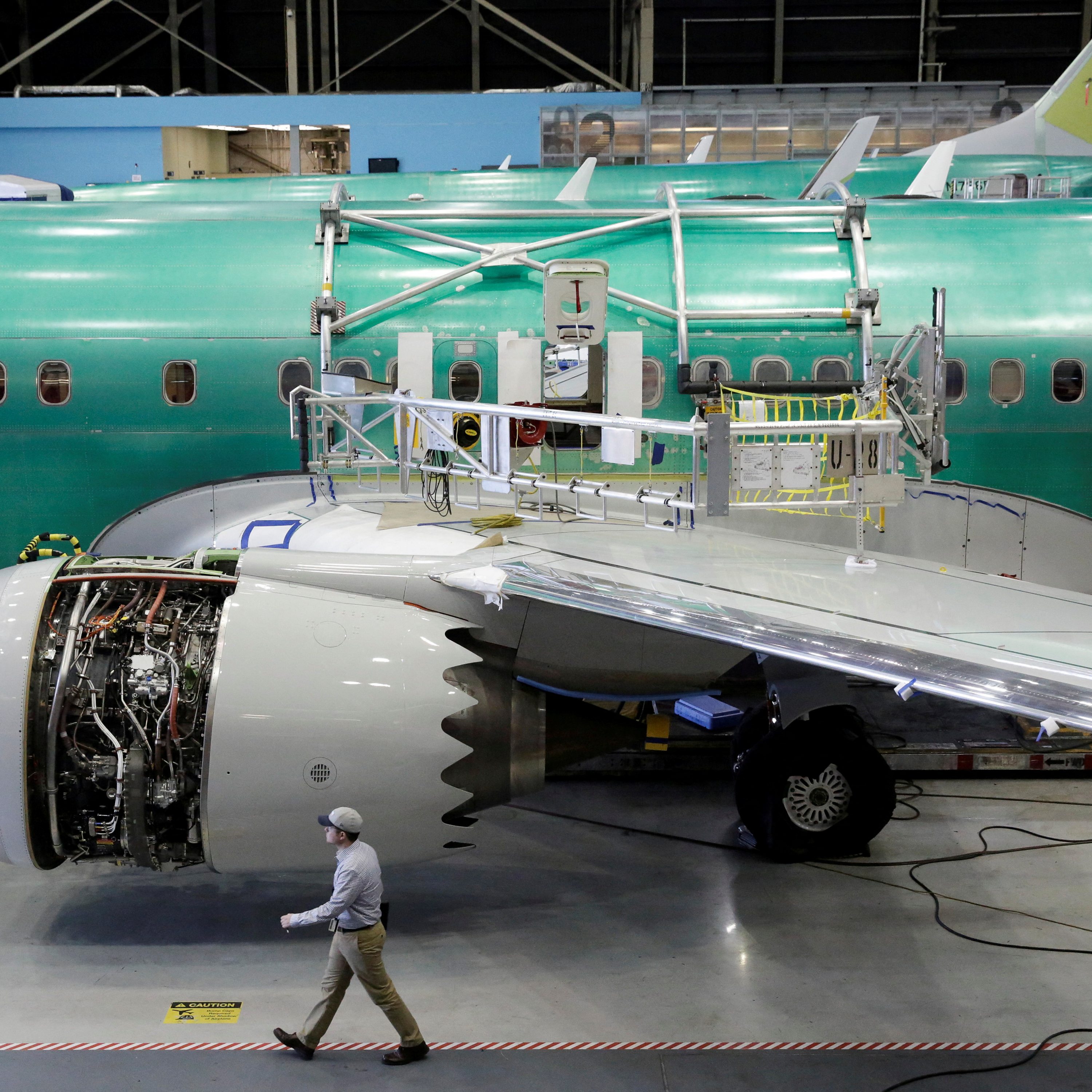
Rahul Tandon reflects on the departure of the company’s Chief Executive David Calhoun. He is set to leave at the end of the year. Could Pakistan be set to resume trade talks with India? We hear from a former Pakistani ambassador to the UK and the US. And we examine why rental costs have risen sharply in some parts of Spain.
Boeing is under pressure after an unused door blew out of a Boeing 737 Max in January shortly after take-off. Will Bain looks at what the changes at the top will mean for the aviation giant as it faces heavy scrutiny following safety incidents and manufacturing issues. Also on the programme: A deadline for Donald Trump to put up the $464m (£365m) penalty for inflating his net worth is due to expire Monday. If he doesn't, the New York Attorney General may start freezing his bank accounts and seizing his property. And as rental costs rise steeply in parts of Spain, Guy Hedgecoe looks at the situation in Ibiza, where the problem is particularly acute due to tourism.
Donald Trump’s social media business is set to become publicly listed after shareholders of a company approved the deal. This will potentially unlock a $3bn windfall for the former US president. Roger Hearing will be hearing how exactly Trump is expected to make money from this. The FBI say there's a criminal investigation into what happened when a panel fell off a Boeing plane in mid-flight back in January. We find what this means for the passengers that were onboard. And we look at the career of the woman who photographed some of the greatest moments in rock.
Donald Trump’s social media company, Truth Social, has been given the go-ahead to go public in a vote by shareholders. The deal could provide a $3bn windfall as the ex-president fights legal penalties. Hundreds of doctors in Kenya are striking today demanding better pay and conditions - we speak to one medic who is taking part. And as the Indian Premier League gets underway, we look at how much more the world's richest cricket league could grow as a business.
The US has filed a landmark lawsuit against Apple in which they are accused monopolising the smartphone market and crushing competition. Roger Hearing will be looking at what this means for the company going forward. Turkey has raised interest rates to 50% to fight inflation at 67%, we find out how it affects ordinary citizens. And as the EU moves to close unpaid internships but unions say it's not enough.
The US Justice Department alleges Apple used its control of the iPhone to illegally limit competitors and consumer options. Apple deny the claims. Also in the programme: The Biden administration unveils the strictest ever US car emission limits to boost EVs; and why a Swedish pharmacy chain is banning the sale of anti-ageing skincare to children.
The US central bank left interest rates unchanged at a range of 5.25% to 5.5%, a 23-year-high. We look into the details. Tech firms in Denmark have come together to develop and roll out a new computer game intended to engage girls in science and technology outside of the classroom. We get the latest from our correspondent. And the world's most expensive drug will soon be available in the US at a price of $4.25m. We hear about the rare disease it treats and the high cost of developing medicine to battle it
The European Union has agreed to extend duty free imports of Ukrainian produce, which have been a lifeline for its war-torn economy. But to ease farmer’s concerns about being undercut, price caps have been brought in on some Ukrainian items, including oats, eggs, poultry and sugar. Will Bain looks at why - and what impact it could have on the Ukrainian economy. Microsoft has hired DeepMind co-founder, Mustafa Suleyman, to lead its new AI division. What does this tell us about the company’s plans for AI - and why hiring the right people is as important as the money you invest when it comes to new tech. And as Ethiopia's biggest commercial bank seeks to recoup large sums of money withdrawn by customers after - what is being called - a "systems glitch" - how does a bank recoup such losses.
Hong Kong lawmakers have passed a security law that critics fear will further erode civil liberties in the city. Will tougher restrictions scare away foreign investors? Bangalore, home to some of the biggest IT companies in India, is battling an acute water shortage. We get the latest from our correspondent. And Star Wars creator George Lucas steps into the boardroom power battle at Disney to support the firm's CEO, Bob Iger. Will the force be with him? Presenter Sam Fenwick finds out.
Japan’s central bank brings the era of negative interest rates to an end with its first rate rise in 17 years. Rahul Tandon looks at why and what this might mean for global markets. As the government in Pakistan continues to limit access to social media sites, we hear from a digital marketing boss in the country, about the effect on their company. And as Unilever announces plans to create a stand-alone business for its ice cream products, including Ben & Jerry's and Magnum, we speak to one former Unilever executive about what this could mean for business on both sides of the deal.
The island is experiencing one of its worst crisis in the last three decades, with people struggling to get staples like milk and bread. Presenter Sam Fenwick examines the difficulties the Cuban economy is facing. Former US President Donald Trump hasn't been able to find a private company to guarantee the $464m million he's been ordered to pay in a New York civil fraud case. We hear about the consequences this could have for the former US president. And --why the number of stolen luxury watches has surged in the past year.
As investors wait to see if Japan’s central bank will bring to an end eight years of negative interest rates, Rahul Tandon speaks to a former economist at the Bank of Japan about whether the policy has worked - and what would they do in the current economic climate. China's industrial production picked up in the first two months of 2024, accompanied by faster growth in the high-tech manufacturing and the consumer goods manufacturing sectors - so is the economy getting back on track? The number of watches recorded as lost or stolen has more than tripled over the last year reaching $1.9 Billion Dollars - according to the world's largest watch database - The Watch Register. We speak to their boss about why and what can be done to help recover stolen goods.
The United States is warning the rest of the world that the US is the canary in the coalmine when it comes to the global opioid crisis. Our presenter Will Bain will be hearing what the US plans on doing. Also, the man who bankrolled Nikki Haley's failed bid for the US Presidency warns where his cash might go next. And there is big news in K-pop for the UK as a band is set to grace the main stage of one of the world's biggest music festival for the first time.
We take a look at Russia's economy as the nation holds the first presidential elections since the beginning of war with Ukraine. Major internet disruption has been reported in various countries across Africa. We hear about the consequences it is having on businesses. And Japanese carmakers Nissan and Hinda want to join forces in the electric vehicle market. What impact will this have in the auto industry?
Former Secretary of the U.S. Treasury Steven Mnuchin said he is arranging a team of investors to purchase Chinese social media giant TikTok. Our presenter Roger Hearing will be looking at how significant this move will be to stop Chinese influence in America. There is a defeat in the UK courts for the Australian who claims to be the man who founded Bitcoin. And Denmark moves to conscript women into the armed forces for the first time as part of a beefing up of its defences - but there are fears about what that will do to the labour market.
Companies across the world struggle to pay debts as the impact of higher interest rates starts to kick in, according to S&P. We look into the details. As US legislators discuss the future of TikTok in the country, we hear from a business that relies on the app to boost sales. And in Bangalore, also known as India's Silicon Valley, a severe water crisis is putting companies under stress. We hear more from our correspondent.
The US House of Representatives has approved a landmark bill that could see TikTok banned in America. The measure would give the social media giant's parent company ByteDance six months to sell its controlling stake, or the app will be removed in the US. Many people are concerned about the possible ban, including US business owners who use TikTok to boost sales. Also in the programme, presenter Will Bain asks why the EU has decided to regulate AI and talks to a major donor from the US election campaign.
US House of Representatives passes bill that could force TikTok's owner to sell the app or see it banned in the country. We get the latest from our correspondent. The European Union has approved the world's first comprehensive framework for constraining the risks of artificial intelligence. We look into the details. And the European Commissioner of Agriculture, Janusz Wojciechowski, talks to World Business Report about recent farmers' protests in the continent.
