


Practical Stoicism


About
Available on








Community
309 episodes

Who is the current Roman Emperor? Okay, so the Roman Empire no longer exists -- but if it did, who would have rightful claim to the throne? Learn more about your ad choices. Visit megaphone.fm/adchoices


In this practical episode of "Practical Stoicism," I delve into the critical art of forming good habits, a cornerstone of personal growth and self-improvement. Starting with a deep dive into the nature of bad habits—those that are not chemical addictions or compulsions but rather result from habituated choices—I draw from the profound insights of Epictetus on the realms of choice and control. I emphasize that our actions and behaviors are within our grasp, aiming to guide you through the transformative process of becoming your best self by making deliberate choices. By clearly distinguishing between what is within our control and what is not, I set the stage for overcoming undesirable habits. With wisdom from Chrysippus and practical strategies for reshaping our behavior, this episode offers a Stoic roadmap to replace chronic behaviors with virtuous habits, guiding you on a transformative journey towards self-discipline and enlightened character development. -- Become a Patron: https://stoicismpod.com/members Plant some trees: https://stoicismpod.com/trees Download Stoicism260: https://stoicismpod.com/app Subscribe to the newsletter: https://practicalstoicism.net/subscribe Pre-order my book: https://stoicismpod.com/book Podcast Artwork by Randy Johnson: https://originalrandy.com Learn more about your ad choices. Visit megaphone.fm/adchoices
In this enlightening episode of "Practical Stoicism," I delve into the profound realization that the search for purpose and meaning in life becomes increasingly urgent as we age. I explore the journey from the invincibility felt in youth to the mature quest for fulfillment, highlighting the importance of discovering a purpose that transcends the expectations of others. Drawing on the wisdom of Stoic philosophy and the teachings of Epictetus and Agrippinus, I've come to understand that true purpose is a deeply personal voyage towards enlightenment, free from the constraints of conformity and rebellion. Join me as I navigate the path to uncovering our individual essence through the lens of Stoicism, offering insights into how to lead a life marked by virtue and excellence. -- Become a Patron: https://stoicismpod.com/members Subscribe to the weekly newsletter: https://practicalstoicism.net/subscribe Pre-order my book: https://stoicismpod.com/book Download Stoicism260: https://stoicismpod.com/app Podcast Artwork by Randy Johnson: https://originalrandy.com Learn more about your ad choices. Visit megaphone.fm/adchoices

Ladies and gentlemen, A.A. Long. The man responsible for Stoicism's contemporary revival. We talk about free will, Zeno's criterion of truth, virtue ethics beyond the Classical period, and more. I hope you enjoy this special episode. -- Become a Patron: https://stoicismpod.com/members Subscribe to the weekly newsletter: https://practicalstoicism.net/subscribe Pre-order my book: https://stoicismpod.com/book A. A. Long's Wikipedia page: https://en.wikipedia.org/wiki/A._A._Long A. A. Long's website: https://dagrs.berkeley.edu/user/40 Podcast Artwork by Randy Johnson: https://originalrandy.com Learn more about your ad choices. Visit megaphone.fm/adchoices

In today's episode, we embark on a Stoic journey to manage anger, exploring how Stoicism provides practical tools for transforming our emotional responses. I delve into the Stoic distinctions between proto-emotions and assented-to emotions, illustrating how understanding these concepts can empower us to master our anger. By examining the role of impressions and the importance of not hastily giving assent, I share insights on how we can approach life's challenges with a calm and rational mindset. Join me as we discover Stoicism's timeless wisdom for managing anger and leading a more harmonious life. -- Become a Patron: https://stoicismpod.com/members Subscribe to the weekly newsletter: https://practicalstoicism.net/subscribe Pre-order my book: https://stoicismpod.com/book Podcast Artwork by Randy Johnson: https://originalrandy.com Learn more about your ad choices. Visit megaphone.fm/adchoices

In today's episode, I delve into the pervasive issue of procrastination, a mental health symptom that seems to afflict us all in various degrees. From the stress of not being able to afford housing to the pressures of societal expectations, procrastination can manifest in many forms. The Stoics, with their practical philosophy, offered a solution to procrastination through the concept of Memento Mori, or "remember that you must die." By confronting our mortality, we're reminded of the limited time we have and are encouraged to act accordingly. However, as I explore in the episode, simply reminding ourselves of death doesn't always translate into action. We discuss the societal obsession with productivity and the relentless pursuit of efficiency, which often leads to burnout and anxiety. Despite our efforts to maximize productivity, we find ourselves trapped in a cycle of endless tasks and obligations, with little time for genuine relaxation or self-reflection. But there's a way out of this cycle. By redefining our priorities and embracing a mindset focused on virtue rather than productivity, we can reclaim control of our time and lives. This involves recognizing the inherent value of rest, leisure, and personal fulfillment, rather than constantly striving for external measures of success. Ultimately, the key lies in two practices: Memento Mori, as a gentle reminder of life's finite nature, and the creation of a plan to guide our actions and priorities. With these tools, we can navigate the complexities of modern life with clarity and purpose, free from the burden of endless productivity. -- Become a Patron: https://stoicismpod.com/members Subscribe to the weekly newsletter: https://practicalstoicism.net/subscribe Pre-order my book: https://stoicismpod.com/book Podcast Artwork by Randy Johnson: https://originalrandy.com Learn more about your ad choices. Visit megaphone.fm/adchoices

In this episode I delve into the painful experience of losing a relationship, particularly one that we didn't want to end. I highlight the acute distress caused by breakups, where someone actively chooses to leave, unlike death, which is inevitable and beyond anyone's control. I discuss how Stoicism-inspired reasoning can help alleviate the pain of heartache and navigate through the grief that follows a breakup. I emphasize the concept of "indifferents" in Stoicism, things that have no power over our ability to choose virtuously. These indifferents prompt us to make choices, but they do not dictate the choices we ultimately make. The episode clarifies the distinction between "indifferents" and "indifference," explaining that Stoics do not treat indifferents with indifference. Rather, they carefully consider how their choices regarding indifferents reflect their character and virtue. Furthermore, Stoic role ethics are introduced, emphasizing the importance of fulfilling one's roles in life responsibly. The host explains that heartache can hinder our ability to fulfill our roles effectively and underscores the need to address heartache as an indifferent that could impede our progress toward cultivating a good character. Practical steps for coping with heartbreak are provided, including acceptance, understanding that another person's unhappiness does not define your worth, focusing on fulfilling other roles in life, and practicing self-care. Overall, the episode offers a Stoic perspective on navigating the emotional turmoil of heartbreak with rationality and self-care, emphasizing the importance of understanding and accepting indifferents while striving to fulfill one's roles in life responsibly. -- Become a Patron: https://stoicismpod.com/members Subscribe to the weekly newsletter: https://practicalstoicism.net/subscribe Pre-order my book: https://stoicismpod.com/book Podcast Artwork by Randy Johnson: https://originalrandy.com Learn more about your ad choices. Visit megaphone.fm/adchoices
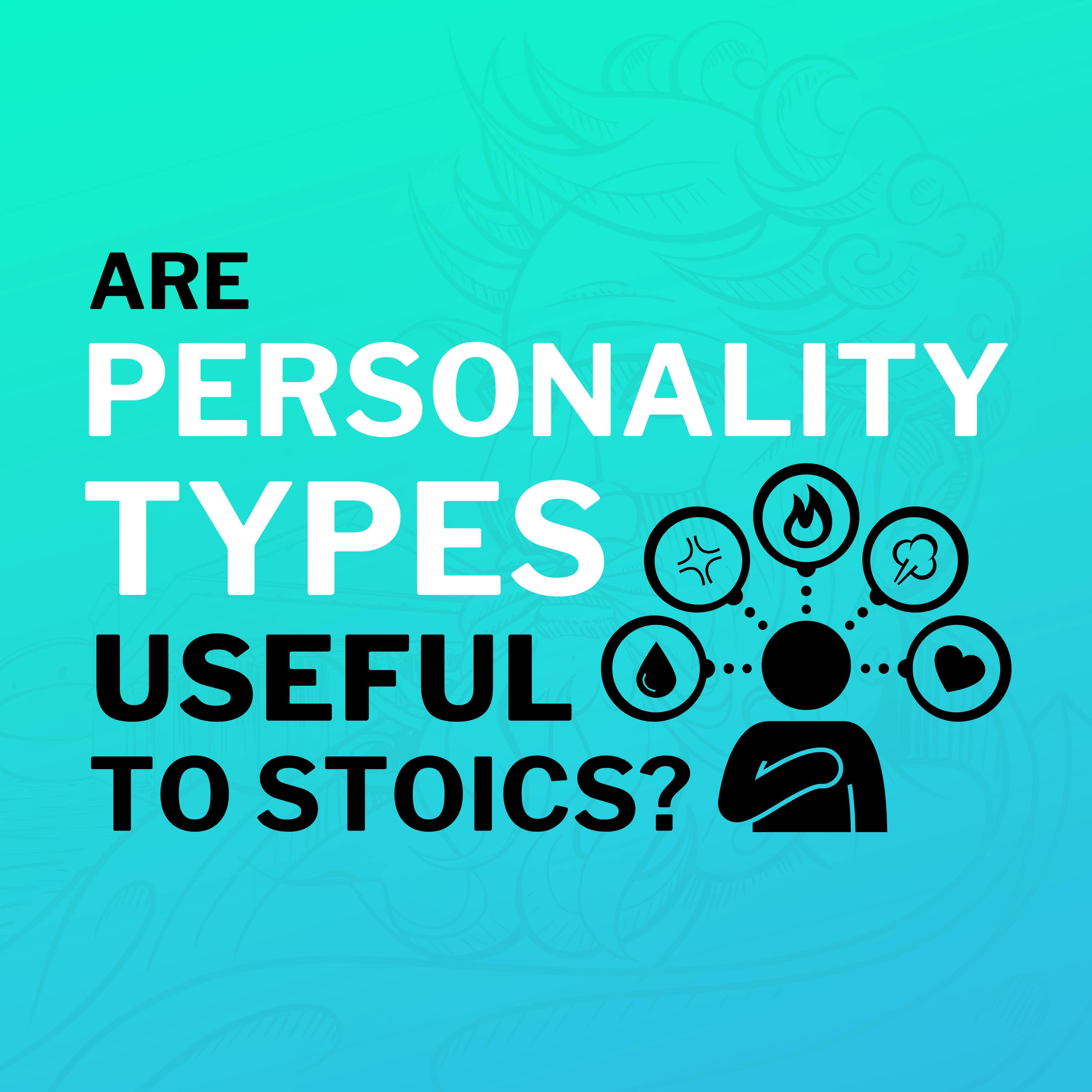
Greetings, listeners. It's remarkable to witness our community's growth, now exceeding 100,000 listeners every Monday and Friday. Your continued support is truly appreciated. Today's episode delves into a thought-provoking query posed by Griff, a dedicated listener and Patron, regarding the relevance of personality types within the context of Stoicism. Griff questions whether such classifications confine individuals rather than foster personal development. From my perspective, I maintain a degree of skepticism towards these systems. They often serve as tools for self-indulgence rather than avenues for genuine self-improvement. However, I do recognize their practical applications. They can provide valuable insights into our behaviors and guide therapeutic interventions. While these systems may offer useful insights, it's crucial not to allow them to define us. Instead, we should view them as tools for self-reflection and growth. Let's utilize them wisely, not as rigid identity markers, but as resources for enhancing our understanding of ourselves and facilitating personal development. -- Become a Patron: https://stoicismpod.com/members Pre-order my book: https://stoicismpod.com/book Podcast Artwork by Randy Johnson: https://originalrandy.com Learn more about your ad choices. Visit megaphone.fm/adchoices
In today's episode, I tackle the enduring Stoic principle that "Virtue is its own reward." This exploration is a personal journey into the heart of Stoicism, examining whether this ancient wisdom holds true in our contemporary lives, and I won't shy away from getting a bit salty or taking some swipes along the way. We begin with Meditation 11.4 as our focal point, which encourages us to reflect on our contributions to the common good and to find contentment in these efforts as our reward. This meditation is the springboard into a deeper discussion about the role of Virtue in our lives. I openly acknowledge the practical realities of living by Stoic virtues. If I weren't compensated for producing this podcast, I simply wouldn't be able to do it. This admission leads us to the crux of today's topic: how to apply Stoic Virtue in our everyday existence. While Stoicism places Virtue as the highest good, it doesn't ignore the modern complexities we all navigate. I critique the notion that to live a Stoic life, one might need to adopt an ascetic lifestyle, devoid of personal belongings or societal ties. However, this view aligns more with Cynicism than Stoicism. Stoicism doesn't advocate for unnecessary hardship but rather for a meaningful life, where challenges are seen as opportunities for growth, not as goals in themselves. The discussion challenges the misconception that Stoics should live in extreme self-denial. Stoicism recognizes our natural human desires, emphasizing that it's possible to want things, be part of a community, and pursue goals that positively impact the Cosmopolis, or the global community. At its core, today's episode reveals that Stoicism teaches Virtue is indeed its own reward, but this doesn't mean withdrawing from the world. Virtue manifests through our actions, decisions, and our influence on our Circles of Concern—the people, animals, and environment we interact with. Stoics are encouraged to live lives that harmonize personal ambitions with the collective good, always acting with the welfare of the community in mind. The key takeaway is that Stoicism is about active participation in life, not seclusion from it. It's about chasing what we want, within reason, and contributing to society in meaningful ways. Stoicism doesn't force us to choose between living virtuously and living fully; it suggests that a truly good life includes both. Remember, it's about being a Human Being, appropriately, engaging with the world, pursuing Virtue, and finding fulfillment in the good we do for both others and ourselves. Learn more about your ad choices. Visit megaphone.fm/adchoices
In today's episode, I delve into the profound theme of Forgiveness within the framework of Stoicism, a topic that resonates deeply with both my personal experiences and the Stoic principles I strive to embody. I commence with a note of gratitude towards new Patrons – Dan Brann, Jenny Kay, and Jay – whose support is instrumental in dedicating myself fully to this podcast. For those contemplating joining our Patreon, it offers an ad-free listening experience, exclusive articles, discussions with special guests, and a vibrant private Discord community. The essence of today's discourse on Forgiveness is drawn from a personal narrative – my journey of forgiving my mother, a path marked by decades of hurt, distance, and ultimately, reconciliation. This story illustrates not just a personal struggle but encapsulates the Stoic view on external events and our control over them. My childhood, marred by broken promises and absent visitations, laid the groundwork for years of resentment towards my mother. However, the Stoic practice of accepting things beyond our control and focusing on our reactions played a pivotal role in navigating this tumultuous relationship. Forgiveness, from a Stoic perspective, is intricately tied to the understanding and acceptance of human imperfection, including our own. It is not merely about absolving others but recognizing the limitations within which everyone operates. This realization does not come swiftly or easily; it is a gradual process of internalizing and genuinely believing in the fallibility of all humans, including those who might have wronged us. The episode breaks down Forgiveness into three actionable steps rooted in Stoic philosophy: Acknowledging our lack of control over others' actions and their inherent imperfections. Internalizing this understanding to a degree where it informs our belief system and reactions. Adjusting our expectations to align with the reality of human imperfection, thereby reducing the likelihood of disappointment. This framework for Forgiveness, though not explicitly outlined in Stoic texts, draws inspiration from Stoic principles, particularly the reflections of Marcus Aurelius on self-awareness and mutual human fallibility. In conclusion, Forgiveness, as discussed in this episode, transcends the personal and delves into the philosophical, offering a Stoic approach to dealing with one of the most challenging aspects of human relationships. It's a reminder of the power of acceptance, the importance of adjusting our expectations, and the virtue of empathy towards ourselves and others. -- Become a Patron: https://stoicismpod.com/members Pre-order my book: https://stoicismpod.com/book Podcast Artwork by Randy Johnson: https://originalrandy.com Learn more about your ad choices. Visit megaphone.fm/adchoices
It is not always Just to be nice, but it is always nice to be Just. This is easier said than done. Can Meditations 5.32 and a bit of heavy Monday morning reflection help us get better? If not, there's a Toblerone at the end of this episode that you might be interested in. -- Become a Patron: https://stoicismpod.com/members Pre-order my book: https://stoicismpod.com/book Join the waitlist: https://stoicismpod.com/app Podcast Artwork by Randy Johnson: https://originalrandy.com Learn more about your ad choices. Visit megaphone.fm/adchoices
Anya Leonard is my friend and one of my heroes. She's built something really incredible over the last 10-years (ClassicalWisdom.com) and I think it is as important a contribution to mankind as was Britannica compiling the great works of Western literature - she has create a "great works" platform and she provides it for free to everyone. This makes her not just a friend and a hero but also a comrade in arms. In today's episode you'll learn about Anya, some of her history, what inspired her to start Classical Wisdom more than a decade ago, and also about an upcoming talk she's giving at the Plato's Academy Centre on philosophy and kids. -- Classical Wisdom: https://classicalwisdom.com Greek Classics Course: https://courses.classicalwisdom.com Plato's Academy Event: https://philosophyandchildren.eventbrite.ca Become a Patron: https://stoicismpod.com/members Pre-order my book: https://stoicismpod.com/book Podcast Artwork by Randy Johnson: https://originalrandy.com Learn more about your ad choices. Visit megaphone.fm/adchoices

-- Become a Patron: https://stoicismpod.com/members Pre-order my book: https://stoicismpod.com/book Podcast Artwork by Randy Johnson: https://originalrandy.com Learn more about your ad choices. Visit megaphone.fm/adchoices
-- Become a Patron: https://stoicismpod.com/members Pre-order my book: https://stoicismpod.com/book Podcast Artwork by Randy Johnson: https://originalrandy.com Learn more about your ad choices. Visit megaphone.fm/adchoices

-- Become a Patron: https://stoicismpod.com/members Pre-order my book: https://stoicismpod.com/book Podcast Artwork by Randy Johnson: https://originalrandy.com Learn more about your ad choices. Visit megaphone.fm/adchoices

Tanner Campbell converses with Michael Tremblay, an MMA fighter, writer, and co-creator of Stoa Stoic Meditations app. They delve into several topics, including the role of sport and exercise in addressing rage and anger. Michael Tremblay shares his insights on the practice of martial arts, particularly Brazilian Jiu-Jitsu, and its philosophical alignment with Stoicism. He emphasizes how martial arts were his first exposure to explicit moral education, teaching not just physical skills but also the importance of character development, self-control, and ethical behavior. Discussing anger, Tremblay highlights the Stoic perspective, as outlined by Seneca, which views anger as a reaction to perceived harm that demands punishment. He distinguishes between two types of anger: the immediate, reactionary kind often experienced in daily frustrations, and a deeper, more persistent anger stemming from significant personal betrayals or grievances. Tremblay notes that while physical activities like martial arts can effectively mitigate the immediate, reactionary anger, they are less effective in addressing deeper, long-standing feelings of rage or betrayal. He explains how Stoicism helps navigate these emotions by encouraging a present-focused mindset, acknowledging past mistakes while striving to change and improve. In dealing with regret, Tremblay and Campbell agree that while Stoicism advocates for acceptance and moving forward, it also acknowledges the natural feelings of sadness and shame that come with regret. They underscore the importance of understanding and transforming these feelings constructively, focusing on the present and future actions rather than dwelling on past errors. The conversation also touches upon Epictetus, his background as a slave, and his philosophical teachings. Tremblay provides insights into Epictetus's approach to teaching young Roman men destined for politics or industry, emphasizing the importance of not just learning philosophy but living it. In summary, the podcast highlights the value of physical disciplines like martial arts in managing immediate anger and stress, while recognizing the need for philosophical reflection and self-improvement in addressing deeper emotional issues. The discussion reinforces the Stoic principles of focusing on present actions, accepting the past, and continually striving for personal growth and ethical living. -- Become a Patron: https://stoicismpod.com/members Check out Neurohacker: https://neurohacker.com/practical Podcast Artwork by Randy Johnson: https://originalrandy.com Stoa Conversations: https://open.spotify.com/episode/7wHSqUf6BZDIUBDu0YgAAs Stoa Meditation App: https://stoameditation.com Learn more about your ad choices. Visit megaphone.fm/adchoices
In this week's episode of "Practical Stoicism," host Tanner Campbell tackles a diverse set of questions from Patreon supporters, diving deep into the application of Stoicism in modern life. Campbell begins by addressing the nature of Stoicism as a practical philosophy that requires active engagement and contextual understanding, warning against the misuse of Stoic quotes out of context, akin to religious dogmatism. He emphasizes that Stoicism, much like any philosophy, demands practice and interpretation rather than rote memorization of texts. The episode covers four main questions: 1. The distinction between externals and indifferents, particularly our bodies, and how Stoicism views the impact of physical health on mental well-being. Campbell clarifies that while our bodies are considered indifferent, how we choose to care for them is not, highlighting the importance of personal responsibility in maintaining health. 2. Strategies for using Stoic principles to prevent coworkers' actions from negatively affecting one's day. The host suggests that adopting a Stoic mindset involves choosing not to let external behaviors dictate one's emotional state, underscoring the value of practicing Stoicism in interpersonal relationships. 3. The ethical considerations of vegetarian and vegan diets through a Stoic lens. Campbell explores the ancient Stoics' views on extravagance and simplicity in diet, ultimately arguing for a balanced approach that respects both personal health and the treatment of animals. 4. The potential conflict between striving for sagehood and technological or societal progress. The discussion centers on whether the pursuit of Stoic ideals might hinder innovation, with Campbell concluding that Stoicism encourages curiosity and the rational pursuit of ideas that align with one's nature and contribute to the common good. Campbell's thoughtful exploration of these topics demonstrates Stoicism's relevance in addressing contemporary ethical dilemmas and personal challenges. By emphasizing contextual understanding and the practical application of Stoic principles, the episode invites listeners to engage more deeply with Stoicism as a guide to living well. -- Become a Patron: https://stoicismpod.com/members Check out Neurohacker: https://neurohacker.com/practical Learn more about your ad choices. Visit megaphone.fm/adchoices

Donald Robertson joins Tanner Campbell to discuss his new book, "Marcus Aurelius: The Stoic Emperor," published by Yale University Press. The conversation delves into the life and philosophy of Marcus Aurelius, shedding light on both well-documented and lesser-known aspects of his reign. Robertson emphasizes the substantial amount of information available about Marcus Aurelius, more so than for most other ancient philosophers. Despite historical gaps and unreliable sources, a wealth of details about his reign, personal writings, and even his appearance at various stages of life is accessible. This rich trove of information provides a detailed picture of his life, philosophy, and the era he lived in. An interesting topic discussed is Marcus Aurelius's engagement in activities such as leading a dance troupe known as the "College of the Salii" or "The Leaping Priests." This group performed martial dances in honor of Mars, the god of war, serving both a religious function and preparing young men for military service. The discussion portrays Marcus Aurelius as a multifaceted emperor deeply involved in the cultural and religious practices of his time. The conversation also touches on the historical and personal challenges Marcus Aurelius encountered, including the political intrigue and his complex relationship with Hadrian. Robertson suggests that the environment of suspicion and surveillance under Hadrian likely influenced Marcus Aurelius's philosophical reflections and his cautious approach to governance. Furthermore, Robertson explores potential controversies and interpretations surrounding Marcus Aurelius's life, particularly his upbringing under Hadrian's influence. The dialogue hints at the darker aspects of Roman society and governance, including exploitation and manipulation at the highest levels of power. Robertson's insights into Marcus Aurelius extend beyond his philosophical musings, offering a glimpse into his personal experiences and the societal norms of his era. The book promises a comprehensive and nuanced portrayal of one of Stoicism's most revered figures, supported by thorough research and historical accuracy. This episode anticipates the revelations in "Marcus Aurelius: The Stoic Emperor" and underscores the importance of understanding historical figures within the full context of their lives. Robertson’s work aims to provide a detailed exploration of the Stoic emperor’s life and legacy. For those interested in Donald Robertson's examination of Marcus Aurelius, "Marcus Aurelius: The Stoic Emperor" is available on Amazon. -- Become a Patron : https://stoicismpod.com/members Check out Neurohacker : https://neurohacker.com/practical Purchase Donald's new book : https://a.co/d/90ZftVw Learn more about your ad choices. Visit megaphone.fm/adchoices

In today's episode, I explored the question of whether women should engage in the study of philosophy, particularly Stoicism, through the lens of Musonius Rufus, a Roman Stoic philosopher. Musonius was asked if daughters should receive the same education as sons, and his response is profoundly relevant today, especially in discussions about gender roles in philosophy. Stoicism, often perceived as a male-dominated philosophy, asserts that Virtue – the knowledge of how to live excellently – is attainable by anyone, regardless of gender. This principle is rooted in the belief that both men and women possess the same rational faculty – a brain capable of learning and understanding. The slight physical variations between genders do not impede the ability to acquire knowledge, including Virtue. Just as men and women can learn skills like math or carpentry, both can equally learn and practice Virtue. Musonius, whose teachings have been passed down over centuries, believed firmly in the equality of men and women in their capability and inclination toward Virtue. According to him, both genders have been endowed with reason by the gods, share the same senses, and have similar body parts. More crucially, both have a natural tendency toward virtue and are equally capable of distinguishing good from bad. He argued that if both men and women are naturally inclined to virtue and capable of discerning right from wrong, there's no logical reason why the study of philosophy – the pursuit of a good life – should be exclusive to men. If it's fitting for men to be good, it's equally fitting for women. Musonius went further to describe qualities that are ideal for a woman leading a good life, suggesting that these are best nurtured through the study of philosophy. He contended that a woman versed in philosophy would be a better housekeeper, a prudent manager of household affairs, chaste, self-controlled, not given to excessive grief or uncontrolled emotion, and a just and courageous individual. These teachings of philosophy, he argued, are universal and apply equally to men and women. Addressing concerns that women engaging in philosophy might become arrogant or neglectful of their duties, Musonius emphasized that philosophy should be a practical guide to life. He compared it to medicine, which is valuable only if it contributes to the health of the body. Similarly, philosophy is meaningful if it leads to the betterment of the soul. The overarching point Musonius made was that everyone, regardless of gender, should fulfill their duties and roles virtuously. His views, though rooted in the gender norms of his time, transcend these to focus on the universal human duty to care for our circles of concern, control desires, maintain emotional stability, and act courageously. In conclusion, Musonius Rufus, a thinker ahead of his time, affirmed that the pursuit of Stoic Virtue is not confined by gender. His teachings remind us that the path to sagehood and the practice of Virtue are open to all, encouraging a more inclusive understanding of Stoicism that resonates with contemporary perspectives on gender equality in the pursuit of philosophical knowledge. -- Become a Patron : https://stoicismpod.com/members Visit the store : https://store.stoicismpod.com Check out Neurohacker : https://neurohacker.com/practical Learn more about your ad choices. Visit megaphone.fm/adchoices
In today's episode, I dove into a contemplative discussion on grief, regret, and the nature of our reactions to loss, drawing inspiration from Seneca's "Letters of Consolation to Marcia." Seneca, in his own verbose manner, offered insights on dealing with the loss of a loved one, a topic that often intertwines with regret, especially when that loss is sudden and unexpected. I began by highlighting a significant excerpt from Seneca's letters, where he acknowledges the naturalness of sorrow over losing one's children but stresses the importance of reasonableness in grief. This discussion led me to explore the concept of regret in the context of death and loss, positing that all forms of regret stem from some loss, whether it be a life, an opportunity, or a relationship. Delving into whether regret is natural, I suggested that while regret may be normative, it might not align with our true nature if we lived as sages, perfectly rational and moral beings. As sages, we wouldn't perceive loss, death, or ended relationships as inherently negative. This raised the question: Should we expect sage-like behavior from ourselves and others, or is it merely an ideal? I proposed viewing regret as a crossroads, a chance to reconsider our perspectives on life's events. For instance, instead of regretting what we did wrong in a relationship, why not feel gratitude for the joyous moments shared? This shift in perspective can transform regret into an opportunity for growth and self-improvement. Addressing regret for things we believe negatively impacted others, like feeling responsible for someone's unhappiness or death, I emphasized the importance of taking responsibility and using these feelings as motivation for change. These moments of regret are reminders of our journey towards a better self, a chance to acknowledge our past imperfections and commit to a more mindful and virtuous path forward. In conclusion, dealing with regret as Stoics, or more accurately as Prokoptôn, involves recognizing it as an opportunity to make better choices. It's about accepting our past mistakes, learning from them, and continuously striving to align our actions with Virtue. Regret, then, becomes not a burden but a catalyst for personal growth and a deeper understanding of our journey towards Stoic ideals. -- Become a Patron : https://stoicismpod.com/members Check out QualiaMind : https://neurohacker.com/practical Check out Will's podcast : https://www.willjohncock.com/techno-umbilico Learn more about your ad choices. Visit megaphone.fm/adchoices

Support my work by becoming a patron here : https://stoicismpod.com/members Learn more about your ad choices. Visit megaphone.fm/adchoices

In today's podcast episode, I explored Meditation 10 from Book 8 of Marcus Aurelius' "Meditations." This particular meditation delves into the nature of repentance, pleasure, and their relationship with virtue. Marcus asserts that repentance is a self-reproof for neglecting something useful, and what is truly good must always be useful. He concludes that sensual pleasure, therefore, is neither good nor useful. Marcus’ meditation might initially seem to advocate for a life devoid of pleasure, echoing a stereotypical stoic rejection of sensual experiences. However, I aimed to provide a more nuanced interpretation. While virtue, the only good in Stoicism, is indeed always useful, it doesn’t necessarily imply that anything not perpetually useful is devoid of value. Repentance, as discussed by Marcus, is about recognizing the lost opportunity for something beneficial, aligning with Stoic principles. But when he suggests that no sage would repent refusing sensual pleasure, it’s vital to understand the context of utility in Stoicism. Pleasure, especially sensual pleasure, is not inherently good in the Stoic framework, but it's not always harmful either. It’s classified as an ‘indifferent’ – something that neither contributes to nor detracts from virtue. In real-life scenarios, the utility of pleasure can be highly context-dependent. For instance, sexual pleasure within a relationship might foster intimacy and connection, aligning with one’s duties in the Circles of Concern. In this sense, pleasure can be situationally useful. I speculated that Marcus’ harsh stance on pleasure might have stemmed from personal struggles or the context of his times. It’s important to remember that “Meditations” was a personal journal, reflecting his thoughts and struggles, not always a prescriptive guide for all. I emphasized that attempting to completely reject pleasure is unrealistic and unnecessary. Stoicism advises moderation and mindful engagement with life’s pleasures. It’s about how we interact with ‘indifferents’ like pleasure and how these interactions reflect our character. Engaging healthily with pleasure can indeed be a part of a virtuous life. In conclusion, while Marcus Aurelius provides a stern view on pleasure, a contemporary Stoic perspective recognizes the role of pleasure as an indifferent. It’s not about banishing pleasure but about engaging with it in a way that’s aligned with our character and virtues. This approach reflects a more balanced and realistic application of Stoic principles in modern life. Remember, you can further support this exploration of Stoicism by becoming a patron, removing ads, and joining our community for deeper discussions. -- Become a Patron : https://stoicismpod.com/members Check out Neurohacker's Qualia Mind : https://neurohacker.com/practical Learn more about your ad choices. Visit megaphone.fm/adchoices

In today's podcast episode, I tackled some thought-provoking listener questions, providing insights into how to approach life's complexities through a Stoic lens. The first question came from listener "Modern Rust", who asked about prioritizing roles in life. My response emphasized the Stoic principle that no roles should contradict each other. The key lies in understanding the Circles of Concern, starting with the self at the center. I explained that prioritizing ourselves means appropriately caring for things beyond ourselves, extending to family, community, and beyond. Each role must align with our responsibility to our own well-being and should not conflict with our roles in other circles. The discussion ventured into more complex scenarios, like serving in the military or facing moral dilemmas at work. I stressed that actions in one circle must benefit the others. For instance, defending one's country is justified if it aligns with personal, familial, and communal responsibilities. The Stoic approach isn't about blind obedience to external demands but about careful consideration of how our actions impact all aspects of our lives and the broader community. Listener Arkhê posed the second question, seeking elaboration on the Stoic concept that possessing one virtue inherently means possessing all others. I expressed my perspective as a podcaster, not a formal academic, focusing on making Stoicism practical for everyday life. I discussed the Unity of Virtue, explaining that true bravery, for example, requires wisdom, temperance, and justice. This unity suggests that perfect virtue, or sagehood, is an ideal we strive for, not necessarily a state we achieve. This perspective allows for continuous self-improvement within the Stoic practice. The final question from BattleBaby touched on the balance between Stoic reserve and assertiveness. I addressed the misconception that Stoicism advocates for passivity or being a doormat. Instead, Stoicism encourages thoughtful, well-reasoned actions that reflect our character and understanding. Whether facing harassment at work or confronting societal issues, Stoicism teaches us to make choices based on a deep understanding of our roles and responsibilities. It's not the outcomes that define our Stoic virtue but the intention and reasoning behind our choices. Throughout the episode, I emphasized the importance of thoughtful deliberation and the interconnectedness of our roles within the Circles of Concern, encouraging listeners to navigate life's challenges with a Stoic mindset that values rational decision-making and the pursuit of virtue. -- Become a patron : https://stoicismpod.com/members Learn more about your ad choices. Visit megaphone.fm/adchoices

In today's episode, I delve into Book 11 of Marcus Aurelius' "Meditations," focusing on a meditation (Meditations 11.1) that sheds light on the concept of service to ourselves and others. This passage from Marcus Aurelius profoundly illustrates the properties of the rational soul: it has the capacity to see and analyze itself, and to shape its own existence according to its will. What's unique about the rational soul is that it enjoys the fruits of its own actions, unlike plants and animals, whose fruits are enjoyed by others. I explore the idea that the rational soul reaches its own end, regardless of the lifespan of its host. This concept is intriguing because, unlike a play or dance that requires completion to be whole, the rational soul is complete and fulfilled at every moment of its existence. This completeness is intrinsic and does not depend on the duration of life. Diving deeper, I discussed how humans possess a level of consciousness that can interrupt the universe's rationality, creating a reality where the naturally existing rational faculty in humans must be actively leveraged for us to live in accordance with our nature. This brings us to the concept of the madman, the Prokoptôn (the one who is progressing or aspiring Stoic), and the sage. The madman is oblivious to reason and rationality, the Prokoptôn is aware and striving to align with their rational nature, and the sage is the embodiment of perfect rationality. I emphasized that the realization of our rational soul is a choice. We can either let our untamed consciousness overpower our true nature, or we can choose to be Prokoptôn, using our rational faculties to embody the natural reason of our soul. The rational soul, once fully realized, sees its existence as a state that cannot be improved upon and does not require additional time to validate or qualify its existence. Furthermore, I touched upon the interconnectedness of the rational soul with the universe. The idea that the rational soul, part of the universal reason, is connected to everything in existence implies a natural kinship with all beings and things. This perspective challenges the often misunderstood notion of Stoicism as solely a philosophy of individualism and resilience. Instead, it underscores our interconnectedness with the universe and all its inhabitants, urging us to value the universal rational soul and, by extension, everything in existence. In closing, I invited listeners to reflect on how this discussion might alter their understanding of Stoicism and to share their thoughts. This episode aimed to bring to light the deeper, more spiritual aspects of Stoicism, moving beyond the popular interpretations to explore its profound universal implications. -- Become a Patron : https://stoicismpod.com/members Learn more about your ad choices. Visit megaphone.fm/adchoices

I had an insightful discussion with Will Johncock about his book, "Beyond the Individual." Will explored the themes of Stoicism, particularly how it emphasizes community and connection rather than just individualism. As a philosopher and academic, he delved into Stoicism's perspectives on individualism and collectivism, highlighting the importance of understanding where we as individuals end and where the rest of the world begins. He discussed his academic journey, noting how he became interested in Stoicism during his graduate studies in philosophy and sociology. Will explained the concept of Oikeiôsis, emphasizing the Stoic belief in the interconnectedness of all beings and the shared mind. This concept challenges the modern interpretations of Stoicism that focus heavily on individual resilience and self-improvement. Instead, Will's approach highlights the Stoic view of our social nature and responsibilities to others. The podcast also touched on practical applications of Stoic principles in modern life, like parenting and education. Will argued for incorporating Stoic values in early education to foster a sense of community and connectedness from a young age. He addressed the challenges posed by contemporary individualistic interpretations of Stoicism, advocating for a more nuanced and traditional understanding of the philosophy. For those interested in exploring these themes further, Will Johncock's book "Beyond the Individual" offers a detailed and accessible exploration of Stoicism's focus on community and connection. The book is available for purchase online, and it provides a fresh perspective on Stoic philosophy, challenging some of the more individualistic interpretations prevalent today. -- Become a Patron : https://stoicismpod.com/members Learn more about your ad choices. Visit megaphone.fm/adchoices

This episode of "Practical Stoicism" delves into the concept of Oikeiôsis, focusing on how to identify the aspects of life one should actively concern themselves with. I emphasize the distinction between caring about something and actively concerning oneself with it. Drawing from Stoic philosophy, the episode unfolds in four steps: #1 - Realize that you're human: Acknowledging that my most proximal concerns must be for ourselves and other humans. The Stoic perspective asserts that our ethical concerns must follow this order: self > family > friends > community > humanity > non-human animals > biosphere #2 - Identify your strengths, weaknesses: Recognizing our strengths and weaknesses to make informed choices about where to direct our concerns. This involves assessing whether we are financially, physically, or mentally equipped to engage in specific actions. #3 - Identify the roles you cannot unchoose: Recognizing roles and responsibilities that are inherent, non-negotiable, or arise from our choices. Balancing these roles with new concerns to ensure harmony and avoid abandoning essential responsibilities. #4 - Choose what you want: Empowered to freely choose concerns based on personal desires, keeping in mind the logical and rational defense developed through previous steps. This step ensures that our choices align with our strengths, limitations, and existing roles. The episode concludes with the freedom to choose without shame, armed with a rational understanding of personal limitations and priorities. The host encourages listeners to share their chosen concerns on Spotify, fostering a community of inspiration and diverse perspectives. -- Become a patron of this podcast : https://stoicismpod.com/members Learn more about your ad choices. Visit megaphone.fm/adchoices
In today's episode of Practical Stoicism, I'm thrilled to bring back Professor William Stevens for a deep dive into Oikeiôsis, the theme of this month. We delve into its ancient Stoic roots and its relevance in contemporary life, exploring how it helps us understand what is truly ours to be concerned with. Oikeiôsis, a term that signifies the recognition of what is akin or appropriate to us, extends our concern beyond ourselves to our family, community, humanity, and the entire biosphere. Professor Stevens clarifies that while Oikeiôsis is a uniquely Stoic term, its principles are universally applicable, emphasizing our interconnection with all living things and the wider world. Our conversation also tackles misconceptions of Stoicism, highlighting that it's not merely a life hack or a path to personal success but a profound guide for ethical living and community engagement. We discuss how Stoicism, especially through the concept of Oikeiôsis, informs our sense of justice and moral duty, urging us to consider our roles and responsibilities within the vast network of relationships that define our lives. As we conclude, we touch upon the critical issue of environmental responsibility, linking the Stoic view of Oikeiôsis to contemporary concerns like global warming. This episode is a reminder that Stoicism, with its emphasis on virtue and common good, offers timeless wisdom for navigating the complexities of modern life and contributing positively to the world around us. Join us as we explore these ancient yet ever-relevant ideas and how they can inspire us to lead more thoughtful, interconnected lives. -- Become a Patron : https://stoicismpod.com/members William's book : https://a.co/d/9U5511N William's Santa Claus article : https://read.actualstoicism.com/p/is-santa-a-stoic Learn more about your ad choices. Visit megaphone.fm/adchoices
In today's episode, I'm discussing Oikeiôsis, an essential part of Stoic philosophy and a cornerstone for developing a virtuous character. I'll revisit Hierocles' Circles of Concern, illustrating our interconnectedness with family, community, humanity, and the biosphere, and introduce the Pyramid of Concern, a new perspective emphasizing the foundational role of broader concerns in our well-being. As we explore Oikeiôsis, I'll explain how caring for others as ourselves isn't just noble; it's a practical approach to living a fulfilled life. You've been with me through nearly 300 episodes, and now, as we begin 2024, we'll spend a whole month dissecting and applying Oikeiotic thinking and acting. We'll hear from ancient Stoics, apply their wisdom to modern challenges, and I'll even pose a question for you Spotify listeners to engage with directly in the mobile app. Let's start this year by understanding and embracing the full scope of our concerns, shaping them to enrich not just ourselves, but the entire world we are a part of. -- Become a Patron of this podcast : https://stoicismpod.com/members Learn more about your ad choices. Visit megaphone.fm/adchoices

In this episode, I continue the discussion on ego, incorporating insights from my listeners and sharing my own reflections. After welcoming new patron Richard Herring, I note the podcast's expansion onto YouTube and the distinct approach I'm taking there. I dive into various listener perspectives on ego, ranging from its necessity in self-identity and decision-making to its potential dangers when overinflated. These comments highlight the complexity of ego, suggesting it's neither wholly good nor bad but rather a tool that needs careful management. From a Stoic perspective, I agree that ego is essential, especially in the context of recognizing our autonomy and ability to make choices. However, the challenge lies in balancing this self-awareness without letting ego distort our perception of reality or our capabilities. Drawing on psychoanalytic theory, I discuss the ego as the part of our personality that interacts with the external world, highlighting its role in our perception and decision-making processes. This understanding underscores the Stoic view that ego, while necessary, should not be allowed to dominate or misguide us. I then explore the balance between having enough ego to believe in our abilities and avoiding the delusion of overestimating our capabilities. Utilitarian considerations, while not strictly Stoic, play a role in our decision-making, especially in situations where our actions can have significant consequences. Finally, I offer three pieces of advice for keeping the ego in check: 1 - Regularly adopting the cosmic viewpoint to gain perspective on our insignificance in the universe. 2 - Habitually engaging with others to shift focus away from oneself. 3 - Volunteering regularly to maintain a healthy balance between self-concern and service to others. The episode concludes with a reminder to participate in the Spotify question for the upcoming episode, where we'll delve deeper into the concept of ego with a subject matter expert. -- Become a patron of this podcast : https://stoicismpod.com/members Learn more about your ad choices. Visit megaphone.fm/adchoices
Today begins a three-part series exploring ego. I question whether ego is the 'big bad boogey monster' of Vice, setting the stage for a week-long thematic exploration. Initially, I discuss a meditation from Marcus Aurelius, which, although not explicitly about ego (since the concept didn't exist in his time), relates to the idea of self-importance. I note the difference between the everyday use of 'ego' and its clinical or scientific definitions. The colloquial understanding often equates ego with being overly self-important or pompous. Marcus Aurelius' meditation (5.24) provides a Stoic perspective, urging us to consider our insignificance in the grand scheme of the universe. This viewpoint is a direct challenge to the ego-centric view, emphasizing how minuscule our existence is compared to the vastness of matter, time, and historical events. My interpretation of Marcus' message is not to push us towards Nihilism but rather to offer a cosmic perspective that helps temper ego-driven thoughts. This Stoic approach aims to provide a reality check to our self-importance, reminding us that we're not the center of the universe. This acknowledgment doesn't mean our lives are meaningless, but it suggests that we should keep our ego in check to maintain a balanced perspective. My goal with this series is to thoroughly explore the concept of ego, providing practical advice and insights that listeners can apply in their daily lives. By the end of the week, the aim is to have a comprehensive understanding of ego and how it relates to the pursuit of virtue in Stoicism. -- Become a Patron : https://stoicismpod.com/members Join the Discord : https://discord.gg/stoicism Learn more about your ad choices. Visit megaphone.fm/adchoices
