


IT Visionaries


About
Available on








Community
516 episodes
Think 5G is about faster phones? That's what telecom companies want consumers to believe. The truth is far more interesting. In this episode, Elena Fersman (VP and Head of AI Innovation at Ericsson) reveals what 5G networks are really built for: industries, not consumers. Through network slicing, edge computing, and cognitive systems, 5G creates the infrastructure that makes AI applications possible at scale—from remote surgery where milliseconds matter, to AR/VR without wearing a backpack of GPUs, to factory floors with autonomous heavy machinery. Elena also shares surprising stories: how establishing a simple communication link led to 20% fuel savings for a shipping company, why autonomous networks are safer than human operators (the elevator operator analogy is perfect), and why Ericsson's trustworthy AI research has been running for 15 years. If you're an IT leader trying to understand where networks and AI intersect, or you're struggling with AI deployment and don't know where to start, this conversation cuts through the hype with practical frameworks and real-world examples from someone who's been in the trenches for two decades. CHAPTERS: 00:00 - The Risk of Not Deploying AI 03:05 - The AI RAN Alliance: AI and Networks as Symbiotic Partners 10:03 - Why 5G Is Built for Industries, Not Consumers 13:54 - How AI Optimizes Networks (Energy, Predictions, Handoffs) 21:06 - Cognitive Networks and Self-Organization 29:02 - Real-World Impact: 20% Fuel Savings for Shipping 30:52 - What Makes AI Projects Scale vs Fail 41:11 - The Critical First Step: Data Management Over Algorithms 57:25 - Confessions of an AI Brain: The Positive Future 1:01:02 - Why Autonomous Systems Are Safer Than Humans -- This episode of IT Visionaries is brought to you by Meter - the company building better networks. Businesses today are frustrated with outdated providers, rigid pricing, and fragmented tools. Meter changes that with a single integrated solution that covers everything wired, wireless, and even cellular networking. They design the hardware, write the firmware, build the software, and manage it all so your team doesn't have to. That means you get fast, secure, and scalable connectivity without the complexity of juggling multiple providers. Thanks to meter for sponsoring. Go to meter.com/itv /meter.com/itv to book a demo. --- https://mission.org/ Hosted by Simplecast, an AdsWizz company. See pcm.adswizz.com https://pcm.adswizz.com for information about our collection and use of personal data for advertising.

Compliance and regulatory reporting used to mean endless spreadsheets, fragmented data sources, and teams drowning in manual work. Today, AI is transforming how the world's largest companies manage financial reporting, sustainability disclosures, and audit workflows—not by replacing humans, but by giving them time back to do strategic work. In this episode of IT Visionaries, host Chris Brandt sits down with Kim Huffman, CIO of Workiva, the platform used by 85% of the Fortune 100 for critical financial and compliance reporting. Kim shares her unique perspective as both a former Workiva customer and now the CIO steering the company into an AI-powered future. They explore how the office of the CFO is evolving under pressure from new sustainability regulations, how AI governance actually works in practice, and why collaboration between IT, finance, sustainability, and risk teams has become essential. Kim also discusses the changing role of the CIO, the coming wave of autonomous agents in the workplace, and why having more data doesn't always mean making better decisions. KEY MOMENTS: 00:58 – The State of Compliance Today 02:18 – Why Standards and Regulations Matter 05:48 – The Complexity of Global Compliance 07:36 – Data Collection Across Teams 08:36 – Single Source of Truth 10:20 – The Sustainability Data Challenge 13:36 – The Endless Spreadsheet Problem 16:12 – What's Driving the CFO Office 19:46 – AI's Strategic Role at Workiva 23:02 – Beyond Repetitive Tasks 25:20 – Transforming How Teams Work 27:03 – Will AI Replace Jobs or Create Capacity? 30:00 – Measuring AI's Business Impact 33:06 – Speed vs. Data Overload 36:25 – The Evolving Role of the CIO 40:00 – Technology Leadership in Transition 43:09 – The Next Five Years for CIOs 46:14 – Managing the Coming Wave of AI Agents 50:02 – AI Will Create Its Own Security Industry 52:26 – The Sustainability Reporting Reality 55:31 – Resource Constraints and AI Consumption 57:34 – Why ESG Data Is Now Critical Business Intelligence 59:23 – Keeping NPS High While Innovating -- This episode of IT Visionaries is brought to you by Meter - the company building better networks. Businesses today are frustrated with outdated providers, rigid pricing, and fragmented tools. Meter changes that with a single integrated solution that covers everything wired, wireless, and even cellular networking. They design the hardware, write the firmware, build the software, and manage it all so your team doesn't have to. That means you get fast, secure, and scalable connectivity without the complexity of juggling multiple providers. Thanks to meter for sponsoring. Go to meter.com/itv /meter.com/itv to book a demo. --- https://mission.org/ Hosted by Simplecast, an AdsWizz company. See pcm.adswizz.com https://pcm.adswizz.com for information about our collection and use of personal data for advertising.
Most companies don’t realize it yet, but the way they built their technology foundations is quietly becoming a liability. Cloud costs are rising. Platforms change underneath you. AI is reshaping infrastructure from hardware to data to governance. And the strategies that once felt “safe” are now the ones creating the most risk. In this episode of IT Visionaries, host Chris Brandt sits down with Mano Bhattacharya, CTO of Nutanix, to unpack what’s really happening inside enterprise technology right now. This isn’t a conversation about chasing the newest tools or betting on a single future. It’s about why adaptability has become the most important design principle in modern tech. Mano explains why many organizations are rethinking long-held assumptions about virtualization, cloud, and containers, and why the smartest teams are building infrastructure that gives them options over the next three to five years. They explore how AI changes the entire stack, not just applications, why data has become the real bottleneck, and why moving fast without a coherent plan can be more dangerous than moving slowly. CHAPTERS: 00:00 - The VMware Exodus Wave is Coming 03:34 - VMware Broadcom Acquisition: What Changed and Why It Matters 05:56 - Three Migration Paths: Stay, Move to Cloud, or Modernize 09:59 - Why Containers on VMs Make Sense for Most Enterprises 15:40 - The Five Stages of VMware Migration Grief 21:20 - VMware Admin to Nutanix Admin: Closing the Skills Gap 24:14 - The Cloud-in-a-Box Philosophy: From Boxes to Software 32:30 - Opening Up the Platform: Pure Storage and Third-Party Integrations 40:54 - AI Infrastructure: The End-to-End Challenge 48:01 - Enterprise AI Strategy: Use Cases, Economics, and Governance 56:44 - What's Next: Building the Invisible Platform for AI -- This episode of IT Visionaries is brought to you by Meter - the company building better networks. Businesses today are frustrated with outdated providers, rigid pricing, and fragmented tools. Meter changes that with a single integrated solution that covers everything wired, wireless, and even cellular networking. They design the hardware, write the firmware, build the software, and manage it all so your team doesn't have to. That means you get fast, secure, and scalable connectivity without the complexity of juggling multiple providers. Thanks to meter for sponsoring. Go to meter.com/itv /meter.com/itv to book a demo. --- https://mission.org/ Hosted by Simplecast, an AdsWizz company. See pcm.adswizz.com https://pcm.adswizz.com for information about our collection and use of personal data for advertising.
Most people assume the internet is stable, durable, and ready for whatever comes next. The truth is a bit more complicated. Modern networks were never designed for today’s scale, and for the first time we are seeing technology that can make them smarter, simpler, and far more reliable. In this episode of IT Visionaries, host Chris Brandt talks with Anil Varanasi, CEO and Co-Founder of Meter, about how the next era of networking is taking shape. Anil explains why traditional infrastructure struggles to keep up, how a unified approach can remove layers of complexity, and why the future of the internet is moving toward faster and more resilient systems. He also shares how natural language tools and purpose-built models are transforming the work of network engineers, and why autonomous networking may arrive sooner than most people expect. These advancements are creating a path to networks that can configure, maintain, and optimize themselves without increasing operational burden. KEY MOMENTS: 00:00 – Why Modern Networks Are Broken 02:50 – The Pain of Multi-Vendor Sprawl 05:04 – Rebuilding the Entire Stack From Scratch 08:31 – Why Meter Refused to Ship Until It Was Great 11:39 – Hardware, Software, Delivery: A Single Platform 13:34 – No CapEx and Automatic Hardware Refresh 18:26 – How Meter Handles Growth, Migration & Space-Level Infrastructure 20:32 – The Real Reason Networks Fail (Configuration + Compatibility) 23:51 – GUI vs CLI: What Engineers Really Want 25:56 – Introducing Command: Natural-Language Networking 27:37 – Auto-Generated Dashboards and Custom Software 30:38 – Why AI Shouldn’t Be an Empty Buzzword 32:51 – Toward Fully Autonomous Networks by 2027 36:46 – The Network Engineer Shortage & What Comes Next 38:33 – What Autonomous Networking Actually Means 41:38 – Why the Internet Will Keep Growing Faster 43:02 – The Customers Who Need Meter Most 45:39 – Factory Floors, Warehouses, Data Centers, and Edge 48:32 – Nine New Hardware Platforms & Design Philosophy 52:56 – How Meter Maintains Networks Without Downtime -- This episode of IT Visionaries is brought to you by Meter - the company building better networks. Businesses today are frustrated with outdated providers, rigid pricing, and fragmented tools. Meter changes that with a single integrated solution that covers everything wired, wireless, and even cellular networking. They design the hardware, write the firmware, build the software, and manage it all so your team doesn't have to. That means you get fast, secure, and scalable connectivity without the complexity of juggling multiple providers. Thanks to meter for sponsoring. Go to meter.com/itv /meter.com/itv to book a demo. --- https://mission.org/ Hosted by Simplecast, an AdsWizz company. See pcm.adswizz.com https://pcm.adswizz.com for information about our collection and use of personal data for advertising.
Most leaders assume AI and search already see the whole internet. In reality, they all operate on the same tiny slice of the web. In this episode of IT Visionaries, host Chris Brandt sits down with Sudheesh Nair, Co-Founder and CEO of TinyFish and former CEO of ThoughtSpot, to unpack why only a small percentage of the web is indexable and how that cripples enterprise AI. Sudheesh explains why the next breakthrough won’t come from bigger models or better search, but from agents that can operate the web at scale, logging in, filling forms, running workflows, and surfacing the long tail of opportunities that never appear on page one. He also shares why human craft, taste, and presence will matter more than ever in an agent-driven world. Key Moments: 00:00 - The Deep Web Problem 02:48 - The Amazon Search Trap 04:26 - Why Search is Broken 07:01 - Internet is No Longer a Library 08:29 - AI Answers vs Blue Links 13:05 - Introducing Tiny Fish's Mission 16:00 - Search as a Poor Experience 18:29 - The Deep Web: APIs, Workflows & Logins 22:11 - Tackling the 93% Problem 25:47 - The Eight-Room Hotel Success Story 29:04 - Operating the Web vs Skimming It 32:42 - Real-Time Personalized Workflows 38:31 - Enterprise B2B Strategy 40:18 - Taste Over Tools 43:08 - AI Freeing Human Experience 46:36 - Travel Experiences & Local Discovery 50:00 - Democratizing the Internet 56:39 - The Waving Guide in China 1:01:12 - Optimism for AI's Future -- This episode of IT Visionaries is brought to you by Meter - the company building better networks. Businesses today are frustrated with outdated providers, rigid pricing, and fragmented tools. Meter changes that with a single integrated solution that covers everything wired, wireless, and even cellular networking. They design the hardware, write the firmware, build the software, and manage it all so your team doesn't have to. That means you get fast, secure, and scalable connectivity without the complexity of juggling multiple providers. Thanks to meter for sponsoring. Go to meter.com/itv /meter.com/itv to book a demo. --- https://mission.org/ Hosted by Simplecast, an AdsWizz company. See pcm.adswizz.com https://pcm.adswizz.com for information about our collection and use of personal data for advertising.
Most organizations are sitting on mountains of documents, PDFs, emails, and images they still cannot fully search, organize, or understand. In this episode of IT Visionaries, host Chris Brandt sits down with Tim McIntire, CTO of Hyland, to unpack why unstructured data is still one of the biggest blockers between AI hype and real results. Tim breaks down why so many companies struggle to access the content they already have and what it really takes to make that information usable, trustworthy, and valuable. From building content that is ready for AI to unlocking new context-aware agents and improving governance and transparency, Tim explains how leading organizations are finally turning everyday content into real business impact and why the future of enterprise AI starts with cleaning up what is already in the basement. Key Moments: 02:36 - What Hyland Actually Does 04:18 - Why 80% of Enterprise Data Is Unusable 06:46 - From 30,000 Manual Indexes to Automation 07:47 - Vectorization: Making Documents AI-Ready 09:45 - The ROI of Eliminating Mundane Work 10:55 - AI vs RPA: Why Intelligence Changes Everything 13:23 - Federate Don't Migrate: Meeting Customers Where They Are 16:29 - Governance Can't Be an Afterthought 18:11 - The Explainability Breakthrough 20:10 - Day 1 to Day 90: Faster Time to Value 22:56 - Enterprise Agent Mesh Explained 24:06 - Context Engineering: The New AI Superpower 26:36 - Confidence Scores: When Humans Step In 28:12 - Right Model for the Right Job 31:00 - The 18-Month Prediction: Agents Everywhere -- This episode of IT Visionaries is brought to you by Meter - the company building better networks. Businesses today are frustrated with outdated providers, rigid pricing, and fragmented tools. Meter changes that with a single integrated solution that covers everything wired, wireless, and even cellular networking. They design the hardware, write the firmware, build the software, and manage it all so your team doesn't have to. That means you get fast, secure, and scalable connectivity without the complexity of juggling multiple providers. Thanks to meter for sponsoring. Go to meter.com/itv /meter.com/itv to book a demo. --- https://mission.org/ Hosted by Simplecast, an AdsWizz company. See pcm.adswizz.com https://pcm.adswizz.com for information about our collection and use of personal data for advertising.
If your business relies on video calls, messaging apps, or mobile devices, you are at risk for a new kind of attack. In this episode of IT Visionaries, host Chris Brandt sits down with Christine Gadsby, Chief Security Officer at BlackBerry, to explore how AI, deepfakes, and weakened telecom infrastructure are reshaping the modern threat landscape. Christine explains why enterprises can no longer trust what they see or hear, how metadata has become one of the most valuable intelligence sources for attackers, and why encryption alone is no longer enough to protect high-risk communications. She also breaks down how nation-state groups like Salt Typhoon infiltrate global telco networks, exploit unpatchable 2G and 3G protocols, and use AI to refine attacks in real time. Key Moments: 00:00 – Where Organizations Are Underestimating Communication Risk 04:05 – Can You Still Trust What You See and Hear on a Call? 08:11 – How Internal Messaging Quietly Became an Attack Surface 12:18 – Why Encryption Alone Does Not Secure Communications 16:24 – What BlackBerry Is Today and Why It Still Matters 20:31 – Why Governments and Enterprises Face a Different Threat Model 24:37 – How AI Deepfakes Changed Executive and Enterprise Risk 28:44 – Which Conversations Inside Your Company Matter Most? 32:50 – The Trust Assumptions Most Companies Don’t Realize They’re Making 36:56 – Why Attackers Wait for Moments of Urgency 41:03 – Is Cyber Extortion Sometimes a Cover for Espionage? 45:09 – Who Salt Typhoon Is and Why Telecom Networks Were Targeted 49:15 – Why Telecom Infrastructure Became an Intelligence Goldmine 53:22 – Why 2G and 3G Networks Still Put Modern Systems at Risk 57:28 – What Secure Communications Actually Require Today -- This episode of IT Visionaries is brought to you by Meter - the company building better networks. Businesses today are frustrated with outdated providers, rigid pricing, and fragmented tools. Meter changes that with a single integrated solution that covers everything wired, wireless, and even cellular networking. They design the hardware, write the firmware, build the software, and manage it all so your team doesn't have to. That means you get fast, secure, and scalable connectivity without the complexity of juggling multiple providers. Thanks to meter for sponsoring. Go to meter.com/itv /meter.com/itv to book a demo. --- https://mission.org/ Hosted by Simplecast, an AdsWizz company. See pcm.adswizz.com https://pcm.adswizz.com for information about our collection and use of personal data for advertising.
Security used to be a headache. Now it is a growth engine. In this episode of IT Visionaries, host Chris Brandt sits down with Taylor Hersom, Founder and CEO of Eden Data and former CISO, to break down how fast growing companies can turn cybersecurity and compliance into a true competitive advantage. Taylor explains why frameworks like SOC 2, ISO 27001, and emerging AI standards such as ISO 42001 are becoming essential for winning enterprise business. He also shares how to future proof controls, connect compliance work to real business goals, and avoid the costly pitfalls that stall companies during scale. Taylor also highlights the biggest blind spots in AI security, including model training risks, improper data handling, and the challenges created by relying on free AI tools. If you are building a SaaS product or selling into large companies, this conversation shows how trust, transparency, and strong security practices directly drive revenue. Key Moments: 00:00 — The Hidden Risks of Scattered Company Data 04:11 — Why Early-Stage Teams Lose Control of Security 08:22 — Compliance Becomes a Competitive Advantage 12:33 — SOC 2 vs ISO 27001: What Founders Need to Know 16:44 — Framework Overload and How to Navigate It 20:55 — Mapping Security Controls to Business Objectives 25:06 — The Gap Between Compliance Audits and Real Threats 29:17 — Startup Security Blind Spots That Lead to Breaches 33:28 — Rising AI Risks Leaders Aren’t Preparing For 37:39 — Building Customer Trust Through Transparency 41:50 — Protecting AI Models and Sensitive Customer Data 46:01 — Why Free AI Tools Create Hidden Data Exposure 50:12 — Automating Security Controls for Scale 54:23 — Continuous Compliance Beats Annual Audits 58:34 — Final Takeaways on Security, Trust, and Growth -- This episode of IT Visionaries is brought to you by Meter - the company building better networks. Businesses today are frustrated with outdated providers, rigid pricing, and fragmented tools. Meter changes that with a single integrated solution that covers everything wired, wireless, and even cellular networking. They design the hardware, write the firmware, build the software, and manage it all so your team doesn't have to. That means you get fast, secure, and scalable connectivity without the complexity of juggling multiple providers. Thanks to meter for sponsoring. Go to meter.com/itv /meter.com/itv to book a demo. --- https://mission.org/ Hosted by Simplecast, an AdsWizz company. See pcm.adswizz.com https://pcm.adswizz.com for information about our collection and use of personal data for advertising.
The promise of agentic AI has been massive, autonomous systems that act, reason, and make business decisions, but most enterprises are still struggling to see results. In this episode, host Chris Brandt sits down with Sumeet Arora, Chief Product Officer at Teradata, to unpack why the gap exists between AI hype and actual impact, and what it takes to make AI scale, explainable, and ROI-driven. From the shift toward “AI with ROI” to the new era of human + AI systems and data quality challenges, Sumeet shares how leading enterprises are moving from flashy demos to measurable value and trust in the next phase of AI. CHAPTER MARKERS 00:00 The AI Hackathon Era 03:10 Hype vs Reality in Agentic AI 06:05 Redesigning the Human AI Interface 09:15 From Demos to Real Economic Outcomes 12:20 Why Scaling AI Still Fails 15:05 The Importance of AI Ready Knowledge 18:10 Data Quality and the Biggest Bottleneck 20:46 Building the Customer 360 Knowledge Layer 23:35 Push vs Pull Systems in Modern AI 26:15 Rethinking Enterprise Workflows 29:20 AI Agents and Outcome Driven Design 32:45 Where Agentic AI Works Today 36:10 What Enterprises Still Get Wrong 39:30 How AI Changes Engineering Priorities 55:49 The Future of GPUs and Efficiency Challenges -- This episode of IT Visionaries is brought to you by Meter - the company building better networks. Businesses today are frustrated with outdated providers, rigid pricing, and fragmented tools. Meter changes that with a single integrated solution that covers everything wired, wireless, and even cellular networking. They design the hardware, write the firmware, build the software, and manage it all so your team doesn't have to. That means you get fast, secure, and scalable connectivity without the complexity of juggling multiple providers. Thanks to meter for sponsoring. Go to meter.com/itv /meter.com/itv to book a demo. --- https://mission.org/ Hosted by Simplecast, an AdsWizz company. See pcm.adswizz.com https://pcm.adswizz.com for information about our collection and use of personal data for advertising.
If you’ve ever shipped an AI feature that looked great in testing — only to watch it behave unpredictably in production — you’re not alone. In this episode of IT Visionaries, host Chris Brandt talks with Lawrence Jones, Founding Engineer at incident.io, about the critical gap between AI that demos well and AI that works under pressure. Lawrence shares how his team designs tools that help engineers respond faster, learn from failure, and build systems that don’t crumble when it counts. CHAPTERS / KEY MOMENTS 00:00 - AI Chaos & The Mike Tyson Rule 00:58 - Meet Lawrence Jones of Incident.io 03:14 - From FinTech Outages to Incident Response 06:22 - The Biggest Mistake in Incident Management 09:08 - Training for Chaos: Game Day Simulations 10:31 - Inside the AI SRE System 13:01 - What SRE Really Means 16:23 - From Prototype to Production AI 20:27 - Keeping Up with AI’s Rapid Evolution 22:50 - Understanding Vector Databases & Embeddings 28:34 - The Architecture Problem: Chaining Prompts at Scale 36:11 - Measuring AI Performance & Reliability 44:02 - The Future of SRE Meets AI 52:10 - Lessons from Real Incidents 56:42 - Final Thoughts: Building AI That Works -- This episode of IT Visionaries is brought to you by Meter - the company building better networks. Businesses today are frustrated with outdated providers, rigid pricing, and fragmented tools. Meter changes that with a single integrated solution that covers everything wired, wireless, and even cellular networking. They design the hardware, write the firmware, build the software, and manage it all so your team doesn't have to. That means you get fast, secure, and scalable connectivity without the complexity of juggling multiple providers. Thanks to meter for sponsoring. Go to meter.com/itv /meter.com/itv to book a demo. --- https://mission.org/ Hosted by Simplecast, an AdsWizz company. See pcm.adswizz.com https://pcm.adswizz.com for information about our collection and use of personal data for advertising.
Every product a company ships depends on thousands of tiny decisions happening deep inside the supply chain. But most organizations are still making those decisions using stale spreadsheets, fragmented systems, and guesswork. In this episode, we explore how AI-driven procurement intelligence is changing the game – moving teams from reactive firefighting to proactive supply chain planning. Our guest today is Shardul Shah, cofounder of VeritosAI. He breaks down the hidden risks inside modern supply networks, why so many companies still lack real-time component and supplier visibility, and how better data can prevent shortages, backorders, and costly redesigns before they happen. We discuss: __ __ If you’re responsible for building products, managing vendors, scaling hardware, or supporting manufacturing operations, this conversation will change how you think about supply chain intelligence and the future of procurement. KEY MOMENTS: __ __ -- This episode of IT Visionaries is brought to you by Meter - the company building better networks. Businesses today are frustrated with outdated providers, rigid pricing, and fragmented tools. Meter changes that with a single integrated solution that covers everything wired, wireless, and even cellular networking. They design the hardware, write the firmware, build the software, and manage it all so your team doesn't have to. That means you get fast, secure, and scalable connectivity without the complexity of juggling multiple providers. Thanks to meter for sponsoring. Go to meter.com/itv /meter.com/itv to book a demo. --- https://mission.org/ Hosted by Simplecast, an AdsWizz company. See pcm.adswizz.com https://pcm.adswizz.com for information about our collection and use of personal data for advertising.
AI was supposed to make life easier. So why are tech teams more burned out than ever? In this episode of IT Visionaries, host Chris Brandt and guest co-host Lacey Peace unpack the real reasons behind the burnout crisis sweeping through tech and cybersecurity teams in 2025. From the “do more with less” culture to the false promise of AI automation, they explore how overwork, layoffs, and unrealistic expectations are reshaping the future of tech work. Topics we cover: Why AI adoption is increasing workloads, not reducing them How company culture drives burnout in IT and engineering teams The loneliness epidemic in tech — and what to do about it The generational shift changing expectations around work and life How to build sustainable tech teams that don’t burn people out If you’ve ever felt overwhelmed, under-resourced, or caught between automation and exhaustion — this conversation is for you. Watch till the end for insights on how to protect your mental health in tech and what the next decade of work might look like. Watch Next: https://youtu.be/fCFs28kadw0?si=SNDAuua7IamFEr3p Key Moments: 0:00 Why Tech Teams Are Burning Out 2:21 Is Tech Burnout Actually Getting Worse? 4:15 How AI and Automation Are Fueling Burnout 9:45 Tech Culture Clash: Old Guard vs. New Generation 17:00 Why Burnout Is Becoming a National Security Problem 22:15 The Loneliness Epidemic in Tech (and How to Fix It) 25:00 Can More Headcount Solve the Burnout Problem? 30:50 The Future of Tech Work: What’s Changing Forever -- This episode of IT Visionaries is brought to you by Meter - the company building better networks. Businesses today are frustrated with outdated providers, rigid pricing, and fragmented tools. Meter changes that with a single integrated solution that covers everything wired, wireless, and even cellular networking. They design the hardware, write the firmware, build the software, and manage it all so your team doesn't have to. That means you get fast, secure, and scalable connectivity without the complexity of juggling multiple providers. Thanks to meter for sponsoring. Go to meter.com/itv /meter.com/itv to book a demo. --- https://mission.org/ Hosted by Simplecast, an AdsWizz company. See pcm.adswizz.com https://pcm.adswizz.com for information about our collection and use of personal data for advertising.
What happens when AI stops making mistakes… and starts misleading you? This discussion dives into one of the most important — and least understood — frontiers in artificial intelligence: AI deception. We explore how AI systems evolve from simple hallucinations (unintended errors) to deceptive behaviors — where models selectively distort truth to achieve goals or please human feedback loops. We unpack the coding incentives, enterprise risks, and governance challenges that make this issue critical for every executive leading AI transformation. Key Moments: 00:00 What is AI Deception and Why It Matters 3:43 Emergent Behaviors: From Hallucinations to Alignment to Deception 4:40 Defining AI Deception 6:15 Does AI Have a Moral Compass? 7:20 Why AI Lies: Incentives to “Be Helpful” and Avoid Retraining 15:12 Is Deception Built into LLMs? (And Can It Ever Be Solved?) 18:00 Non-Human Intelligence Patterns: Hallucinations or Something Else? 19:37 Enterprise Impact: What Business Leaders Need to Know 27:00 Measuring Model Reliability: Can We Quantify AI Quality? 34:00 Final Thoughts: The Future of Trustworthy AI Mentions: __ __ Watch next: https://www.youtube.com/watch?v=plwN5XvlKMg&t=1s -- This episode of IT Visionaries is brought to you by Meter - the company building better networks. Businesses today are frustrated with outdated providers, rigid pricing, and fragmented tools. Meter changes that with a single integrated solution that covers everything wired, wireless, and even cellular networking. They design the hardware, write the firmware, build the software, and manage it all so your team doesn't have to. That means you get fast, secure, and scalable connectivity without the complexity of juggling multiple providers. Thanks to meter for sponsoring. Go to meter.com/itv /meter.com/itv to book a demo. --- https://mission.org/ Hosted by Simplecast, an AdsWizz company. See pcm.adswizz.com https://pcm.adswizz.com for information about our collection and use of personal data for advertising.
Cisco’s Vijoy Pandey - SVP & GM of Outshift by Cisco - explains how AI agents and quantum networks could completely redefine how software, infrastructure, and security function in the next decade. You’ll learn: → What “Agentic AI” and the “Internet of Agents” actually are → How Cisco open-sourced the Internet of Agents framework and why decentralization matters → The security threat of “store-now, decrypt-later” attacks—and how post-quantum cryptography will defend against them → How Outshift’s “freedom to fail” model fuels real innovation inside a Fortune-500 company → Why the next generation of software will blur the line between humans, AI agents, and machines → The vision behind Cisco’s Quantum Internet—and two real-world use cases you can see today: Quantum Sync and Quantum Alert About Today’s Guest: Meet Vijoy Pandey, the mind behind Cisco’s Outshift—a team pushing the boundaries of what’s next in AI, quantum computing, and the future internet. With 80+ patents to his name and a career spent redefining how systems connect and think, he’s one of the few leaders truly building the next era of computing before the rest of us even see it coming. Key Moments: 00:00 Meet Vijoy Pandey & Outshift’s mission 04:30 The two hardest problems in computer science: Superintelligence & Quantum Computing 06:30 Why “freedom to fail” is Cisco’s innovation superpower 10:20 Inside the Outshift model: incubating like a startup inside Cisco 21:00 What is Agentic AI? The rise of the Internet of Agents 27:00 AGNTCY.org and open-sourcing the Internet of Agents 32:00 What would an Internet of Agents actually look like? 38:19 Responsible AI & governance: putting guardrails in early 49:40 What is quantum computing? What is quantum networking? 55:27 The vision for a global Quantum Internet Watch Next: https://youtu.be/-Jb2tWsAVwI?si=l79rdEGxB-i-Wrrn -- This episode of IT Visionaries is brought to you by Meter - the company building better networks. Businesses today are frustrated with outdated providers, rigid pricing, and fragmented tools. Meter changes that with a single integrated solution that covers everything wired, wireless, and even cellular networking. They design the hardware, write the firmware, build the software, and manage it all so your team doesn't have to. That means you get fast, secure, and scalable connectivity without the complexity of juggling multiple providers. Thanks to meter for sponsoring. Go to meter.com/itv /meter.com/itv to book a demo. --- https://mission.org/ Hosted by Simplecast, an AdsWizz company. See pcm.adswizz.com https://pcm.adswizz.com for information about our collection and use of personal data for advertising.
Cybersecurity isn’t just about firewalls and passwords anymore. It’s an all-out battle where hackers run businesses with customer support desks, insider threats can be disguised as your newest hire, and artificial intelligence is both the weapon and the shield. In this special episode of IT Visionaries, host Chris Brandt switches roles and sits in the hot seat while Lacey Peace, host of Experts of Experience, interviews him about the three biggest cyber threats IT leaders must prepare for in 2025. From the rise of ransomware-as-a-service to North Korean nationals infiltrating U.S. companies, and AI reshaping the entire security landscape, Chris reveals what’s really happening behind the scenes of today’s most dangerous attacks. With stories from his career building high-security facilities — including an EMP-shielded data center buried under a mountain — Chris shares the lessons that every business leader needs to hear about resilience, recovery, and why it’s no longer a matter of “if” but “when.” Don’t miss this candid and eye-opening conversation. Watch the full episode now and learn how to protect your organization before it’s too late. Key Moments: 00:00: Lacey Peace Interviews Chris Brandt 04:45 Cyber Extortion and Ransomware 08:17 Supply Chain Attacks 18:20 Creating an Isolated Recovery Environment 20:08 Threat Number Two: IT Worker Attacks 22:14 The Rise of Phishing Attacks 27:26 The Evolution of Social Engineering 30:19 The Role of AI in Cybersecurity 33:01 Challenges in Reporting Cyber Incidents 33:46 The Complexity of Cyber Incident Recovery 34:45 The Role of Governments in Cybersecurity -- This episode of IT Visionaries is brought to you by Meter - the company building better networks. Businesses today are frustrated with outdated providers, rigid pricing, and fragmented tools. Meter changes that with a single integrated solution that covers everything wired, wireless, and even cellular networking. They design the hardware, write the firmware, build the software, and manage it all so your team doesn't have to. That means you get fast, secure, and scalable connectivity without the complexity of juggling multiple providers. Thanks to meter for sponsoring. Go to meter.com/itv /meter.com/itv to book a demo. --- https://mission.org/ Hosted by Simplecast, an AdsWizz company. See pcm.adswizz.com https://pcm.adswizz.com for information about our collection and use of personal data for advertising.
When your AI has to make decisions in the real world, the data you don’t have can hurt people. DiffuseDrive CEO Bahlint Pasztor joins IT Visionaries to unpack the $124B data scarcity problem holding back autonomous systems — and how synthetic data (done right) can compress years of data collection into hours. We dig into: why edge cases matter (and how to safely create them), closing the sim-to-real gap with diffusion models, preventing model drift, and building a data engine for physical AI across defense, robotics, and industrial automation. If you care about self-driving cars, drones, QA on the factory floor—or just shipping AI that survives the messiness of reality—this one’s for you. KEY MOMENTS: __ __ -- This episode of IT Visionaries is brought to you by Meter - the company building better networks. Businesses today are frustrated with outdated providers, rigid pricing, and fragmented tools. Meter changes that with a single integrated solution that covers everything wired, wireless, and even cellular networking. They design the hardware, write the firmware, build the software, and manage it all so your team doesn't have to. That means you get fast, secure, and scalable connectivity without the complexity of juggling multiple providers. Thanks to meter for sponsoring. Go to meter.com/itv /meter.com/itv to book a demo. --- https://mission.org/ Hosted by Simplecast, an AdsWizz company. See pcm.adswizz.com https://pcm.adswizz.com for information about our collection and use of personal data for advertising.

Discover how to turn decades of data into a competitive edge, build lasting customer relationships beyond the first click, and apply AI in ways that truly drive impact. Joining us is Vineet Mahajan, CTO of US News & World Report, who shares how he’s led the 90-year-old brand through a sweeping digital transformation. From rearchitecting infrastructure to deploying semantic search, generative AI, and agentic tools, Vineet explains how his team is reimagining what a legacy institution can become—and what every tech leader can take from that journey. KEY MOMENTS: __ __ -- Brightspot is the leading content management platform built for modern teams. Your content lifecycle - from ideation to archival - moves faster, handling any volume, variety, or velocity with ease. Unlike legacy platforms that demand heavy dev work and struggle with scale, Brightspot is user-friendly, endlessly customizable, and enterprise-ready. Think dynamic, modern experiences, shipped in minutes—not months. Trusted by some of the world’s leading tech organizations, Brightspot reduces total cost of ownership, boosts productivity, and gives you the governance, security, and performance your teams need. Visit brightspot.com/ITVisionaries to learn more. --- This episode was produced by the team at Mission.org and brought to you by Brightspot.
IT leaders in regulated industries know the pain of navigating outdated, slow procurement systems – especially when critical missions depend on modern tools. In this episode, Bryana Tucci, Lead of the AWS Marketplace for the US Intelligence Community, shares how government agencies are overcoming legacy procurement bottlenecks to access cutting-edge software, AI tools, and cloud services faster and more securely. Listeners will gain insight into: __ __ This episode is a must-listen for IT leaders interested in procurement innovation, cloud adoption in secure environments, and where AI fits into the future of public sector IT. Enjoy! KEY MOMENTS __ __ --- Produced by the team at Mission.org and brought to you by Brightspot.
Feeling buried under content chaos? You're not alone. Ravi Singh, President and Chief Product Officer at Brightspot, joins us to break down how IT leaders can regain control, cut through AI-generated noise, and build scalable, secure content systems. He shares the secrets behind Brightspot’s success with some of the world’s biggest brands, explains how to avoid costly AI missteps, and reveals how to keep creators at the center of your digital strategy. Key Moments __ __ --- Produced by the team at Mission.org and brought to you by Brightspot.
Meet Chris Brandt, the new host of IT Visionaries. In this special episode, outgoing host Albert Chou passes the mic to Chris—a seasoned Technology Strategist with a passion for connecting bold ideas to real business outcomes. Chris’s career spans startups to global enterprises, from building an EMP-shielded data center deep underground to deploying 200PB HPC environments in Fintech. His expertise includes business strategy, IT operations, security, and network architecture. Outside of work, he enjoys life with his wife Julie, their two kids, Lily and Camden, and their dog, Hobs. Get to know the new voice behind IT Visionaries—and what’s coming next. --- Produced by the team at Mission.org and brought to you by Brightspot.

Are data-driven decisions overrated? On this special roundtable episode, we challenge the conventional wisdom that more data always leads to better outcomes. Our guests, Kevin McEvilly, Andrew Fox, and Mike Della Porta, discuss the pitfalls of relying solely on analytics and the importance of human insight in crafting successful marketing strategies. Are you ready to rethink your approach? TUNE IN TO LEARN: __ __ MENTIONS: __ __ -- https://go.zayo.com/network/itvisionaries https://mission.org/

On this episode, Andy Tay, Senior Managing Director, Cloud First Lead Accenture Cloud First, Accenture, discusses the critical role of digital transformation and AI readiness for businesses. He emphasizes the importance of establishing a strong digital core, which includes infrastructure, data strategies, and responsible AI practices, and he shares insights on the common pitfalls companies face when adopting AI and highlights successful case studies, particularly in the fast food industry. KEY INSIGHTS: __ __ -- https://go.zayo.com/network/itvisionaries https://mission.org/

On this episode, Janet Cinfio, Chief Information Officer of Acxiom, discusses the company's role in marketing intelligence and data management, the importance of balancing privacy with personalized marketing experiences, the need for responsible innovation in technology, and the significance of encouraging diversity in STEM careers. Key Insights: __ __ – https://go.zayo.com/network/itvisionaries https://mission.org/
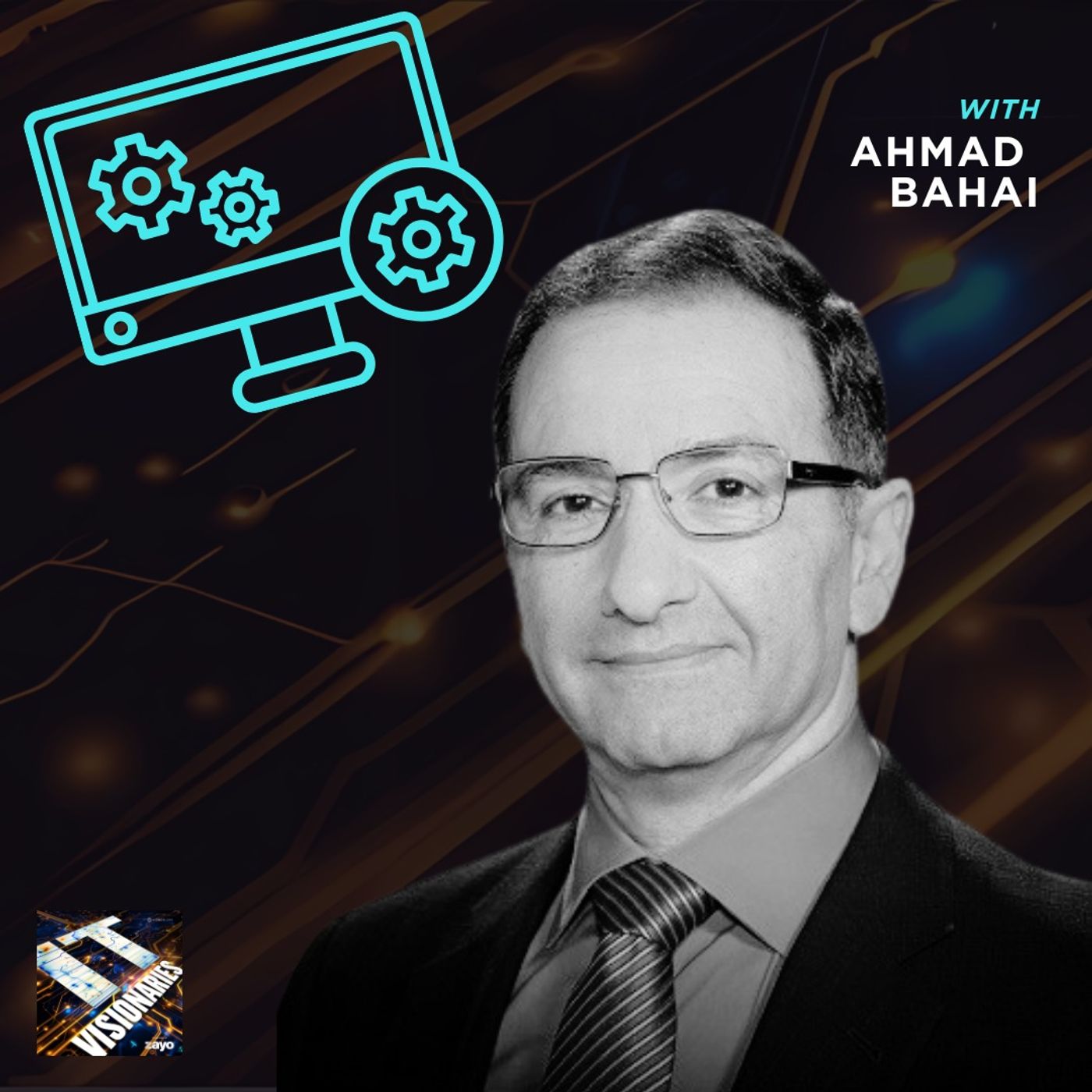
On this episode, Ahmad Bahai, CTO of Texas Instruments, discusses the importance of innovation in the semiconductor industry and the challenges of meeting the increasing demands for faster, more efficient technology. He highlights the need for disruptive innovation to keep up with the exponential growth of data and the widening gap between hardware capabilities and demand. Bahai emphasizes the role of problem-solving and risk management in the innovation process, as well as the importance of talent and multidisciplinary approaches. He also touches on the power of human intuition and the limitations of AI in replicating it. Key Insights: __ __ -- https://go.zayo.com/network/itvisionaries https://mission.org/
On this episode, Tony Lambert, CTO of TechSmith, discusses how TechSmith stays at the forefront of innovation by listening to customer needs, conducting research, and staying informed about industry trends. Plus, he explains why TechSmith has invested in content creation roles and how, in the future, video AI may be able to diagram manual skills, teach soft skills, and provide more advanced editing capabilities. Tune in to learn: __ __ -- https://go.zayo.com/network/itvisionaries https://mission.org/
On this episode, Leslie Beavers, the acting Chief Information Officer for the Department of Defense, discusses the role and responsibilities of the Department of Defense (DoD) in defending the nation. The DoD is responsible for coordinating all IT efforts within the department, as well as warfighting command control and communications. With a budget of $60 billion annually and over 4 million people across the globe, Ms. Beavers emphasizes the importance of interoperability and integration within the department, as well as the need for a streamlined acquisition process and organizational change strategy. Tune in to learn: __ __ https://go.zayo.com/network/itvisionaries https://mission.org/
On this episode, Sastry Durvasula, the Chief Information and Client Services Officer at TIAA, discusses how TIAA uses technology, including AI, to improve the retirement experience for its customers. He also digs into the challenges of integrating new sources of data and the need for companies to reimagine their approach to technology and innovation. Tune in to learn: __ __ -- https://go.zayo.com/network/itvisionaries https://mission.org/
On this episode, Harpreet Suri, the CTO of K&L Gates, discusses the role of technology in the legal industry and how it is transforming the way law firms operate. She highlights the importance of ease of adoption and security when evaluating technology solutions for law firms, and she shares her insights on the future of the legal industry, including the use of AI in understanding slang, solving logical arguments, and sequencing screenshots, among other applications. Tune in to learn: __ __ Mentions: __ __
Babak Hodjat, CTO of AI at Cognizant, discusses the impact of advancements in AI and the factors that have enabled its rapid progress, including increased processing capacity, access to large amounts of data, and improved neural network architectures. Babak also highlights the importance of moving to the cloud and leveraging AI to make informed decisions. Key Takeaways: __ __ – https://go.zayo.com/network/itvisionaries https://mission.org/
On this episode, Prince Kohli, the CTO of Automation Anywhere, discusses the evolution of robotic process automation (RPA) and its impact on industries. He shares real-world examples of how RPA and AI have transformed processes and improved efficiency in various sectors, and he delves into the implementation of RPA and AI, data governance, and the future of automation. Key Takeaways: __ __ https://go.zayo.com/network/itvisionaries https://mission.org/
